
TL;DR:
- Iowa is an at-fault state with a 51% bar: at 50% of the fault you recover half, and past 50% you recover nothing.
- Drivers must carry $20,000 per person, $40,000 per accident, and $15,000 for property damage. A 2026 bill to raise those limits never reached a floor vote.
- You have two years to sue for injuries and five years for bike damage. A claim against the state goes to the Department of Management in writing within two years.
- Iowa auto policies include uninsured motorist coverage unless it was rejected in writing. It pays for bodily injury only, and a hit-and-run claim needs physical contact with you.
- Iowa has no dooring statute, no passing distance in feet, and no statewide bicycle helmet law. Section 321.281 bars drivers from steering unreasonably close to a rider.
Who Pays After a Crash in Iowa
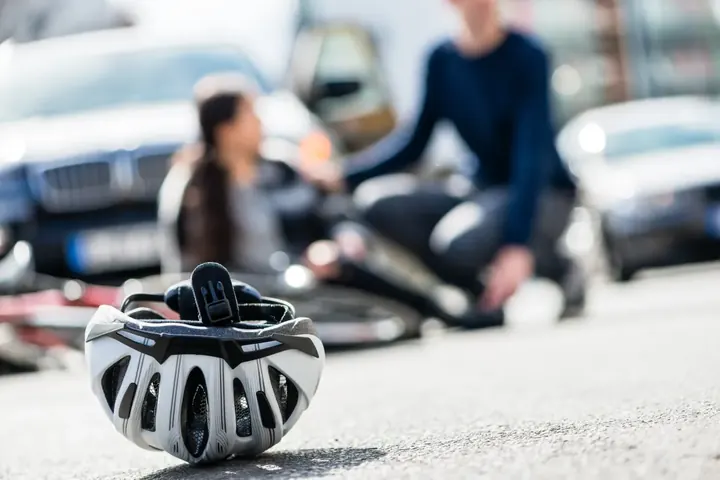
Iowa is an at-fault state. The driver who caused the crash pays, and Iowa Code section 321.20B bars anyone from driving without financial liability coverage in effect. Section 321A.21 sets the floor: $20,000 for one person's injuries, $40,000 for everyone hurt in the accident, and $15,000 for property damage.
Those numbers are not moving. House File 2352 would have raised them to $50,000, $100,000, and $50,000. It cleared the House Transportation Committee 21 to 0 in February 2026 and never reached a floor vote.
The Iowa Code has no personal injury protection system and no injury threshold to clear before you bring a claim. Your bike and gear are paid from the driver's $15,000 property limit.
Two sections of chapter 668 shrink the medical part of the claim. Under section 668.14A, added in 2020, you can recover no more than the amounts actually paid to your providers, plus whatever is needed to satisfy charges still outstanding. If the hospital billed $40,000 and your health plan settled the account for $12,000, the claim is built on $12,000.
Section 668.14 then lets the defense show the jury that private insurance already paid your bills. You may answer with what that coverage cost you in premiums and with your plan's right to be repaid, so keep both records.
Fault and How It Reduces a Claim
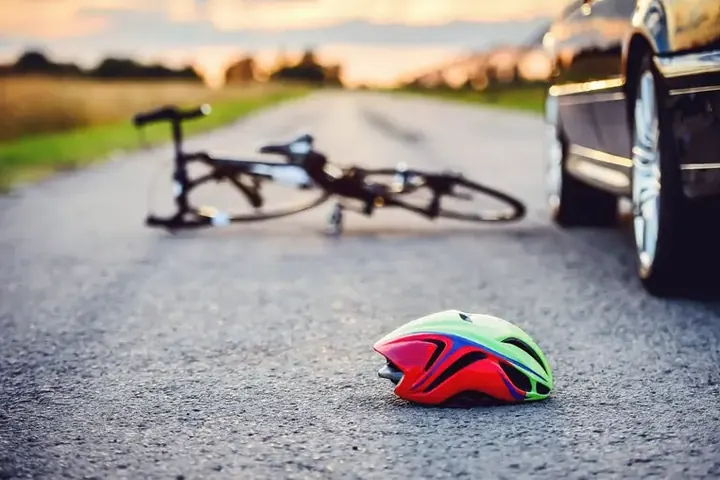
Iowa compares fault, and the line sits just past 50%. Under Iowa Code section 668.3, your own fault does not bar the claim unless you bear a greater percentage than the combined fault of the people you are claiming against. Below that line the award shrinks in proportion. A rider found 50% at fault for a $100,000 loss collects $50,000. At 51%, the same rider collects nothing.
Section 668.1 defines fault to include an unreasonable failure to avoid an injury. The raw material comes from chapter 321, because section 321.234 gives a person riding a bicycle on the highway the rights and duties of the driver of a vehicle. The rules most likely to be raised against you:
- Lights. Section 321.397 requires a white front lamp visible from at least 300 feet and a red rear lamp or reflector, from sunset to sunrise.
- Lane position. Section 321.297 sends traffic moving slower than the normal speed to the right-hand lane or as close as practicable to the right-hand curb or edge, except when passing or preparing for a left turn.
- Local rules. Section 321.236 lets cities regulate bicycle operation, so sidewalk riding is a question for the city code where you crashed.
When the driver carries most of the fault, section 668.4 helps, within limits. A defendant found 50% or more at fault is jointly and severally liable, but only for economic damages such as medical bills and lost wages.
Iowa has no statewide bicycle helmet law, and the leading helmet decision favors riders. In Meyer v. City of Des Moines, decided in 1991, the Iowa Supreme Court held that a moped operator had no statutory or common-law duty to wear a helmet and upheld the trial court's refusal to instruct the jury on his riding without one. That case involved a moped, and no published Iowa decision applies it to a bicycle.
Hit-and-Run and Uninsured Drivers
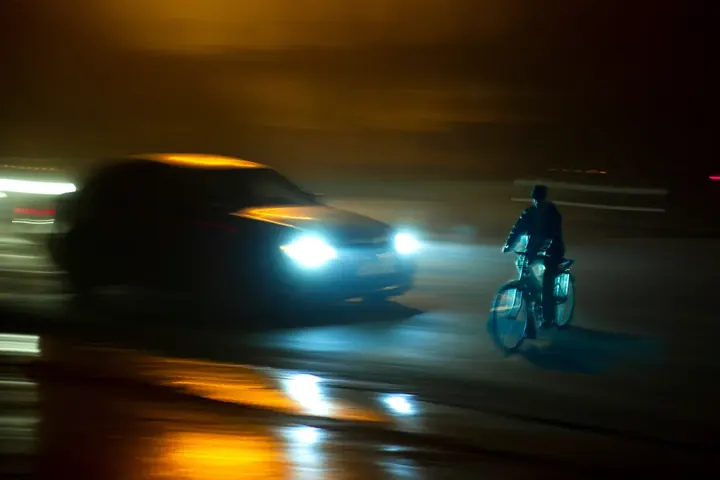
Iowa Code section 516A.1 writes uninsured, hit-and-run, and underinsured motorist coverage into every auto liability policy issued for a vehicle registered or garaged in the state. The named insured can drop it only by a signed rejection on a separate sheet of paper. Limits must be at least $20,000 per person and $40,000 per accident.
The statute protects persons insured under the policy who are legally entitled to recover from the other driver, and for an uninsured or underinsured driver it does not require that you be inside a car. Who counts as an insured away from the car is set by the policy form, so confirm that the coverage follows you onto a bike.
The coverage is for bodily injury and death. The statute requires nothing for property, so do not count on it to pay for the bike.
For a driver who flees, section 516A.1 requires physical contact of the hit-and-run vehicle "with the person insured or with a motor vehicle which the person insured is occupying." A car that strikes you qualifies. A car that forces you into the ditch without touching you does not. A car that clips your wheel and never touches your body is the open question: the statute does not say.
The statute sets no reporting deadline, which leaves the deadline to your policy. Call police from the scene.
Owning two insured cars does not double the protection. Section 516A.2 makes antistacking clauses enforceable and caps recovery across several policies at the highest single limit among them.
Two things to check in a bike insurance policy: whether it offers uninsured motorist coverage of its own, and whether crash damage to the bike is covered no matter who hit you.
Dooring and Passing Laws
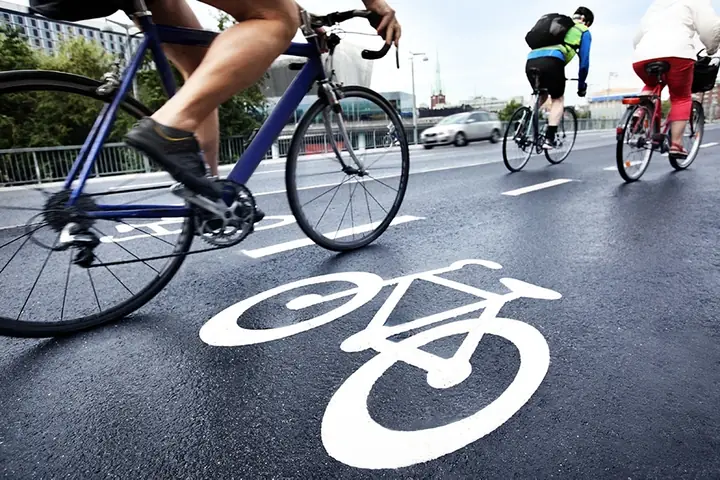
Iowa has no dooring statute. Chapter 321 of the Iowa Code, which holds the rules of the road, says nothing about opening a vehicle door into traffic. A rider who is doored still has a claim, but it rests on ordinary negligence under chapter 668 and on any city ordinance that applies.
Passing law is nearly as thin. Section 321.299 requires a driver to pass to the left "at a safe distance" and to stay left until safely clear. Iowa sets no distance in feet.
What Iowa does have is section 321.281, enacted in 2010. A driver may not steer "unreasonably close to or toward" a person riding a bicycle on a highway, including the shoulder, and no one may knowingly throw an object at a rider. A violation is a simple misdemeanor with a scheduled fine.
Two more sections are worth knowing by number:
- Crosswalks. Since a 2024 amendment, section 321.327 requires drivers to yield to a person riding a bicycle in a marked crosswalk, or an unmarked one at an intersection, where no traffic signal is operating.
- Phones. Section 321.276, rewritten in 2025, bars holding, viewing, or manipulating an electronic device while driving.
E-bikes
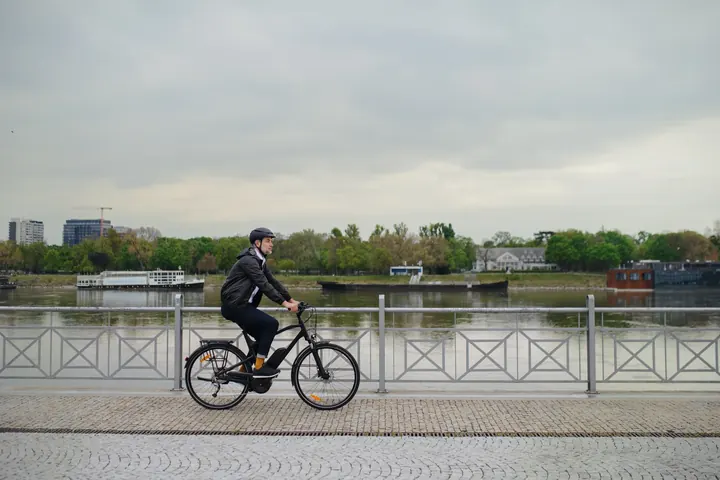
Iowa calls it a low-speed electric bicycle. Section 321.1 defines one as a device with a seat, two or three wheels, fully operable pedals, and an electric motor in one of three classes. Class 1 assists only while you pedal and cuts out at 20 mph. Class 2 has a motor that can propel the bike on its own and cuts out at 20 mph. Class 3 assists only while you pedal and cuts out at 28 mph.
The wattage line moved in 2026. Senate File 490, signed April 30 and effective July 1, 2026, changed the motor limit from "less than" 750 watts to "not more than" 750 watts. The common 750-watt e-bike now sits inside the definition.
Section 321.235B supplies the rest. No one under 16 may operate a Class 3, which must carry a speedometer. Every e-bike needs a permanent label stating its class, top assisted speed, and motor wattage. The section exempts e-bikes from licensing, registration, titling, and proof of financial liability coverage. In a crash you stand where a cyclist stands: the same 51% bar, the same two-year deadline. Iowa has no helmet requirement for any class.
Photograph the label. A motor above 750 watts puts the machine outside the bicycle definition.
One question has no answer in the Iowa Code, in Insurance Division guidance, or in any published decision found for this guide: whether an auto policy's uninsured motorist or medical payments coverage applies to you on an e-bike. Get your insurer's position in writing.
Deadlines

Iowa gives you two years to sue for injuries and five for the bike. A claim against the state has to pass through an administrative filing before any court will hear it.
- At the scene
Police Notice and Driver Details
Section 321.266 requires the driver in a crash with an injury or death to notify the sheriff, the state patrol, or another peace officer immediately. Section 321.263 requires that driver to give you a name, address, and registration number.
- 72 hours
Written Report to the Iowa DOT
When no law enforcement agency investigates, the driver must send a written report to the Iowa Department of Transportation within 72 hours of a crash with an injury, a death, or $1,500 in apparent property damage. Senate File 2088, signed in 2026, raises that trigger to $5,000 no later than March 1, 2027.
- Two years
Injury Lawsuit
Iowa Code section 614.1 gives you two years to sue for injuries to the person. For a rider hurt as a minor, section 614.8 as amended on July 1, 2026 allows five years after reaching majority. It was one year before.
- Two years
Claims Against Government
A claim against the state falls under chapter 669. Section 669.13 bars it forever unless a written claim reaches the director of the Department of Management within two years. The State Appeal Board takes claims online or on its Claim Form and Affidavit, and section 669.5 allows suit only after the attorney general disposes of the claim or six months pass without a decision. A suit against a city, county, township, or school district must be commenced within two years under section 670.5. Iowa has no shorter notice-of-claim period.
- Five years
Bike Damage Lawsuit
Section 614.1 gives actions for injuries to property five years, so a suit for the bike and gear alone can wait longer than the injury claim.
Section 668.10 bars assigning any fault to the state or a municipality for failing to install a stop sign or traffic control device, though a failure to maintain one already in place counts. For a dispute over the bike alone, small claims court hears cases up to $6,500 under section 631.1.
Evidence to Preserve
With a 51% bar, evidence in Iowa does one job above all: it keeps your percentage of fault down.
- The officer's report number and the agency that took it.
- The driver's name, address, registration number, and insurance card. Section 321.263 requires the first three after an injury crash, and section 321.20B requires the driver to carry proof of financial liability coverage in the vehicle.
- Your lights, photographed on the bike, if the crash happened after sunset. The standard is 300 feet.
- Proof of physical contact if the driver fled: photos of your injuries and clothing, witness names.
- The e-bike label showing class, top assisted speed, and wattage.
- Explanation-of-benefits statements from your health plan. Under section 668.14A, the amounts actually paid are the medical claim.
- Your auto policy's declarations page, showing that uninsured motorist coverage was never rejected.
- The damaged bike, unrepaired, with receipts for the bike and gear.
Coverage for Iowa Riders

Iowa law leaves a rider exposed in four places: a driver carrying the $20,000 minimum, auto uninsured motorist coverage that pays for injuries but not for the bike, medical costs your health plan passes on to you, and a 51% bar that can turn the claim around. The Velosurance policy offers the coverages discussed above.
Uninsured Motorist covers losses beyond medical bills, such as lost wages, when the at-fault driver cannot pay.
Medical Payments covers the deductible and out-of-pocket costs your health plan leaves, regardless of the driver's insurance. Choose a limit close to your plan's out-of-pocket deductible.
Liability is the coverage for the day the percentages run against you. If you are held responsible for a crash, it covers injury to other people and damage to their property, including the cost of defending a covered lawsuit, with limits from $25,000 to $500,000.
Crash damage to the bike is part of the policy itself: stated value with no depreciation, subject to the deductible, whoever was at fault. Class 1, Class 2, and Class 3 e-bikes are covered like conventional bikes.
For any of these coverages to apply, it must be on the policy before the crash. Get a quote before the next ride, not after it.
Frequently Asked Questions
- How does the 51% rule work in an Iowa bicycle accident claim?
- You recover damages in Iowa as long as your share of the fault is not greater than the combined fault of the people you are claiming against, and the award is reduced by your share. A rider 50% at fault for a $100,000 loss collects $50,000. The caveat worth knowing: at 51% the recovery is zero, so the evidence that sets your percentage decides the claim.
- How long do you have to file a bicycle accident claim in Iowa?
- You have two years to file suit in Iowa for injuries and five years for damage to your bike. One thing to watch: a claim against the state must first be filed in writing with the Department of Management within two years, and a suit against a city or county must be started within two years.
- What makes a hit-and-run claim work for a cyclist in Iowa?
- Uninsured motorist coverage on an Iowa auto policy can pay for your injuries when the driver flees, provided the vehicle made physical contact with you. Call police from the scene and tell your insurer promptly, because the reporting deadline is set by the policy. With one wrinkle: the coverage pays for bodily injury only, and the statute does not say whether contact with the bike alone is enough.
- How are Class 1, Class 2, and Class 3 e-bikes treated after a crash in Iowa?
- Iowa treats Class 1, Class 2, and Class 3 e-bikes as bicycles, so the same 51% rule and two-year deadline apply. Class 1 assists only while you pedal and cuts out at 20 mph, Class 2 has a motor that can propel the bike on its own and cuts out at 20 mph, and Class 3 assists only while you pedal and cuts out at 28 mph for riders 16 and older. The caveat worth knowing: a motor above 750 watts puts the machine outside the bicycle definition.
- How does riding without a helmet affect an Iowa bicycle accident claim?
- Iowa has no statewide bicycle helmet law, and the leading court decision favors riders: in 1991 the Iowa Supreme Court held that a moped operator had no statutory or common-law duty to wear a helmet and upheld the refusal to instruct the jury on it. One thing to watch: that case involved a moped, and no published Iowa decision applies it to a bicycle.
Sources
- Iowa Code chapter 668 (comparative fault), sections 668.1, 668.3, 668.4, 668.10
- Iowa Code sections 668.14 and 668.14A (evidence of previous payment, recoverable medical expenses)
- Iowa Code section 614.1 (limitation periods) and section 614.8 (minors)
- House File 1036 (2026), enrolled, section 5 (minors: five years after majority, effective July 1, 2026)
- Senate File 512 (2026), enrolled (accrual language in section 614.1)
- Iowa Code chapter 669 (State Tort Claims Act), sections 669.3, 669.4, 669.5, 669.13
- Iowa Code section 670.5 (actions against municipalities)
- Iowa Department of Management, State Appeal Board (claims against the state)
- Iowa Code section 631.1 (small claims jurisdiction)
- Iowa Code sections 321A.1 and 321A.21 (minimum liability limits) and section 321.20B (financial liability coverage required)
- House File 2352 (2026), bill history (minimum financial responsibility amounts, not enacted)
- Senate File 2073 (2026), bill history (companion bill, not enacted)
- Iowa Code chapter 516A (uninsured, underinsured, and hit-and-run motorists), sections 516A.1 and 516A.2
- Iowa Code chapter 321 (motor vehicles and law of the road), sections 321.1, 321.234, 321.236, 321.297, 321.299, 321.327, 321.384, 321.397, 321.482A
- Iowa Code section 321.281 (actions against bicyclists)
- Iowa Code section 321.276 (use of electronic device while driving)
- Iowa Code sections 321.261, 321.263, 321.266 (duties and reports after an accident)
- Senate File 2088 (2026), enrolled, sections 9 and 13 (accident report threshold)
- Iowa Code section 321.235B (low-speed electric bicycles)
- Senate File 490 (2026), enrolled, and bill history (750-watt limit, effective July 1, 2026)
- 2024 Iowa Acts chapter 1137, section 5 (bicyclists in crosswalks)
- Iowa Legislature, Code sections affected by 2026 legislation
- Meyer v. City of Des Moines, 475 N.W.2d 181 (Iowa 1991)
- Iowa Insurance Division, Consumer Connection: Auto Insurance Terms to Know
This guide is general information about Iowa law as of the review date above. It is not legal or insurance advice, and it does not create an attorney-client relationship. Laws change and every crash turns on its own facts: talk to a licensed Iowa attorney about your situation.