
TL;DR:
- Hawaii is a no-fault state: the insurer of the car that hit you pays up to $10,000 of medical treatment regardless of fault, even if you own no car.
- An injury claim against the driver requires $5,000 in personal injury protection benefits incurred, a death, or a listed permanent injury. Bike damage has no threshold.
- Fault follows modified comparative negligence: a rider 50% at fault collects half, and a rider 51% at fault collects nothing.
- Minimum auto liability limits doubled to $40,000 per person, $80,000 per accident, and $20,000 for property on policies effective on or after January 1, 2026.
- You have two years to sue, drivers must give three feet when passing, and since July 15, 2026 every rider under 18 needs a helmet.
Who Pays After a Crash in Hawaii
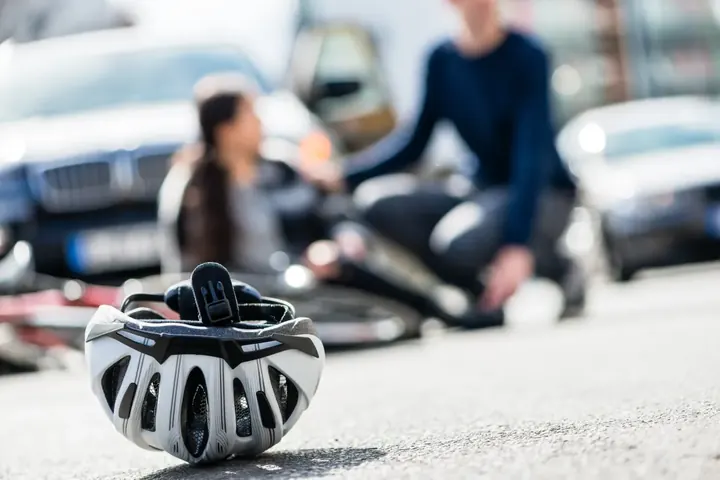
Hawaii is a no-fault state, and its statute names you. HRS section 431:10C-304 requires a motor vehicle insurer to pay personal injury protection benefits, without regard to fault, to "any pedestrian, including a bicyclist" hurt by the insured vehicle. Section 431:10C-305 makes the insurance on the vehicle that caused the harm the primary source. You need no car and no auto policy of your own.
The benefit is narrow. Section 431:10C-103.5 caps it at $10,000 per person and limits it to treatment: medical, hospital, surgical, ambulance, physical therapy, rehabilitation. Lost wages are not part of the basic benefit. Shoulder surgery with rehab costs $15,000 to $40,000, so one operation can outrun the benefit.
If that vehicle carries no insurance, section 431:10C-305 turns to any other motor vehicle insurance that applies to you.
Suing the driver for your injuries has a gate. Section 431:10C-306 abolishes tort liability for the owner or driver of an insured vehicle unless the crash caused death, a significant permanent loss of use of a part or function of the body, a permanent and serious disfigurement that causes mental or emotional suffering, or personal injury protection benefits incurred of $5,000 or more. Deductibles and copayments count toward the $5,000.
Past the gate, the driver's liability policy pays. Act 138 of 2024 doubled the minimums: $40,000 per person, $80,000 per accident, and $20,000 for property damage on new and renewal policies effective on or after January 1, 2026. Section 431:10C-301.5 then takes a deduction: an injury recovery is reduced by $5,000 or the personal injury protection benefits incurred, whichever is greater, up to the benefit limit.
The bike sits outside all of this. Section 431:10C-306 leaves property damage claims untouched, so the bike and gear are claimed against the driver's property damage limit with no threshold.
Fault and How It Reduces a Claim

Hawaii uses modified comparative negligence. Under HRS section 663-31 you recover as long as your negligence is not greater than the negligence of the person you are suing, or the combined negligence of all of them. Your award is then cut by your percentage. A rider found 30% at fault for a $100,000 loss collects $70,000. A rider found 50% at fault collects $50,000. At 51%, the court enters judgment for the defendant.
When two defendants share the blame, section 663-10.9 keeps joint and several liability for torts relating to motor vehicle accidents, so either can be held for the whole award.
Section 291C-142 gives a cyclist on a roadway every right and every duty of a driver. An insurer arguing for a higher percentage will look for a rule you broke. The usual candidates:
- Lane position. Section 291C-145 requires a rider slower than traffic to keep as near the right-hand curb or edge as practicable, with exceptions for left turns, hazards, and a lane too narrow to share side by side. Where a usable bike lane exists, a slower rider must use it.
- Lights. Section 291C-147 requires a white front lamp visible from 500 feet between 30 minutes after sunset and 30 minutes before sunrise, and a red rear reflector at all times.
- Sidewalks. Section 291C-148 allows a bicycle on a sidewalk at 10 mph or less, yielding to pedestrians, and bans sidewalk riding in business districts.
The criminal code leans the other way. Under sections 707-700 and 707-705, a person legally operating a bicycle is a vulnerable user, and a driver who negligently causes one substantial bodily injury commits negligent injury in the first degree, a class C felony.
Helmets are an open question. Section 291C-150 says who must wear one and is silent on whether riding without one can be used to reduce damages.
Hit-and-Run and Uninsured Drivers

HRS section 431:10C-301 puts uninsured motorist coverage in every policy on a vehicle registered or principally garaged in Hawaii, at the bodily injury minimums of $40,000 per person and $80,000 per accident, unless a named insured rejected it in writing. Underinsured motorist coverage must be offered the same way. Check the declarations page of every auto policy in your household.
The coverage protects "persons insured" under the policy. Section 431:10C-103 defines an insured as the named insured plus a spouse, relatives, and minors in the same household, with no mention of being in the car. Ask your insurer to confirm in writing that yours applies on a bicycle.
Stacking is prohibited unless you bought the stacking option, which every insurer must offer when a policy is first applied for or issued.
For a hit-and-run, section 431:10C-103 treats an unidentified vehicle that causes an injury accident as uninsured, provided the crash is reported to the police or the proper governmental authority within 30 days or as soon as practicable afterward. The statute's text lists no physical contact condition, but read your policy for its own notice terms.
With no auto policy in the household, section 431:10C-408 opens the assigned claims program to a person for whom no liability or uninsured motorist benefits apply or can be identified. The filing procedure is not in the statute, so call the Insurance Division for it.
Uninsured motorist coverage pays for bodily injury only. It does not replace the bike. Two things to check in a bike insurance policy: whether it offers uninsured motorist coverage of its own, and whether crash damage is covered no matter who hit you.
Dooring and Passing Laws

HRS section 291C-125 is the dooring statute. No person may open the door of a motor vehicle on the side available to moving traffic unless and until it is reasonably safe and can be done without interfering with, or causing immediate hazard to, other traffic. It says "person," so a passenger stepping out of a rideshare in Waikiki is bound by it as much as the driver.
Passing has had a number since 2018. Section 291C-43 requires a driver overtaking a bicyclist to allow at least three feet of separation between the right side of the vehicle, "including all mirrors or other protuberances," and the left side of the bicyclist, On a narrow road such as the Hana Highway, the mirror clause decides the case: the three feet is measured from the widest point of a truck, not from its body.
Bike lanes are protected by section 291C-123, which bars motor vehicles from driving or parking in a bicycle lane or path except for a legal turn, lane change, or parking maneuver, emergencies, and breakdowns.
E-bikes

Hawaii rewrote its e-bike law in 2026. Act 259, signed and effective July 15, 2026, replaced the old "low-speed electric bicycle" with three classes. An electric bicycle has fully operable pedals and a motor of no more than 750 watts. Class 1 assists only while you pedal and stops at 20 mph. Class 2 can run on the motor alone and stops assisting at 20 mph. Class 3 assists only while you pedal, stops at 28 mph, and must have a speedometer.
The traffic code's definition of "bicycle" in HRS section 291C-1 includes an electric bicycle. In a crash you are treated as a cyclist: the same fault rule, the same deadlines, the same under-18 helmet rule.
Three rules are specific to e-bikes. A rider under 16 may operate a Class 2 or Class 3 only under the direct supervision of a parent or guardian. Section 249-14 requires a permanent $30 registration from the county director of finance, and an unregistered e-bike can be cited or temporarily impounded. Sidewalk riding is allowed at up to 10 mph outside business districts unless a county ordinance says otherwise.
Act 259 also says nothing in chapter 291C requires insurance for a road-legal, classified electric bicycle. The line it draws is the "high-speed electric device": a motor over 750 watts and a top speed above 28 mph. Those are barred from roadways, bike lanes, and sidewalks.
One question has no published answer: whether "bicyclist" in the no-fault statute includes an e-bike rider. The traffic code's definition points that way, but no Insurance Division guidance or appellate decision says so. Get the insurer's position in writing. In a bike insurance policy, check that your e-bike's class is covered and that the motor is unmodified.
Deadlines

Most Hawaii deadlines land on the same two-year mark, which makes the calendar look forgiving. The early steps protect the claim.
- At the scene
Notify Police Immediately
HRS section 291C-16 requires the driver in a collision with an injury, a death, or $3,000 or more in apparent property damage to notify the nearest police officer immediately. Get the report number.
- 30 days
Report a Hit-and-Run to Police
An unidentified vehicle counts as uninsured under section 431:10C-103 when the crash is reported to police within 30 days or as soon as practicable afterward.
- 30 days
Insurer's No-Fault Decision
After reasonable proof and a demand for payment, the insurer has 30 days to pay personal injury protection benefits or deny them in writing with reasons.
- Two years
Written Notice to a County
A claim against a county (a city bus, a county truck, a street defect) needs written notice within two years after the injuries accrued under section 46-72. It goes to the official named in the county charter, or else the council chairperson or the county clerk, and must state when, where, and how the injury happened and the amount claimed.
- Two years
Lawsuit Against the State
Section 662-4 bars a tort claim against the State unless the action is begun within two years after the claim accrues.
- Two years
Injury, Wrongful Death, and Bike Damage Lawsuit
Section 431:10C-315 gives you two years from the crash to sue in tort, or two years from the last payment of motor vehicle insurance benefits if that is later. Section 657-7 sets the same two years for damage to the bike and gear. A wrongful death action runs two years from the death under section 663-3.
For a rider under 18, section 657-13 holds the two-year clock until the 18th birthday. The annotations to sections 46-72 and 662-4 record rulings that this pause reaches claims against a county but not claims against the State.
For a dispute over the bike alone, the small claims division of the district court hears claims up to $5,000 under section 633-27.
Evidence to Preserve
A Hawaii claim turns on three numbers: the $5,000 threshold, your fault percentage, and the two-year clock.
- The police report number from the Honolulu, Maui, Kauai, or Hawaii County police department, with the date you reported if the driver fled.
- The plate and insurance card of the car that hit you. That insurer owes your personal injury protection benefits.
- Every medical bill, deductible, and copayment. They add up to the $5,000 that opens an injury claim against the driver.
- The scene: lane width, bike lane markings, the open door, the passing vehicle's mirrors.
- Your bike as it was: front lamp, rear reflector, the county registration decal, and for an e-bike the class label. Keep it unrepaired until the claim settles.
- Every auto policy in your household, with its uninsured motorist and stacking elections.
Coverage for Hawaii Riders

Hawaii's system leaves specific holes: $10,000 of no-fault medical benefits and no wage loss, a $5,000 deduction from an injury recovery, a fault rule that pays nothing at 51%, and no auto coverage that replaces the bike. The Velosurance policy offers the coverages discussed above.
Uninsured Motorist covers losses beyond medical bills, such as lost wages, when the at-fault driver cannot pay.
Medical Payments covers the deductible and out-of-pocket costs your health plan leaves once the $10,000 is spent. Choose a limit close to your plan's out-of-pocket deductible.
Liability covers the claims made against you. If you injure a pedestrian on a shared sidewalk, it pays covered settlements or judgments and the cost of defending a covered lawsuit, with limits from $25,000 to $500,000.
Crash damage to the bike is part of the policy itself. The bike is insured at stated value with no depreciation, subject to the deductible, whatever percentage of fault is assigned. Class 1, Class 2, and Class 3 e-bikes are covered like conventional bikes.
For any of these coverages to apply, it must be on the policy before the crash. Get a quote and add them before your next ride.
Frequently Asked Questions
- Who pays medical bills for a cyclist hit by a car in Hawaii?
- The insurer of the car that hit you pays, under Hawaii no-fault, up to $10,000 of medical treatment regardless of fault, even if you own no car. The insurer has 30 days from reasonable proof and a demand for payment to pay or deny in writing. One thing to watch: the benefit covers treatment only, with no lost wages and nothing for the bike.
- How does fault affect a bicycle accident claim in Hawaii?
- You recover in Hawaii as long as your negligence is not greater than that of the person you are suing, with the award reduced by your percentage. A rider 30% at fault for a $100,000 loss collects $70,000, and a rider 50% at fault collects $50,000. The caveat worth knowing: at 51% the court enters judgment for the defendant.
- When can a Hawaii cyclist bring an injury claim against the driver?
- You can bring an injury claim against the driver once your personal injury protection benefits incurred reach $5,000, with deductibles and copayments counted. A death, a significant permanent loss of use, or a permanent and serious disfigurement also opens the claim. With one wrinkle: the recovery is reduced by $5,000 or the benefits incurred, whichever is greater, up to the benefit limit.
- How long do you have to file a bicycle accident claim in Hawaii?
- You have two years from the crash to sue for injuries or for damage to your bike in Hawaii, and two years from the death in a wrongful death case. One thing to watch: a claim against a county also needs written notice within two years, and a hit-and-run should be reported to police within 30 days.
- How are Class 1, Class 2, and Class 3 e-bikes defined in Hawaii?
- Hawaii defines three classes, each with fully operable pedals and a motor of no more than 750 watts. Class 1 assists only while you pedal and stops at 20 mph, Class 2 can run on the motor alone and stops assisting at 20 mph, and Class 3 assists only while you pedal, stops at 28 mph, and has a speedometer. The caveat worth knowing: a device with a motor over 750 watts and a top speed above 28 mph is barred from roadways, bike lanes, and sidewalks.
Sources
- Hawaii Revised Statutes section 663-31 (comparative negligence)
- Hawaii Revised Statutes section 663-10.9 (joint and several liability)
- Hawaii Revised Statutes section 663-3 (wrongful death)
- Hawaii Revised Statutes section 431:10C-103 (definitions: insured, uninsured and underinsured motor vehicle)
- Hawaii Revised Statutes section 431:10C-103.5 (personal injury protection benefits and limit)
- Hawaii Revised Statutes section 431:10C-301 (required coverage, uninsured and underinsured motorist coverage, stacking)
- Hawaii Revised Statutes section 431:10C-301.5 (covered loss deductible)
- Hawaii Revised Statutes section 431:10C-304 (obligation to pay personal injury protection benefits)
- Hawaii Revised Statutes section 431:10C-305 (source of payment)
- Hawaii Revised Statutes section 431:10C-306 (abolition of tort liability)
- Hawaii Revised Statutes section 431:10C-315 (limitation periods for motor vehicle accident claims)
- Hawaii Revised Statutes section 431:10C-408 (assigned claims)
- Hawaii Insurance Division, Auto Insurance Minimum Limits FAQ (effective January 1, 2026)
- Hawaii Revised Statutes sections 657-7 and 657-13 (two-year limitation period, minors)
- Hawaii Revised Statutes section 46-72 (notice of claims against a county)
- Hawaii Revised Statutes section 662-4 (tort claims against the State)
- Hawaii Revised Statutes section 633-27 (small claims division)
- Hawaii Revised Statutes section 291C-16 (immediate notice of collision)
- Hawaii Revised Statutes section 291C-43 (overtaking a bicycle, three feet)
- Hawaii Revised Statutes section 291C-125 (opening and closing vehicle doors)
- Hawaii Revised Statutes sections 291C-142, 291C-145, 291C-147, 291C-148 (bicycle rights, duties, lane position, equipment, sidewalks)
- Hawaii Revised Statutes section 291C-150 (bicycle helmets)
- Hawaii Revised Statutes sections 707-700 and 707-705 (vulnerable users, negligent injury in the first degree)
- Hawaii Revised Statutes section 249-14 (bicycle and e-bike registration)
- Hawaii Act 259 (2026), HB2021 HD2 SD2 CD1 (electric bicycle classes, helmets, bicycle lanes)
- Hawaii State Legislature, HB2021 measure status (Act 259, July 15, 2026)
This guide is general information about Hawaii law as of the review date above. It is not legal or insurance advice, and it does not create an attorney-client relationship. Laws change and every crash turns on its own facts: talk to a licensed Hawaii attorney about your situation.