
TL;DR:
- Georgia is an at-fault state with a 50% bar: at 49% responsible you recover 51% of your loss, at 50% you recover nothing.
- Minimum auto liability limits are $25,000 per person, $50,000 per accident, and $25,000 for property, and Georgia auto policies carry no personal injury protection.
- You have two years to sue for injuries and four years for bike damage, but only six months to serve a written claim on a city and 12 months for a county or the state.
- Uninsured motorist coverage is in every Georgia auto policy unless rejected in writing; a hit-and-run claim needs physical contact or an eyewitness other than you.
- Drivers must change lanes to pass a bicycle, or slow down and leave at least three feet. Helmets are required under 16 and on every Class III e-bike.
Who Pays After a Crash in Georgia
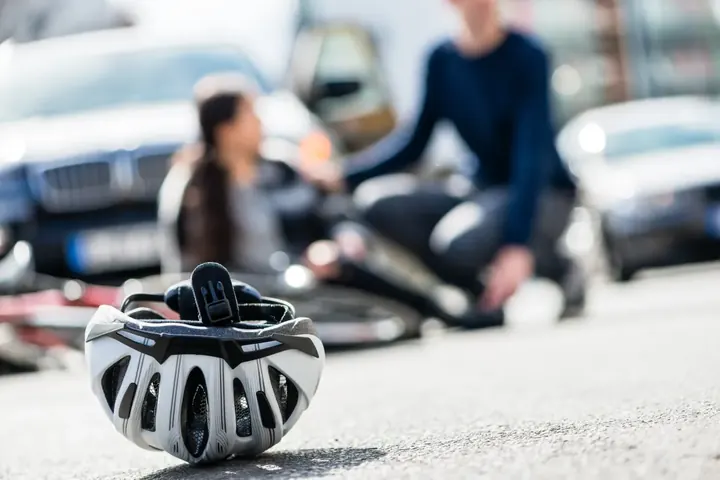
Georgia is an at-fault state. Its no-fault system was repealed effective October 1, 1991, and the chapter that replaced it asks drivers for one thing: liability insurance. Code section 33-34-4 makes that coverage a condition of operating a motor vehicle, and section 33-7-11 sets the floor at $25,000 for one person's injuries, $50,000 for everyone hurt in the accident, and $25,000 for property damage. Neither the 2025 nor the 2026 legislative session changed those numbers.
No injury threshold stands between you and a claim, and no Georgia auto policy carries personal injury protection. Medical payments coverage is optional, and section 33-34-2 defines it around relatives "while occupying the covered motor vehicle," so whether yours pays after a crash on a bike turns on the policy wording.
The 2025 tort reform act, Senate Bill 68, changed how medical bills are valued. Under section 51-12-1.1, which applies to crashes on or after April 21, 2025, medical damages are limited to the reasonable value of medically necessary care. If you have health insurance, the jury may see both the amounts billed and the amounts actually needed to satisfy those bills.
Section 51-12-33 also makes each defendant liable only for its own percentage of fault, with no joint liability.
Fault and How It Reduces a Claim

Georgia draws its line at 50%, and an even split loses. Under section 51-12-33, a jury sets your percentage of fault and the judge reduces your damages by it. If you are 50% or more responsible, you receive nothing. A rider 49% at fault for a $100,000 loss collects $51,000. At 50%, the same rider collects zero.
The arguments about your percentage come from the traffic code. Section 40-6-291 applies the rules for vehicles to bicycles, and these are the ones most likely to be raised:
- Lane position. Section 40-6-294 requires riding as near to the right side as practicable. The exceptions cover left turns, hazards (the statute names debris, rough pavement, parallel drain grates, and "potentially opening car doors"), a lane too narrow to share safely with a motor vehicle, and traveling at the speed of traffic. Two abreast is the limit on a roadway.
- Lights. Section 40-6-296 requires a white front light and a red rear light at night, each visible from 300 feet. A rear reflector approved by the Department of Public Safety can replace the rear light.
- Sidewalks. Section 40-6-144 bars vehicles from sidewalks. The only opening is a local ordinance allowing riders 12 or younger.
Helmets are the rare point Georgia settles by statute. Riders under 16 must wear one, as must everyone on a Class III e-bike, yet sections 40-6-296 and 40-6-303 both say a violation is not negligence per se and may not be considered evidence of negligence or liability. An adult on any other bike has no helmet duty to violate.
Hit-and-Run and Uninsured Drivers

Section 33-7-11 puts uninsured motorist coverage in every Georgia auto policy unless a named insured rejected it in writing. The limits default to the policy's own liability limits and cannot be offered below $25,000, $50,000, and $25,000.
The statute's definition of "insured" does the work for cyclists. It covers the named insured and, while they live in the same household, the spouse and relatives of either, "while in a motor vehicle or otherwise." Nothing in that wording requires you to be in a car, though your own policy form is worth checking.
The default version works in your favor. Unless you chose the cheaper alternative in writing, your coverage is added on top of the at-fault driver's liability insurance. Hit by a driver carrying the $25,000 minimum, with $25,000 of added-on coverage of your own, you have $50,000 to draw on. The reduced version pays only the difference between the two limits, which here is nothing. Georgia Court of Appeals decisions also allow separate policies to be stacked, so list every auto policy in the household.
For a driver who flees, the statute requires actual physical contact between the unknown vehicle and "the person or property of the insured," with one exception: contact is not required if your account is corroborated by an eyewitness other than you. A car that forces you off the road without touching you can support a claim, but only with a witness.
The bike is a different story. For property damage, the statute defines "property of the insured" as the insured motor vehicle and personal property contained in it. On that wording, a bike you were riding is not covered property.
Two things to check in a bike insurance policy: whether it offers uninsured motorist coverage of its own, and whether crash damage is covered no matter who hit you.
Dooring and Passing Laws
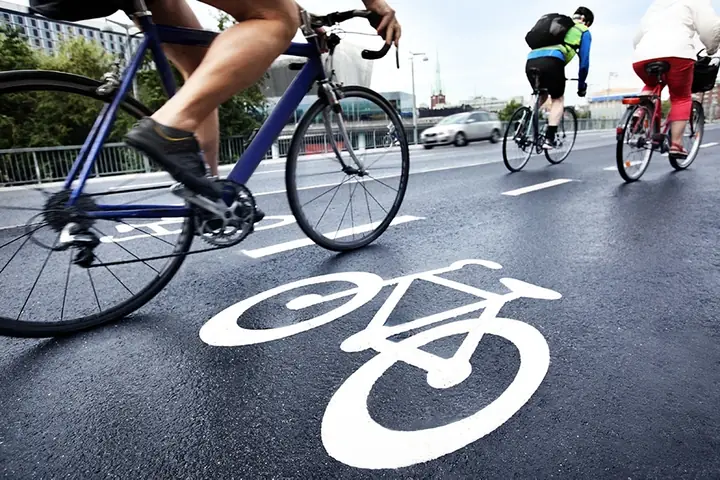
Section 40-6-243 is Georgia's dooring statute. No person may open a motor vehicle door on the side available to moving traffic "unless and until it is reasonably safe to do so" and it can be done without interfering with other traffic. Nor may anyone leave a door open on that side longer than it takes to load or unload passengers.
It pairs with the lane position rule. Because section 40-6-294 lists "potentially opening car doors" among the hazards that justify leaving the right edge, riding outside the door zone of a parked row is lawful positioning.
Passing was rewritten by House Bill 353, effective July 1, 2021. The old rule asked for three feet "when feasible." Section 40-6-56 now requires a driver approaching a bicycle to change into a lane not adjacent to it if road and traffic conditions allow. If a lane change is impossible, prohibited, or unsafe, the driver must slow to at least 10 mph below the posted limit or 25 mph, whichever is more, and keep at least three feet from the bicycle at all times.
A violation is a misdemeanor with a fine of up to $250. A driver who stayed in your lane with the next lane open, or passed at the posted limit, broke a rule with numbers in it.
E-bikes

Georgia calls them electric assisted bicycles. Section 40-1-1 defines one as a device with two or three wheels, a saddle, fully operative pedals, and an electric motor of not more than 750 watts, and the same section removes it from the definition of motor vehicle. Section 40-6-301 gives the rider every right and duty of a bicycle operator. After a crash you stand where any cyclist stands: the 50% bar, the two-year deadline, the claim against the driver.
Section 40-6-300 sets the classes, in Roman numerals. Class I assists only while you pedal and stops at 20 mph. Class II has a motor that can propel the bike without pedaling, with a 20 mph ceiling. Class III assists only while you pedal and stops at 28 mph.
Class III carries the extra rules. Section 40-6-303 bars anyone under 15 from operating one, requires a helmet for every operator and passenger, and keeps it off bike paths and shared use paths unless the path runs within or beside a highway or the local authority allows it.
Every e-bike made since January 1, 2020 must carry a permanent label showing its class, motor wattage, and top assisted speed. Photograph it: a machine over 750 watts falls outside the definition.
One question has no clear answer in Georgia's statutes or published appellate opinions: whether uninsured motorist or medical payments coverage on an auto policy applies to you on an e-bike. Get your insurer's position in writing.
Deadlines

Georgia gives you two years to sue for injuries and four for the bike, but a claim against a city can be lost in six months.
- At the scene
Report to Police Immediately
Section 40-6-273 requires the driver of any vehicle in an accident with injury, death, or $500 or more in apparent property damage to give notice immediately: to local police inside a city, to the sheriff or the state patrol outside one. Under section 33-7-11, that report is also a condition of a hit-and-run uninsured motorist claim.
- Six months
Written Claim Against a City
Section 36-33-5 bars any suit against a city until the claim has been presented in writing to its governing authority, within six months of the event. State the time, place, and extent of the injury, the negligence that caused it, and the specific dollar amount you are seeking. Serve it on the mayor or the chair of the city council or commission, in person or by certified mail or statutory overnight delivery. In 2025 the Georgia Supreme Court held in Dates v. City of Atlanta that the six months are not extended for an injured child.
- 12 months
Claim Against a County
Section 36-11-1 bars any claim against a county that is not presented within 12 months after it accrues.
- 12 months
Notice of Claim Against the State
Under the Georgia Tort Claims Act, section 50-21-26, written notice is due within 12 months of the date the loss was or should have been discovered. Send it by certified mail or statutory overnight delivery, or deliver it in person, to the Risk Management Division of the Department of Administrative Services, with a copy to the agency involved. No suit may be filed until the department denies the claim or 90 days pass.
- Two years
Injury Lawsuit
Section 9-3-33 gives you two years from the crash to sue for injuries to the person. For a rider under 18, section 9-3-90 starts the two years at the 18th birthday.
- Four years
Bike Damage Lawsuit
Section 9-3-31 allows four years for injuries to personal property, which covers the bike and gear.
Recovery against government is capped. Section 50-21-29 limits a claim against the state to $1 million per person and $3 million per occurrence. For a crash with a city or county vehicle, section 36-92-2 waives immunity up to $500,000 for one person's injuries, $700,000 per occurrence, and $50,000 for property.
Evidence to Preserve
With a 50% bar that ends the claim at an even split, evidence in Georgia has one job: keeping your percentage under half.
- The report number and the agency that took it: city police, the county sheriff, or the Georgia State Patrol.
- Eyewitness names and phone numbers. In a hit-and-run without contact, an eyewitness other than you is the claim.
- The exact location: inside city limits, in unincorporated county, or on a state route. It decides whether a six-month or 12-month notice applies and who receives it.
- Your lights, photographed on the bike, if the crash happened at night.
- The lane and its hazards: width, parked cars, drain grates, debris. They justify your position under section 40-6-294.
- The e-bike label showing class, wattage, and top assisted speed.
- Every household auto policy's declarations page, showing whether uninsured motorist coverage is the added-on or reduced form.
- Medical bills and explanation-of-benefits statements. Under section 51-12-1.1, both the amounts billed and the amounts paid are evidence.
Coverage for Georgia Riders

Georgia law leaves a rider exposed in four places: a driver carrying the $25,000 minimum, a driver who flees with no contact and no witness, medical costs in a state whose auto policies carry no personal injury protection, and a bike the uninsured motorist statute does not treat as covered property. The Velosurance policy offers the coverages discussed above.
Uninsured Motorist covers losses beyond medical bills, such as lost wages, when the at-fault driver cannot pay. Riders with no auto policy in the household have no section 33-7-11 coverage to fall back on.
Medical Payments covers the deductible and out-of-pocket costs your health plan leaves, regardless of the driver's insurance. Choose a limit close to your plan's out-of-pocket deductible.
Liability is the coverage for the day the percentages run against you. At 50% fault your own claim ends, and the other party's claim against you does not. Liability covers injury to other people and damage to their property, including the cost of defending a covered lawsuit, with limits from $25,000 to $500,000.
Crash damage to the bike is part of the policy itself: stated value with no depreciation, subject to the deductible, whoever was at fault.
For any of these coverages to apply, it must be on the policy before the crash. Get a quote before the next ride, not after it.
Frequently Asked Questions
- How does the 50% rule work in a Georgia bicycle accident claim?
- You recover damages in Georgia as long as your share of fault is below 50%, and the award is reduced by that share. A rider 49% at fault for a $100,000 loss collects $51,000. The caveat worth knowing: at 50% or more the recovery is zero, so the evidence that sets your percentage decides the claim.
- How long do you have to file a bicycle accident claim in Georgia?
- You have two years to file suit in Georgia for injuries and four years for damage to your bike. One thing to watch: a claim against a city needs a written demand with a specific dollar amount within six months, and a claim against a county or the state needs notice within 12 months.
- What makes a hit-and-run claim work for a cyclist in Georgia?
- Uninsured motorist coverage on a Georgia auto policy can pay when the driver flees, and it covers household members while in a motor vehicle or otherwise. The claim needs actual physical contact with the unknown vehicle or an eyewitness other than you who corroborates your account. Report the crash to police immediately, because the statute makes that report a condition of recovery.
- What does Georgia law require of a driver passing a bicycle?
- Georgia requires a driver to change into a lane not adjacent to the bicycle whenever conditions allow. When a lane change is impossible, prohibited, or unsafe, the driver must slow to at least 10 mph below the posted limit or 25 mph, whichever is more, and leave at least three feet. A violation is a misdemeanor with a fine of up to $250.
- How are Class I, Class II, and Class III e-bikes treated after a crash in Georgia?
- Georgia gives riders of Class I, Class II, and Class III e-bikes the rights and duties of bicycle operators, so the same 50% rule and two-year deadline apply. Class I assists only while you pedal, to 20 mph; Class II has a motor that can propel the bike by itself, to 20 mph; Class III assists only while you pedal, to 28 mph, for operators 15 and older wearing a helmet. The caveat worth knowing: a motor over 750 watts puts the bike outside the definition.
Sources
- O.C.G.A. 51-12-33 (reduction and apportionment of damages; 50% bar)
- O.C.G.A. 51-12-1.1 (medical and healthcare expenses; Ga. L. 2025, p. 19, SB 68, effective April 21, 2025)
- O.C.G.A. 51-11-7 (plaintiff's failure to avoid consequences) and Title 51, Official Code of Georgia Annotated, release 86
- O.C.G.A. 33-7-11 (uninsured motorist coverage; minimum limits)
- O.C.G.A. 33-34-2 and 33-34-4 (medical payments coverage defined; liability insurance required)
- Title 33, Official Code of Georgia Annotated, release 86 (editor's notes on the 1991 repeal of the no-fault chapter; annotations to 33-7-11)
- O.C.G.A. 40-9-2 and 40-9-37 (proof of financial responsibility; liability policy limits)
- O.C.G.A. 9-3-31, 9-3-32, 9-3-33 (limitation periods)
- O.C.G.A. 9-3-90 (limitation periods for minors)
- O.C.G.A. 36-33-5 (written claim against a municipal corporation)
- O.C.G.A. 36-11-1 (claims against counties)
- O.C.G.A. 36-92-2 (local government motor vehicle claims; waiver limits)
- O.C.G.A. 50-21-26 and 50-21-29 (Georgia Tort Claims Act: notice of claim, damage caps)
- Georgia Department of Administrative Services, State Tort Claims Policy, July 1, 2026
- Fleureme v. City of Atlanta, S25G0995 (Ga. June 24, 2025)
- Dates v. City of Atlanta, S24G1246 (Ga. June 10, 2025)
- O.C.G.A. 40-6-56 and 40-6-55 (passing a bicyclist; yielding in a bicycle lane)
- O.C.G.A. 40-6-243 (opening and closing vehicle doors)
- O.C.G.A. 40-6-144 (driving upon a sidewalk)
- O.C.G.A. 40-6-291, 40-6-294, 40-6-296 (bicycles: traffic laws, lane position, lights, helmets)
- O.C.G.A. 40-6-300 to 40-6-303 (electric assisted bicycles)
- O.C.G.A. 40-1-1 (definitions: bicycle, electric assisted bicycle, motor vehicle)
- O.C.G.A. 40-6-273 (duty to report an accident)
- Title 40, Official Code of Georgia Annotated, release 86 (amendment notes for HB 353 of 2021 and HB 454 of 2019)
- Georgia Office of Commissioner of Insurance and Safety Fire, auto insurance resources
This guide is general information about Georgia law as of the review date above. It is not legal or insurance advice, and it does not create an attorney-client relationship. Laws change and every crash turns on its own facts: talk to a licensed Georgia attorney about your situation.