
TL;DR:
- Florida is a no-fault state: PIP pays up to $10,000 regardless of fault, at 80% of medical bills and 60% of lost income, and it covers a cyclist struck by a car.
- Get medical care within 14 days of the crash. Without an emergency medical condition, PIP medical reimbursement stops at $2,500.
- Since March 24, 2023, a rider found more than 50% at fault recovers nothing. At 50% or less, the award is reduced by your share.
- You have two years to file a negligence lawsuit. A claim against a government agency must be presented in writing within three years.
- Florida drivers need only $10,000 of PIP and $10,000 of property damage liability to register a car. Bodily injury liability is not required.
Who Pays After a Crash in Florida
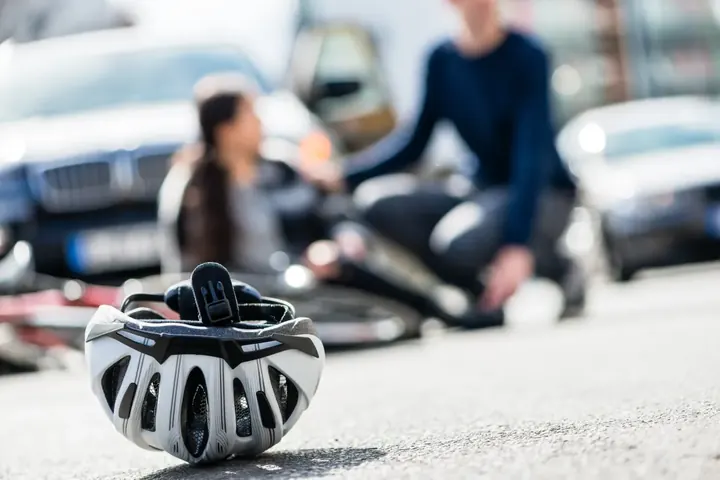
Florida is a no-fault state, and the first $10,000 of a cyclist's claim usually comes from an auto policy. Section 627.733 of the Florida Statutes requires every registered motor vehicle to carry personal injury protection, known as PIP. Section 627.736 says what it pays: 80% of medical expenses and 60% of lost gross income, up to a combined $10,000, plus a $5,000 death benefit.
PIP reaches people outside the car. The statute covers a person struck by a motor vehicle "while not an occupant of a self-propelled vehicle," and it fixes the order of insurers. If you own an insured car, your own policy pays. If you own no car but live with a relative who insures one, that relative's policy pays. If neither applies and you are a Florida resident, the insurer of the vehicle that hit you pays. In every case the injury must be caused by physical contact with the motor vehicle.
Two conditions cut the benefit short. You must receive initial medical care within 14 days of the crash. And unless a qualified provider finds that you had an emergency medical condition, medical reimbursement stops at $2,500.
What PIP leaves is the larger problem. Under section 324.022, a Florida driver registers a car with $10,000 of property damage liability and nothing else beyond PIP. Bodily injury liability is not on the list. Where the Financial Responsibility Law does require proof, section 324.021 sets it at $10,000 per person and $20,000 per crash.
Your bike and gear are paid from the driver's property damage limit, which may be only $10,000. PIP pays nothing for the bike.
A lawsuit against the driver is limited by section 627.737. You can claim the economic losses PIP does not pay. You can claim pain and suffering only if the injury is one of four kinds: significant and permanent loss of an important bodily function, a permanent injury within a reasonable degree of medical probability, significant and permanent scarring or disfigurement, or death.
Fault and How It Reduces a Claim
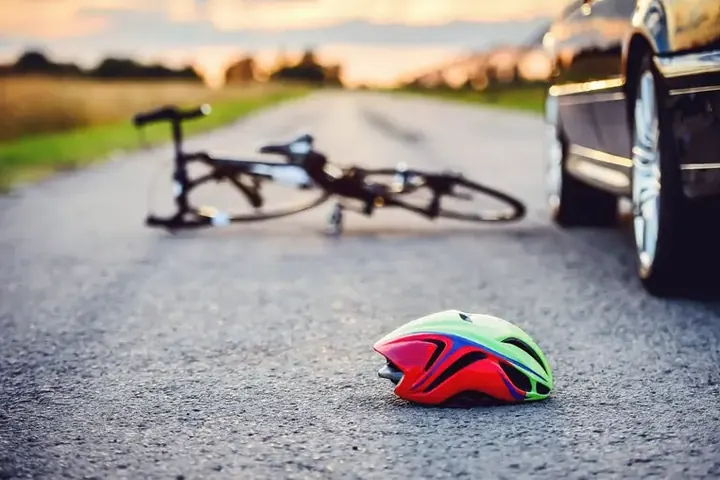
Florida changed its fault rule on March 24, 2023, the day the governor signed House Bill 837. Section 768.81 now sets a ceiling. Your share of the blame reduces your award by the same percentage, and a party found greater than 50% at fault for their own harm "may not recover any damages." A rider 50% at fault collects half. A rider 51% at fault collects nothing.
The act applies to causes of action filed after that date. PIP is separate: it pays regardless of fault, so a rider barred from suing still has the $10,000.
Section 768.81 also ended joint and several liability in negligence cases. Each defendant owes only its own percentage.
That makes the percentage the fight. Section 316.2065 gives a cyclist all the rights and all the duties of a driver, and an insurer will read it looking for a rule you broke:
- Lane position. A rider slower than traffic must use the bike lane or, without one, ride as close as practicable to the right-hand curb or edge. Exceptions cover passing, left turns, hazards, and a lane too narrow to share side by side.
- Lights. Between sunset and sunrise a bike needs a white front lamp visible from 500 feet and a red rear lamp and reflector visible from 600 feet.
- Stop signs. A full stop is required. Groups may then proceed 10 or fewer at a time.
Helmets are settled in the rider's favor. Under subsection (18) of the same section, failing to wear a bicycle helmet "may not be considered evidence of negligence or contributory negligence." The text is not limited to children.
Hit-and-Run and Uninsured Drivers

A Florida driver may carry no coverage for your injuries at all. Uninsured motorist coverage, on your own auto policy, is the insurance code's answer.
Section 627.727 requires every auto policy that includes bodily injury liability coverage to include uninsured motorist coverage too, unless the insured rejects it in writing on a form approved by the Office of Insurance Regulation. The limits match your bodily injury limits unless you chose lower ones in writing. The same coverage applies to an underinsured driver, one whose liability limits are less than your damages. A policy with only PIP and property damage liability carries none.
In Mullis v. State Farm (1971), the Florida Supreme Court said the named insured and resident relatives are covered when an uninsured motorist injures them "under whatever conditions, locations, or circumstances," including as pedestrians. The opinion does not name bicycles, so ask your insurer in writing.
Stacking is the default. Limits for two or more insured vehicles add together unless you accepted the non-stacking limitation on a signed form in exchange for a premium cut of at least 20%.
The statute contains no physical contact rule for a hit-and-run claim, and in Brown v. Progressive Mutual the Florida Supreme Court refused to enforce a policy clause demanding one. You still must prove that another vehicle caused the crash. PIP is stricter: for a cyclist it requires physical contact with the motor vehicle.
Uninsured motorist coverage pays for bodily injury only. When the driver is gone, a bike insurance policy's crash coverage is the only source for the bike. Check two things in a bike insurance policy: whether it offers uninsured motorist coverage of its own, and whether crash damage is covered no matter who hit you.
Dooring and Passing Laws
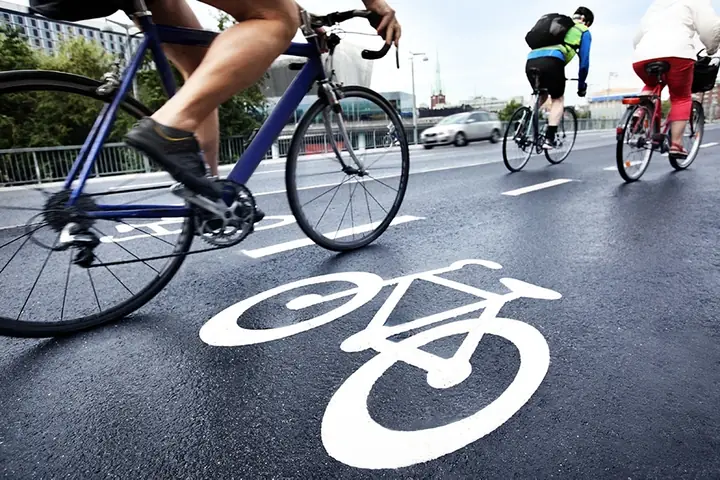
Section 316.2005 is Florida's dooring statute. No person may open any door on a motor vehicle until it is reasonably safe to do so and can be done without interfering with the movement of other traffic. Nor may anyone leave a door open on the side available to moving traffic longer than necessary to load or unload passengers.
Passing is governed by section 316.083, last amended in 2021. A driver overtaking a bicycle or an e-bike in the same travel lane must pass at a safe distance of not less than three feet. A driver who cannot give three feet must stay behind until it is possible. The three-foot rule also protects a rider in a painted bike lane. It does not apply beside a separated bike lane.
E-bikes
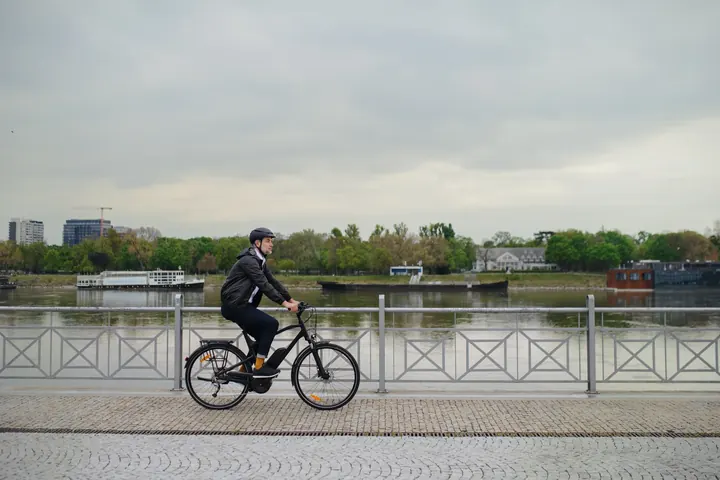
Section 316.003 defines an electric bicycle as a bicycle or tricycle with fully operable pedals, a seat, and an electric motor of less than 750 watts. Class 1 assists only while you pedal and stops at 20 mph. Class 2 can be propelled by the motor alone and stops assisting at 20 mph. Class 3 assists only while you pedal and stops at 28 mph.
Section 316.20655 gives an e-bike rider the rights and duties of a bicycle rider and exempts the bike from financial responsibility, driver license, registration, and title laws. Every e-bike must carry a permanent label showing its class, top assisted speed, and motor wattage.
Local rules now vary. Since July 1, 2025, chapter 2025-149 of the Laws of Florida lets a city or county set minimum ages for e-bike riders and require them to carry government-issued photo ID. A statewide micromobility bill, CS/SB 382, passed both chambers in 2026 and was vetoed on June 25, 2026, so the state rules above are unchanged.
Whether PIP pays an e-bike rider is an open question. The statute covers a person who is "not an occupant of a self-propelled vehicle," and the no-fault law does not define that phrase. No published Florida authority located for this guide says how the phrase applies to a motor-assisted bike. Get your auto insurer's position in writing. In a bike insurance policy, check that your e-bike's class and top assisted speed are covered.
Deadlines

Florida's shortest deadline is medical, not legal: 14 days to see a doctor. The lawsuit deadline most riders rely on was cut from four years to two in 2023.
- Immediately
Crash Notice to Police
Section 316.065 requires the driver in a crash with an injury or death to notify the local police, the county sheriff, or the Florida Highway Patrol by the quickest means. For property-only crashes the threshold rose to $2,000 on October 1, 2026.
- 14 days
First Medical Visit for PIP
PIP pays medical benefits only if you receive initial services and care within 14 days after the crash, under section 627.736.
- 30 days
PIP Payment Clock
PIP benefits are overdue if not paid within 30 days after the insurer receives written notice of a covered loss.
- Two years
Negligence or Wrongful Death Lawsuit
Section 95.11 gives you two years to file an action founded on negligence, and two years for wrongful death. The two-year period applies to causes of action accruing after March 24, 2023.
- Three years
Written Claim Against a Government Agency
Under section 768.28, you cannot sue the state, a county, a city, or another public agency until you have presented the claim in writing to the agency within three years after it accrues. Unless the defendant is a municipality or a county, the claim must also go to the Department of Financial Services. Damages are capped at $200,000 per person and $300,000 per incident.
Two longer numbers sit in the statutes: section 768.28 allows four years to sue a government body, and section 95.11 lists four years for "injuring personal property." Whether either outlasts the two-year negligence period in a bike crash case is a question for a Florida attorney. Treat two years as the deadline for everything, the bike included.
Evidence to Preserve
A Florida claim turns on three things: the 14-day PIP rule, proof of permanency, and the 50% fault line. Collect evidence with each in mind.
- The crash report number. An officer who investigates an injury crash completes a Florida Traffic Crash Report, Long Form, under section 316.066. Reports are confidential for 60 days but available immediately to the parties involved.
- The driver's plate and insurer, photographed. If no auto policy in your household covers you, that insurer is where your PIP claim goes.
- Proof of physical contact with the vehicle: paint transfer, damage to the bike, photos of the car, witness names. PIP for a cyclist depends on it.
- A dated record of your first medical visit, within 14 days, and any finding of an emergency medical condition.
- A physician's opinion on permanency. It decides whether you can claim pain and suffering under section 627.737.
- Every auto policy in your household, including any signed rejection or non-stacking form.
- Evidence of who was at fault: video, lane width, bike lane markings, your lights after dark, the position of an open door.
- The damaged bike, unrepaired, with receipts for the bike and gear.
Coverage for Florida Riders
Florida's gaps are specific. PIP pays 80% of medical bills and stops at $10,000. The driver who hit you may carry no bodily injury coverage. Pain and suffering is off the table without a permanent injury. And one percentage point past 50% of the fault ends the lawsuit. The Velosurance policy offers the coverages discussed above.
Uninsured Motorist covers losses beyond medical bills, such as lost wages, when the at-fault driver cannot pay. In a state where bodily injury liability is not required to register a car, that is a common outcome.
Medical Payments covers the deductible and out-of-pocket costs your health plan leaves, whatever the driver's insurance does. Choose a limit close to your plan's out-of-pocket deductible.
Liability answers the other side of the 50% rule. If you are blamed for a crash that injures a pedestrian or damages someone's property, it pays covered settlements or judgments and the cost of defending a covered lawsuit, with limits from $25,000 to $500,000.
Crash damage to the bike, the loss PIP ignores and a $10,000 property damage limit may not cover, is part of the policy itself. The bike is insured at stated value with no depreciation, subject to the deductible, whoever caused the crash. Class 1, Class 2, and Class 3 e-bikes are covered like conventional bikes.
For any of these coverages to apply, it must be on the policy before the crash. Get a quote and add them before your next ride.
Bicycle Accident Attorneys in Florida
Velosurance legal partners who represent injured cyclists in Florida.
-

-

Christopher Burns. Attorney - Cyclist - Advocate
233 E. Bay Street, 8th Floor
Jacksonville, FL 32202 -

-

-

Frequently Asked Questions
- Who pays medical bills for a cyclist hit by a car in Florida?
- Personal injury protection pays first, regardless of fault: 80% of medical bills and 60% of lost income, up to $10,000. Your own auto policy pays if you have one, then a household relative's, then the policy on the car that hit you if you are a Florida resident. One thing to watch: you must receive initial medical care within 14 days of the crash.
- How does fault affect a bicycle accident claim in Florida?
- You recover damages in Florida as long as your share of the fault is 50% or less, with the award reduced by your percentage. A rider 50% at fault collects half. The caveat worth knowing: a party found greater than 50% at fault recovers nothing, although PIP still pays regardless of fault.
- When can a Florida cyclist sue for pain and suffering?
- You can sue for pain and suffering when the injury is permanent within a reasonable degree of medical probability, causes significant and permanent loss of an important bodily function, or leaves significant and permanent scarring or disfigurement. Economic losses that PIP does not pay can be claimed against the driver in any case. One thing to watch: a physician's opinion on permanency is the evidence that opens that claim.
- How long do you have to file a bicycle accident lawsuit in Florida?
- You have two years to file a negligence lawsuit in Florida, and two years for wrongful death. One thing to watch: a claim against a government agency must first be presented in writing within three years, and the first medical visit for PIP is due within 14 days of the crash.
- How are Class 1, Class 2, and Class 3 e-bikes treated after a crash in Florida?
- Florida gives riders of Class 1, Class 2, and Class 3 e-bikes the rights and duties of bicycle riders. Class 1 is pedal assist to 20 mph, Class 2 can be propelled by the motor alone and stops assisting at 20 mph, and Class 3 is pedal assist to 28 mph, all with motors of less than 750 watts. The caveat worth knowing: whether PIP pays an e-bike rider is an open question, so get your auto insurer's position in writing.
Sources
- Florida Statutes section 768.81 (comparative fault; apportionment of damages)
- Chapter 2023-15, Laws of Florida (CS/CS/HB 837, civil remedies)
- Florida Statutes section 95.11 (limitation periods)
- Florida Statutes sections 627.732, 627.733, 627.736, 627.737 (Florida Motor Vehicle No-Fault Law: definitions, required security, PIP benefits, tort exemption)
- Florida Statutes section 627.727 (uninsured and underinsured motor vehicle coverage)
- Florida Statutes sections 324.021 and 324.022 (financial responsibility amounts; property damage liability)
- Florida Department of Highway Safety and Motor Vehicles, Florida Insurance Requirements
- Florida Statutes section 768.28 (claims against the state, its agencies, and subdivisions)
- Florida Statutes section 316.2065 (bicycle regulations, helmets)
- Florida Statutes section 316.083 (overtaking and passing a bicycle or electric bicycle)
- Florida Statutes section 316.2005 (opening and closing vehicle doors)
- Florida Statutes sections 316.003 and 316.20655 (electric bicycle definition and regulations)
- Chapter 2025-149, Laws of Florida (CS/CS/CS/SB 462, transportation; local e-bike ordinances)
- Florida Statutes sections 316.027, 316.065, 316.066 (leaving the scene, crash notice, crash reports)
- Chapter 2026-39, Laws of Florida (SB 488, transportation; crash notice threshold)
- Mullis v. State Farm Mutual Automobile Insurance Co., 252 So. 2d 229 (Fla. 1971)
- Brown v. Progressive Mutual Insurance Co., 249 So. 2d 429 (Fla. 1971)
- Florida Senate, CS/SB 382 (2026), Micromobility Devices, bill history (vetoed June 25, 2026)
- Florida Senate, SB 522 and HB 769 (2026), Motor Vehicle Insurance, bill histories (died March 13, 2026)
This guide is general information about Florida law as of the review date above. It is not legal or insurance advice, and it does not create an attorney-client relationship. Laws change and every crash turns on its own facts: talk to a licensed Florida attorney about your situation.