
TL;DR:
- California is a fault state with pure comparative negligence: your share of the blame cuts your recovery by that percentage and never bars it.
- Minimum auto liability limits are $30,000 per person, $60,000 per crash, and $15,000 for property on policies issued or renewed since January 1, 2025.
- You have two years to sue for injuries and three for bike damage, but only six months to file a claim against a city, county, or state agency.
- A hit-and-run uninsured motorist claim needs physical contact, a police report within 24 hours, and a sworn statement to the insurer within 30 days.
- Drivers must give three feet when passing and change lanes when one is available; opening a door into traffic violates Vehicle Code section 22517.
Who Pays After a Crash in California
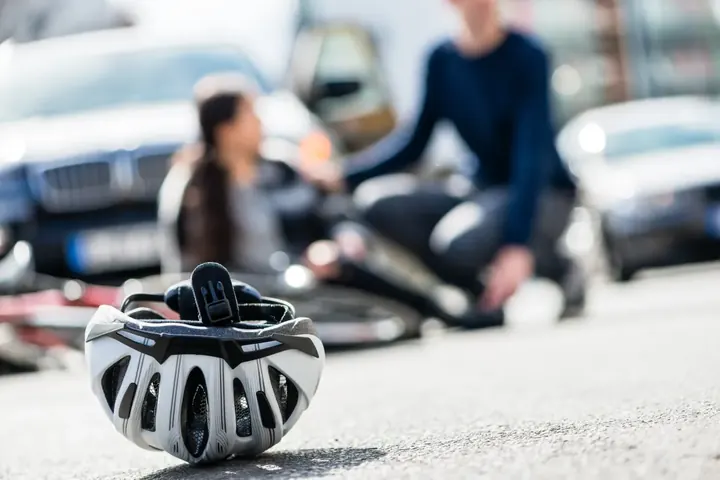
California is a fault state. The driver who caused the crash pays, through the liability insurance the Vehicle Code requires every motorist to carry. There is no personal injury protection here and no threshold to clear before you can bring a claim: any loss, from a cracked rim to a broken pelvis, can be claimed against the person responsible.
How much insurance stands behind that driver changed recently. For any auto policy issued or renewed on or after January 1, 2025, Vehicle Code section 16056 sets the minimums at $30,000 for one person's injuries, $60,000 for everyone hurt in the crash, and $15,000 for property damage. A second step is already written into the statute: $50,000, $100,000, and $25,000 for policies issued or renewed from January 1, 2035.
Run those numbers against a real injury. Shoulder surgery with rehab costs $15,000 to $40,000, so one operation can use up a minimum-limits policy before lost income or pain and suffering enter the claim.
Your bike and gear are paid from the driver's property damage limit. Your medical bills are paid from the bodily injury limit, usually in one settlement at the end of treatment and not as the bills arrive. Until then your health plan pays, and you carry its deductible and copays.
Medical payments coverage on a California auto policy is optional. The Department of Insurance describes it as coverage for people injured in the car, so whether yours follows you onto a bike depends on the policy wording. Ask your auto insurer in writing.
If you own no car and nobody in your household insures one, there is no auto policy of your own to fall back on. That leaves the driver's liability coverage, your health plan, and whatever you carry on the bike itself.
Fault and How It Reduces a Claim
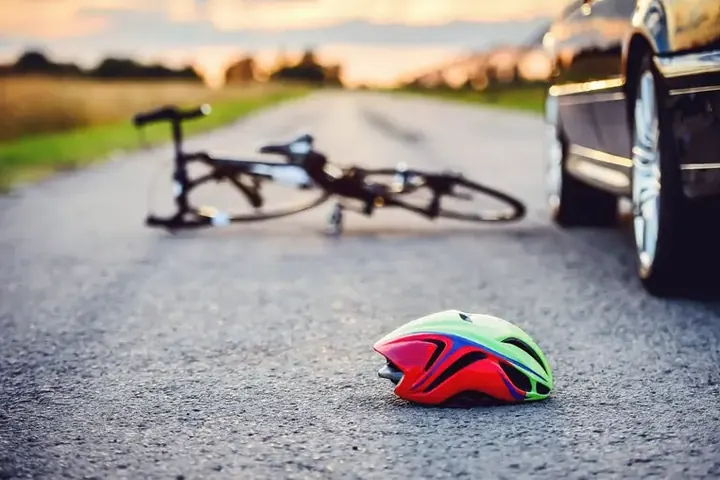
California uses pure comparative negligence, a rule the state Supreme Court adopted in Li v. Yellow Cab Co. in 1975. Your share of the blame reduces your recovery by the same percentage and never wipes it out. A rider found 30% at fault for a $100,000 loss collects $70,000. A rider found 80% at fault still collects $20,000.
So the percentage is the fight. Vehicle Code section 21200 gives a cyclist every right and every duty of a driver, and an insurer will read the rules of the road looking for one you broke. Under Evidence Code section 669, violating a safety statute creates a presumption of negligence when the violation caused the kind of harm the statute was written to prevent. The presumption can be rebutted, and it cuts both ways: it applies to the driver who passed too close exactly as it applies to you.
The usual candidates are specific:
- Lane position. Section 21202 requires a rider slower than traffic to keep as close as practicable to the right edge, with exceptions for passing, left turns, hazards, and lanes too narrow to share side by side.
- Stop signs. California has no stop-as-yield rule. Section 22450 requires a full stop from cyclists as well as drivers.
- Lights. Section 21201 requires a white front light visible from 300 feet at night and a rear red reflector or light. Since January 1, 2026, an e-bike must carry the rear reflector or light at all hours.
- Alcohol. Riding under the influence violates section 21200.5.
A second rule applies when more than one party shares the blame. Under Civil Code section 1431.2, each defendant owes only its own percentage of your non-economic damages, the pain and suffering part of a claim.
Helmets are an open question. Sections 21212 and 21213 say who must wear one and are silent on whether riding without one can be used to reduce an adult's damages.
Hit-and-Run and Uninsured Drivers
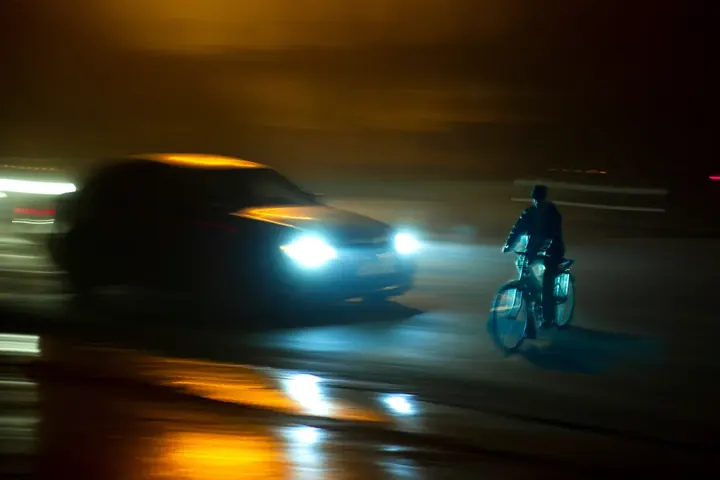
Insurance Code section 11580.2 requires every auto liability policy sold in California to include uninsured motorist coverage unless the named insured signed a written waiver. It covers the policyholder, a spouse, and relatives in the same household "while occupants of a motor vehicle or otherwise." Those last two words carry the coverage onto a bicycle. Check your declarations page to confirm it was never waived.
The coverage has hard edges. An insurer must offer it at your liability limits but is not required to offer more than $30,000 per person and $60,000 per crash. The underinsured half works as an offset: it pays the difference between your limit and what the at-fault driver's insurer paid. Carry $30,000 and get hit by a driver who also carries $30,000, and it pays nothing. Stacking is prohibited, so two cars on a policy do not double the limit.
A hit-and-run claim has three conditions written into the statute. The car must have made physical contact with you; a rider forced off the road by a car that never touched them does not meet the text. The crash must be reported within 24 hours to the city police, the county sheriff, or the local California Highway Patrol office. And a sworn statement must reach your insurer within 30 days.
Then a longer clock starts. Within two years of the crash you must sue the uninsured driver, settle with your own insurer, or demand arbitration in writing by certified mail.
None of this pays for the bike. Uninsured motorist coverage pays for bodily injury only, and the property damage version in section 11580.26 covers only the insured car, capped at $3,500. When the driver is gone or uninsured, a bike policy's crash coverage is what replaces the bike.
Two things to check in a bike insurance policy: whether it offers uninsured motorist coverage of its own, and whether crash damage is covered no matter who hit you.
Dooring and Passing Laws
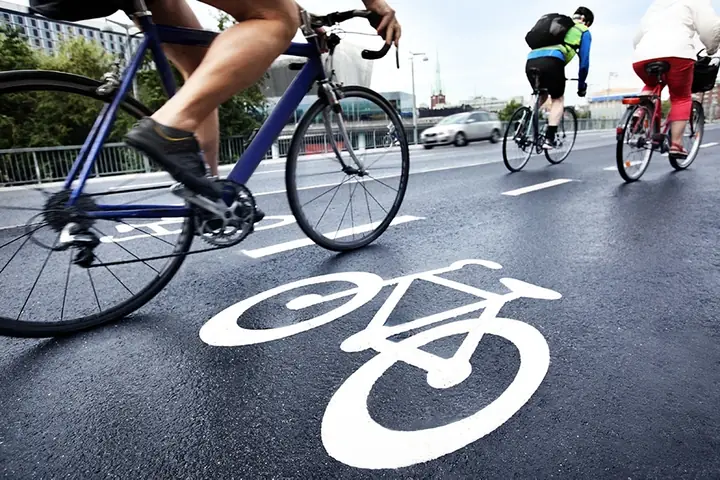
Vehicle Code section 22517 is the dooring statute, and it has not changed since 1963. No person may open a vehicle door on the side available to moving traffic unless it is reasonably safe and can be done without interfering with that traffic, or leave the door open longer than it takes to load or unload passengers. It says "person," not "driver," so a rideshare passenger who opens a door into a bike lane has violated it. A violation supports the negligence presumption in Evidence Code section 669.
Passing is governed by the Three Feet for Safety Act, section 21760. A driver overtaking a bicycle must leave at least three feet between any part of the vehicle and any part of the bike or rider. The current version adds a lane-change rule: when another lane in the same direction is available, the driver must move into it before passing if practicable. A driver who cannot give three feet must slow to a reasonable and prudent speed and pass only when it will not endanger you.
The fines are small: $35, or $220 when a collision injures the cyclist. The value of the statute is in the civil claim, where a close pass that ends in a crash is a violation you can point to by number.
Where a bike lane exists, section 21208 requires a rider slower than traffic to use it, with exceptions for passing, turning, and hazards. Sidewalk riding is left to local ordinance under section 21206, so the answer changes from city to city.
E-bikes
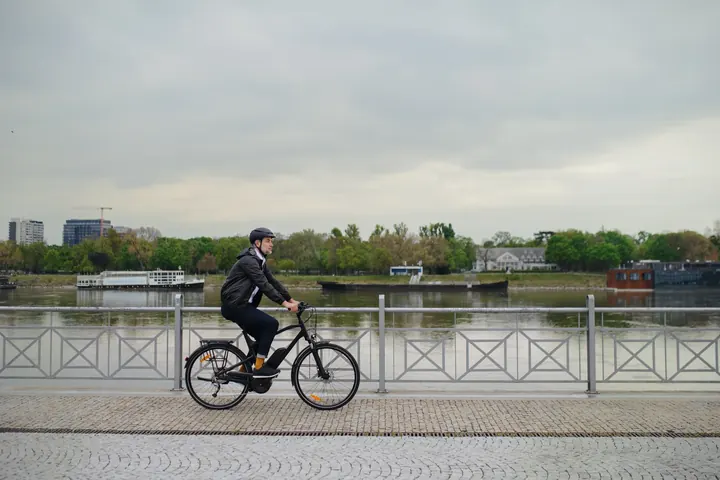
Vehicle Code section 312.5 defines an electric bicycle as a bike with fully operable pedals and a motor that does not exceed 750 watts. Class 1 assists only while you pedal and stops at 20 mph. Class 2 can run on a throttle and stops assisting at 20 mph. Class 3 is pedal assist to 28 mph, must have a speedometer, and is limited to riders 16 and older under section 21213, with a helmet for every rider regardless of age. Riders under 18 need a helmet on Class 1 and Class 2 under section 21212.
Section 24016 says an e-bike is not a motor vehicle. No license, no registration, no plates, no compulsory insurance. In a crash you are treated as a cyclist: the same fault rule, the same deadlines, the same claim against the driver.
The edge of the definition is where trouble starts. Under section 312.5, a machine is not an e-bike if it was built to be modified past 20 mph on motor power alone or past 750 watts, if it has been modified to do so, or if its pedals are gone. A vehicle outside the definition loses every exemption above.
Bills signed in September 2026, including SB 1167 and AB 2346, tighten what can be sold as an e-bike and set a 10 mph speed limit on sidewalks; they are expected to take effect January 1, 2027.
One question has no clear answer in published California authority: whether an auto policy's uninsured motorist or medical payments coverage follows you onto an e-bike. Get your auto insurer's position in writing before you rely on it. In a bike insurance policy, check that your e-bike's class is covered and that the motor has not been modified beyond it.
Deadlines

California's deadlines run from 24 hours to three years, and the short ones are the ones riders miss.
- 24 hours
Report a Hit-and-Run to Police
A hit-and-run must be reported to police, the sheriff, or the California Highway Patrol within 24 hours to keep an uninsured motorist claim alive under Insurance Code section 11580.2.
- 10 days
Driver's DMV Crash Report
The driver who hit you must file an SR-1 report with the DMV within 10 days of any crash involving an injury or more than $1,000 in property damage, under Vehicle Code section 16000.
- 30 days
Sworn Statement to Your Insurer
The sworn statement to your own insurer in a hit-and-run claim.
- Six months
Claim Against a Public Entity
If a public entity is involved (a city bus, a county truck, a road defect), Government Code section 911.2 requires a written claim within six months of the crash. The entity has 45 days to respond, and silence counts as rejection. From a mailed rejection you have six months to sue. Section 911.4 allows an application to file late, up to one year from the crash, but approval is not automatic.
- Two years
Injury or Wrongful Death Lawsuit
Code of Civil Procedure section 335.1 gives you two years to file an injury or wrongful death lawsuit. The same two years applies to suing, settling, or demanding arbitration on an uninsured motorist claim.
- Three years
Bike and Gear Damage Lawsuit
Section 338 gives you three years to sue for damage to the bike and gear. Small claims court hears disputes up to $12,500, which covers most bike-only losses.
For a child, the two-year clock does not start until age 18 under section 352. That pause does not apply to claims against public entities, where the six-month deadline runs regardless of age.
Evidence to Preserve
Evidence in a California bike crash maps onto the statutes above. Collect it with them in mind.
- The police report number, from the city department or the California Highway Patrol, and proof of the time you reported if the driver fled.
- The driver's license, plate, and insurance card, photographed.
- The scene: lane width, bike lane markings, the parked car's door position, signs, and sight lines. Lane width decides whether section 21202 required you to keep right.
- Your bike as it was: front light, rear reflector or light, and for an e-bike the class label and an unmodified motor. Do not repair or discard the bike until the claim is settled.
- Video from your own camera, nearby businesses, doorbells, and transit vehicles. Ask the same day; many systems overwrite within days.
- Medical records from the first visit onward, and every bill, including what your health plan paid and what you paid.
- Receipts for the bike, upgrades, helmet, and gear, which set the property damage claim.
- Proof of mailing for a government claim or an arbitration demand: certified mail receipts and dated copies.
Coverage for California Riders
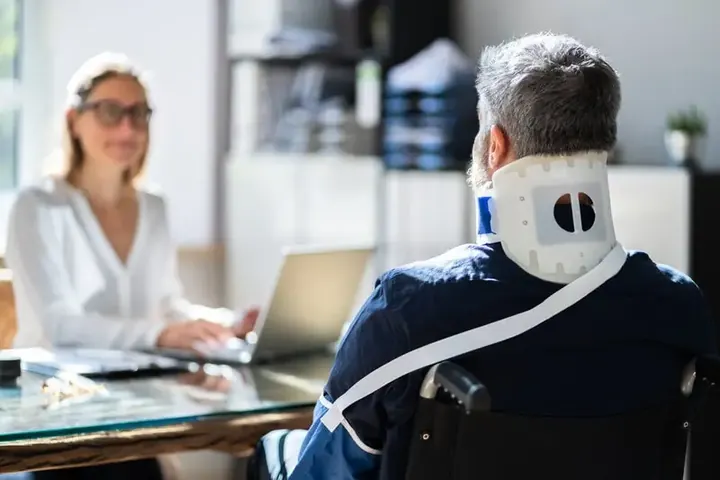
The gaps in this guide are predictable: a driver with $30,000 of coverage, a driver who is never found, a health plan deductible that comes due long before any settlement, and a bike that no auto coverage pays for. The Velosurance policy offers the coverages discussed above.
Uninsured Motorist covers losses beyond medical bills, such as lost wages, when the at-fault driver cannot pay.
Medical Payments covers the deductible and out-of-pocket costs your health plan leaves, whatever the driver's insurance does. Choose a limit close to your plan's out-of-pocket deductible.
Liability answers the other side of comparative fault. If you are blamed for a share of a crash, it covers injury to other people and damage to their property, including the cost of defending a covered lawsuit, with limits from $25,000 to $500,000.
Crash damage to the bike is part of the policy itself. The bike is insured at stated value with no depreciation, subject to the deductible, whoever caused the crash. Class 1, Class 2, and Class 3 e-bikes are covered like conventional bikes.
For any of these coverages to apply, it must be on the policy before the crash. Get a quote and add them before your next ride.
Bicycle Accident Attorneys in California
Velosurance legal partners who represent injured cyclists in California.
-

Josh Cohen - Los Angeles Bicycle Attorney
4929 Wilshire Blvd., Suite 410
Los Angeles, CA 90010 -

Daniel Rose - San Francisco Bicycle Accident Lawyer
One Sansome Street, Suite 3500
San Francisco, CA 94104 -

-

-

-

Steven M. Sweat, Personal Injury Lawyers, APC
11400 W. Olympic Blvd. Suite #218
Los Angeles, CA 90064 -

-

Frequently Asked Questions
- How does fault affect a bicycle accident claim in California?
- You can recover damages in California even when you share the blame, because the state uses pure comparative negligence. Your recovery drops by your percentage of fault: a rider 30% at fault for a $100,000 loss collects $70,000. One thing to watch: a traffic violation on your part creates a presumption of negligence that the insurer will use to raise that percentage.
- How long do you have to file a bicycle accident claim in California?
- You have two years from the crash to file an injury lawsuit and three years to sue for damage to your bike and gear. One thing to watch: when a city, county, or state agency is involved, a written government claim is due within six months of the crash.
- What does the at-fault driver's insurance pay after a bike crash in California?
- The at-fault driver's liability policy pays for your injuries from its bodily injury limit and for your bike and gear from its property damage limit. On policies issued or renewed since January 1, 2025, the minimums are $30,000 per person, $60,000 per crash, and $15,000 for property. The caveat worth knowing: one surgery can use up a minimum-limits policy.
- How does uninsured motorist coverage work for a California cyclist in a hit-and-run?
- Uninsured motorist coverage on a California auto policy pays for your injuries when the driver flees, provided the car made physical contact with you. Report the crash to police within 24 hours and send your insurer a sworn statement within 30 days. With one wrinkle: it pays for bodily injury only, so the bike needs separate crash coverage.
- How are Class 1, Class 2, and Class 3 e-bikes treated after a crash in California?
- California treats Class 1, Class 2, and Class 3 e-bikes as bicycles, so the same fault rule and filing deadlines apply. Class 1 is pedal assist to 20 mph, Class 2 adds a throttle and stops assisting at 20 mph, and Class 3 is pedal assist to 28 mph for riders 16 and older with a helmet. The caveat worth knowing: a bike modified past those limits is no longer an e-bike under the Vehicle Code.
Sources
- Li v. Yellow Cab Co. (1975) 13 Cal.3d 804 (pure comparative negligence)
- California Civil Code section 1431.2 (several liability for non-economic damages)
- California Evidence Code section 669 (presumption of negligence from a statutory violation)
- California Vehicle Code section 16056 (minimum liability limits)
- California Vehicle Code section 16000 (SR-1 crash report)
- California Vehicle Code sections 21200, 21200.5, 21201, 21202, 21206, 21208 (bicycle rights, duties, equipment, and lane rules)
- California Vehicle Code sections 21212 and 21213 (helmets, Class 3 age limit)
- California Vehicle Code section 21760 (Three Feet for Safety Act)
- California Vehicle Code section 22450 (stop signs)
- California Vehicle Code section 22517 (opening vehicle doors)
- California Vehicle Code sections 312.5 and 24016 (electric bicycles)
- California Insurance Code sections 11580.2 and 11580.26 (uninsured and underinsured motorist coverage)
- California Code of Civil Procedure sections 335.1, 338, 352, and 116.221 (filing deadlines, minors, small claims)
- California Government Code sections 911.2, 911.4, 912.4, and 945.6 (claims against public entities)
- California SB 1167 and AB 2346 (2026), Legislative Counsel's digests
- California Department of Insurance, Automobile Insurance guide
- California Department of Motor Vehicles, insurance requirements and accident reporting
This guide is general information about California law as of the review date above. It is not legal or insurance advice, and it does not create an attorney-client relationship. Laws change and every crash turns on its own facts: talk to a licensed California attorney about your situation.