
TL;DR:
- Arkansas is an at-fault state with a 50% bar: at 40% at fault you recover 60% of your loss, and at an even 50% you recover nothing.
- The policy on the car that hits you owes you up to $5,000 in no-fault medical benefits under section 23-89-204, unless the policyholder rejected the coverage in writing.
- Minimum auto liability limits are $25,000 per person, $50,000 per accident, and $25,000 for property, unchanged by the 2025 session.
- You have three years to sue for injuries or bike damage. Claims against the state go to the Arkansas State Claims Commission within the same period.
- Drivers must pass a bicycle with at least three feet of clearance, and section 27-51-1307 bans opening a door into traffic until it is reasonably safe.
Who Pays After a Crash in Arkansas
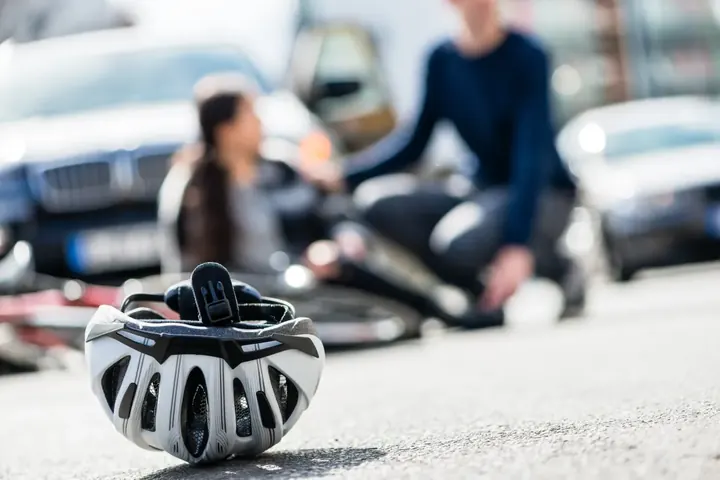
Arkansas is an at-fault state. Section 23-89-206 of the Arkansas Code says tort liability from the use of a motor vehicle "is retained," so the driver who caused the crash owes you for your losses and no injury threshold stands in the way. Section 27-22-104 requires that driver to carry at least $25,000 for one person's injuries, $50,000 for everyone hurt, and $25,000 for property damage.
What sets Arkansas apart is a package of no-fault benefits that reaches cyclists by name. Under section 23-89-202, every private passenger auto policy must include medical and hospital benefits of up to $5,000 per person for expenses incurred within 24 months, income benefits of 70% of lost income up to $140 a week for as long as 52 weeks, and a $5,000 accidental death benefit.
Section 23-89-204 says who collects: occupants of the insured vehicle and "persons struck by the insured vehicle, including pedestrians, bicyclists, motorcyclists." If a car hits you, the policy on that car owes you these benefits whether or not you own a car. Two limits apply. The policyholder may have rejected the coverages in writing, which section 23-89-203 allows. And if you hold the same coverages as a named or additional insured on another auto policy, you claim there instead.
A 2025 law trims the medical part of a claim against the driver. Act 28 of 2025 amended section 16-64-120: damages for past medical care include only the costs actually paid by you or on your behalf, or still unpaid and legally owed. It took effect August 5, 2025. If the hospital billed $30,000 and your health plan settled for $9,000, the claim is built on what was paid.
Fault and How It Reduces a Claim

Arkansas uses modified comparative fault, and the line sits at 50%. Under section 16-64-122, you recover only if your fault is "of a lesser degree" than the fault of the party or parties you are claiming against, and your damages are cut in proportion to your share. If your fault is equal to or greater than theirs, you recover nothing. A rider 40% at fault for a $100,000 loss collects $60,000. A rider 50% at fault collects zero.
Any breach of a legal duty counts as fault. Section 27-51-1802 gives a person on a bicycle the rights and duties of a driver, with changes the legislature wrote in for bikes. The rules most likely to be raised:
- Stop signs and red lights. Section 27-51-1803, added by Act 650 of 2019, lets a cyclist slow at a stop sign and proceed without stopping after yielding, stopping only to avoid an immediate hazard. At a steady red light you must stop completely and yield, then may proceed with caution. A rolling stop made that way is legal, so the argument shifts to whether you yielded.
- Lights. Section 27-36-220 requires a white front lamp and a red rear lamp, each visible from 500 feet, or a red reflector in place of the rear lamp.
One more rule shapes the math. Section 16-55-201 makes each defendant liable only for its own percentage of fault, so with two at-fault drivers you collect each share separately.
Helmets are an open question. Arkansas has no statewide helmet rule for conventional bicycles, and nothing in the bicycle or e-bike statutes says whether riding without one can be used against you.
Hit-and-Run and Uninsured Drivers

Section 23-89-403 requires every Arkansas auto liability policy to include uninsured motorist coverage for bodily injury, at no less than $25,000 per person and $50,000 per accident, unless a named insured rejected it in writing. Underinsured motorist coverage is a separate offer under section 23-89-209, sold only alongside uninsured motorist coverage and with the same floor.
The underinsured version is generous: the statute says it is not reduced by the at-fault driver's insurance, except to the extent you would be paid more than your damages. Against a driver carrying the $25,000 minimum, your own $25,000 sits on top.
Whether either coverage follows you onto a bicycle depends on the policy form: the statute protects "persons insured thereunder" and leaves that definition to the policy.
Hit-and-run is where riders get caught out. The statute does not mention unidentified drivers. In State Farm v. Henderson, decided in 2004, the Arkansas Supreme Court held that the claimant must prove the other vehicle was uninsured, and that a policy covering hit-and-run crashes only when there was physical contact does not violate public policy. A car that forces you off the road without touching you may leave you with no uninsured motorist claim. The policy also sets the reporting deadline, so read it the day of the crash.
For the bike itself, auto coverage is a dead end. Section 23-89-404 makes uninsured motorist property damage coverage optional, applies a $200 deductible, and defines property damage as damage to the insured vehicle plus loss of its use. A bicycle is not the insured vehicle.
Two things to check in a bike insurance policy: whether it offers uninsured motorist coverage of its own, and whether crash damage to the bike is covered no matter who hit you.
Dooring and Passing Laws

Section 27-51-1307 is the dooring rule. No person shall open the door of a motor vehicle on the side available to moving traffic "unless and until it is reasonably safe to do so," or leave a door open on that side longer than necessary to load or unload passengers. "No person" covers passengers as well as drivers.
Passing has a number. Section 27-51-311, enacted as Act 681 of 2007, requires a driver overtaking a bicycle to exercise due care, pass to the left at a safe distance of not less than three feet, and stay left until safely clear. The fine is up to $100, and up to $1,000 more when the violation causes a collision that kills or seriously injures the rider.
The fines are small. The value is in the fault math: a driver who clipped you while overtaking was closer than three feet, and with a 50% bar, a statutory violation on the driver's side is the strongest item your file can hold.
E-bikes

The Electric Bicycle Act, passed as Act 956 of 2017, sits at sections 27-51-1701 through 27-51-1706. An electric bicycle has fully operable pedals and a motor of less than 750 watts, and fits one of three classes. Class 1 assists only while you pedal and stops assisting at 20 mph. Class 2 has a motor that can propel the bike on its own and stops assisting at 20 mph. Class 3 assists only while you pedal and stops at 28 mph.
Section 27-51-1703 does three things for a crash claim. It gives an e-bike rider the rights and duties of a bicycle rider. It says an electric bicycle is not a motor vehicle. And it exempts e-bikes from the insurance, licensing, registration, and title provisions of Title 27. The same 50% bar and three-year deadline apply.
Class 3 carries extra rules under section 27-51-1706. No one under 16 may operate one, and anyone under 21 riding or carried on one must wear a helmet.
Photograph the label. Section 27-51-1704 requires a permanent label showing the class, top assisted speed, and motor wattage. A motor of 750 watts or more falls outside the definition.
One question has no clear answer in the Arkansas statutes: whether the no-fault benefits and uninsured motorist coverage on an auto policy apply to you on an e-bike. Section 23-89-204 names "bicyclists" and dates from 1973, long before the Electric Bicycle Act. Get your insurer's position in writing, and check that a bike insurance policy covers your e-bike's class.
Deadlines

Arkansas gives you three years to sue. Claims against government run on the same clock but through different doors, and with far less money behind them.
- At the scene
Notify Law Enforcement Immediately
Section 27-53-202 requires the driver of a vehicle in a crash with an injury, a death, or $3,000 or more in apparent property damage to notify the nearest law enforcement agency immediately. Act 815 of 2023 raised that figure from $1,000.
- 30 days
No-Fault Benefits Come Due
Under section 23-89-208, medical and income benefits are paid monthly and are overdue 30 days after the insurer receives reasonable proof. An insurer made to pay by lawsuit owes a 12% penalty and attorney's fees.
- Three years
Injury and Bike Damage Lawsuit
Section 16-56-105 sets three years for an injury claim and for a claim for injury to goods or chattels, which covers the bike. The Arkansas Supreme Court confirmed the three-year period for personal injury in Early v. Baker in 2013. A wrongful death action must be filed within three years of the death under section 16-62-102.
- Three years, different forum
Claim Against the State
The state cannot be sued in court for a crash. Section 25-44-204 sends claims barred by sovereign immunity to the Arkansas State Claims Commission, and section 25-44-209 requires filing within the period the law allows for the same type of lawsuit, which is three years for an injury. Under section 25-44-302 the commission will not hear a claim until you have exhausted all remedies against insurers, your own included.
Money is the real limit on government claims. Under section 25-44-215, the commission cannot pay an award above $15,000 on its own; anything larger is referred to the General Assembly for approval and an appropriation.
Cities, counties, and school districts are outside the commission's reach. Section 21-9-301 makes them immune from tort suits except to the extent they are covered by liability insurance. Section 21-9-303 requires them to insure their motor vehicles at the state minimums and gives you a direct action against the insurer, but caps liability at those minimums unless the entity bought more.
The statutes read for this guide contain no separate notice-of-claim deadline for either kind of claim. Confirm that with an Arkansas attorney.
Evidence to Preserve
With recovery cut off at an even split, evidence in Arkansas does one job above all: it keeps your share of fault under 50%.
- The crash report number and the investigating agency.
- The driver's name, address, and registration number, which section 27-53-103 requires the driver to give, plus the insurer's name. That policy is where your no-fault benefits come from.
- How you handled the intersection. Footage, a witness, or bike computer data showing you slowed at the stop sign or stopped at the red light, as section 27-51-1803 requires.
- Your lights or rear reflector, photographed on the bike.
- The point of impact on the bike and the car, your proof of a pass inside three feet.
- The e-bike label, and for a Class 3, proof of your age and helmet.
- Declarations pages for your own and any household auto policy, showing whether no-fault and uninsured motorist coverages were rejected.
- Paid medical bills and explanation-of-benefits statements. Under Act 28 of 2025, amounts actually paid or still owed are the medical claim.
- The damaged bike, unrepaired, with receipts.
Coverage for Arkansas Riders

Arkansas law leaves a rider exposed in four places: a driver carrying the $25,000 minimum, a driver who flees, a no-fault medical benefit that stops at $5,000 or was rejected in writing, and uninsured motorist property coverage that by statute pays only for the insured vehicle. The Velosurance policy offers the coverages discussed above.
Uninsured Motorist covers losses beyond medical bills, such as lost wages, when the at-fault driver cannot pay.
Medical Payments covers the deductible and out-of-pocket costs your health plan leaves, regardless of the driver's insurance. Choose a limit close to your plan's out-of-pocket deductible.
Liability is the coverage for the day the percentages run against you. If you are held responsible for a crash, it covers injury to other people and damage to their property, including the cost of defending a covered lawsuit, with limits from $25,000 to $500,000.
Crash damage to the bike is part of the policy itself: stated value with no depreciation, subject to the deductible, whoever was at fault. Class 1, Class 2, and Class 3 e-bikes are covered like conventional bikes.
For any of these coverages to apply, it must be on the policy before the crash. Get a quote before the next ride, not after it.
Frequently Asked Questions
- How does the 50% rule work in an Arkansas bicycle accident claim?
- You recover damages in Arkansas when your share of fault is smaller than the driver's, and the award is reduced by your percentage. A rider 40% at fault for a $100,000 loss collects $60,000. The caveat worth knowing: at an even 50% the recovery is zero, so the evidence that sets your percentage decides the claim.
- How long do you have to file a bicycle accident claim in Arkansas?
- You have three years to file suit in Arkansas for injuries and for damage to your bike. One thing to watch: a claim against the state goes to the Arkansas State Claims Commission within the same period, and only after you have exhausted remedies against insurers.
- Who pays a cyclist's first medical bills after being hit by a car in Arkansas?
- The policy on the car that struck you pays up to $5,000 in medical and hospital benefits without regard to fault, because Arkansas law extends those benefits to bicyclists struck by the insured vehicle. With one wrinkle: the policyholder may have rejected the coverage in writing, and if you hold the same coverage on another auto policy, you claim there.
- What makes a hit-and-run claim work for a cyclist in Arkansas?
- Uninsured motorist coverage on an Arkansas auto policy can pay when the driver flees, if the policy covers hit-and-run crashes and its conditions are met. One thing to watch: the Arkansas Supreme Court has upheld policies that require physical contact, so read that clause and the reporting deadline the day of the crash. Whether the coverage follows you onto a bicycle depends on the policy form.
- How are Class 1, Class 2, and Class 3 e-bikes treated after a crash in Arkansas?
- Arkansas gives riders of Class 1, Class 2, and Class 3 e-bikes the rights and duties of bicycle riders, so the same 50% rule and three-year deadline apply. Class 1 is pedal assist to 20 mph, Class 2 has a motor that can propel the bike on its own to 20 mph, and Class 3 is pedal assist to 28 mph, with a minimum operator age of 16 and helmets for anyone under 21. The caveat worth knowing: a motor of 750 watts or more puts the bike outside the definition.
Sources
- Arkansas Code section 16-64-122 (comparative fault)
- Act 354 of 2023 (amending section 16-64-122(a))
- Arkansas Code section 16-55-201 (several liability)
- Act 28 of 2025 (section 16-64-120(b), recovery of past medical expenses)
- Arkansas Attorney General Opinion No. 2025-032 (effective date of 2025 acts)
- Arkansas Code section 16-56-105 (actions with limitation of three years)
- Arkansas Code section 16-62-102 (wrongful death actions)
- Early v. Baker, 2013 Ark. 505 (three-year period for personal injury claims)
- Arkansas Code sections 23-89-202 through 23-89-208 (required first party coverage, rejection, persons struck by insured vehicle)
- Arkansas Code section 23-89-209 (underinsured motorist coverage)
- Arkansas Code sections 23-89-403 and 23-89-404 (uninsured motorist coverage, property damage)
- State Farm Mutual Automobile Insurance Co. v. Henderson, 356 Ark. 335, 150 S.W.3d 276 (2004) (physical contact requirement)
- Couch v. Farmers Insurance Co., 375 Ark. 255, 289 S.W.3d 909 (2008) (anti-stacking clauses)
- Act 345 of 2025 (sections 27-19-605 and 27-22-104, minimum liability limits unchanged)
- Arkansas Code section 27-22-104 (insurance required, minimum coverage)
- Act 681 of 2007 (section 27-51-311, overtaking a bicycle)
- Arkansas Code section 27-51-1307 (opening door on traffic side)
- Act 956 of 2017 (Electric Bicycle Act, sections 27-51-1701 through 27-51-1706)
- Act 650 of 2019 (sections 27-51-1801 through 27-51-1803, bicycles at stop signs and red lights)
- Arkansas Code section 27-36-220 (lamps on bicycles)
- Arkansas Code section 27-53-103 (duty to give information after an accident)
- Act 815 of 2023 (section 27-53-202, accident reporting threshold raised to $3,000)
- Arkansas Code sections 25-44-204, 25-44-209, 25-44-215, 25-44-302 (Arkansas State Claims Commission)
- Arkansas Code sections 21-9-301 and 21-9-303 (political subdivisions: immunity, motor vehicle insurance)
This guide is general information about Arkansas law as of the review date above. It is not legal or insurance advice, and it does not create an attorney-client relationship. Laws change and every crash turns on its own facts: talk to a licensed Arkansas attorney about your situation.