


Maryland cycling in numbers
52%
Bike ownership
450+
Miles of trails
75
State parks
78
Bike friendliness score
Maryland from a cyclist's perspective
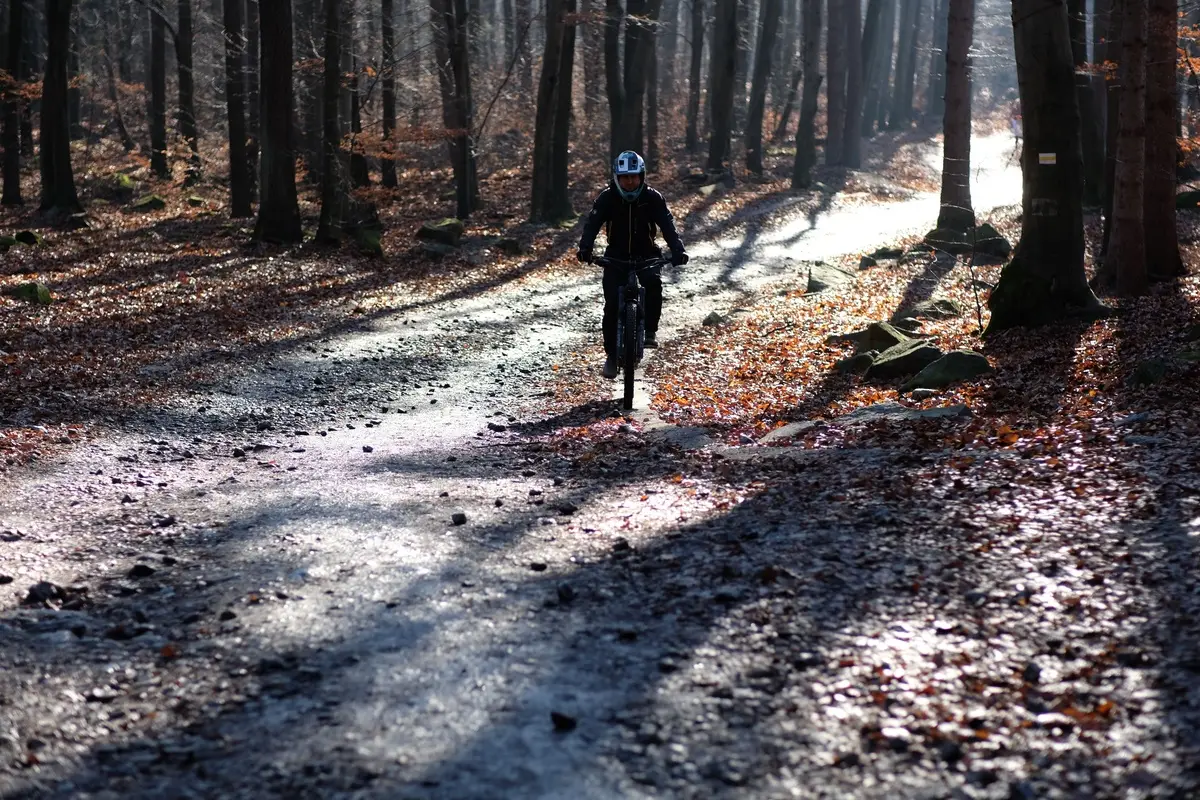
Maryland packs more riding variety into its borders than any state its size has a right to. In a two-hour drive you go from the dead-flat tidal farmland of the Eastern Shore to the 3,000-foot ridges of Western Maryland, with the Chesapeake Bay splitting the middle and shaping nearly everything around it. You can chase pancake-flat century miles past soybean fields in the morning and grind a real mountain climb the same afternoon. The state earns its reputation here: the League of American Bicyclists ranked Maryland the 9th most bicycle-friendly state in the country in 2024, and with roughly 450 miles of rail-trails plus more than 60 state parks, the network backs up the ranking.
The crown jewel is the towpath. The C&O Canal Towpath runs 184.5 crushed-limestone miles from Georgetown in DC up to Cumberland, hugging the Potomac the whole way, flat enough that the only real enemy is mud after rain. At Cumberland it links to the Great Allegheny Passage, and together the C&O and the GAP form an unbroken 335-mile car-free corridor from Washington, DC all the way to Pittsburgh. Ride it on a gravel bike or a loaded tourer; either way it is one of the great multi-day rides in the eastern US, and you can do the whole thing without crossing a single highway.
For road and gravel, the Eastern Shore is the quiet secret. The roads around Talbot, Dorchester, and Caroline counties are flat, lightly trafficked, and stitched together by ferry crossings and tidal creeks, made for long, low-stress endurance miles. When you want elevation, point west to Frederick County. The climbs up Catoctin Mountain and South Mountain are legitimate, the gravel network through the Frederick Watershed is dense, and the rolling roads around Sugarloaf are a regional classic. This is where Maryland stops being flat and starts making you earn it.
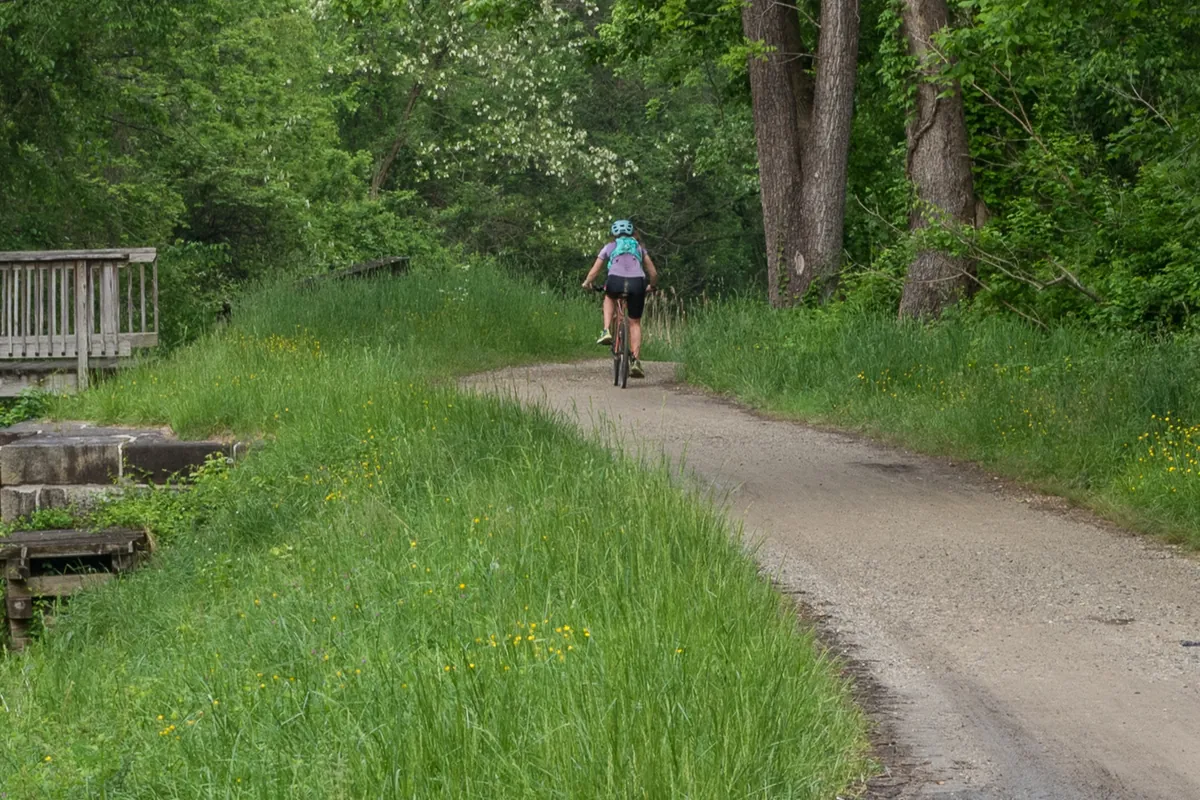 The mountain biking scene is deeper than outsiders expect. Patapsco Valley State Park, just outside Baltimore, is the hub: miles of rooty, technical singletrack spread across multiple areas along the river. The Frederick Watershed delivers rugged, rocky riding for people who like it raw. Closer to DC, Schaeffer Farm and the Seneca Creek system offer flowy, well-built trails maintained by MORE, and Rosaryville State Park's loop is the go-to for fast, repeatable laps. Patapsco alone justifies a bike with real suspension.
City riding is where Maryland gets honest about its caveats. Baltimore has built out the Gwynns Falls Trail and the Jones Falls Trail, giving you protected corridors through the city, though its PeopleForBikes score still sits in the low 30s and traffic on the connecting streets demands attention. Down south, the Capital Crescent Trail and the rest of the DC-area trail web make car-free commuting genuinely workable. The real adversary most of the year is the weather: Mid-Atlantic summers are brutally humid, heat indices push past 95, and afternoon thunderstorms roll in fast. Ride early, carry more water than you think you need, and respect the heat.
Maryland E-bike Laws
Three classes, a 750-watt cap, and a short list of rules. Here is where Maryland stands on e-bikes and where you can ride one.
Maryland adopted the three-class e-bike framework on October 1, 2019. A compliant e-bike — pedals, a motor of 750 watts or less, and a class label — is treated as a bicycle: no license, no registration, no insurance, and you ride it where bikes already go.
The motor assists only while you pedal and cuts off at 20 mph; legal for all ages.
The motor assists whether or not you pedal but stops propelling past 20 mph; legal for all ages.
Assist while pedaling up to 28 mph, no throttle; no one under 16 may operate one on a public highway.
A compliant e-bike is not a motor vehicle under Md. Code, Transp. 11-117.1, so no license is needed to ride one.
Electric bicycles are exempt from titling and registration; no plate, no MVA visit.
Maryland mandates no liability coverage for any e-bike class, so protecting the bike and yourself is on you.
No one under 16 may operate a Class 3 on a public highway, though they may ride as a passenger on a Class 3 built for it (Transp. 21-1205.2); no age floor for Class 1 or Class 2.
Riders and passengers under 16 wear a helmet on any bicycle or e-bike (Transp. 21-1207.1); there is no all-ages e-bike helmet mandate.
Where You Can Ride
- Roads & bike lanesAll three classes may operate where bicycles travel, including bike lanes (Transp. 21-1205.2).
- Bicycle pathsClass 1 and Class 2 are allowed unless a local authority or State agency bars them; Class 3 is barred unless the path runs within or adjacent to a highway right-of-way or the local authority allows it.
- SidewalksThe e-bike statute does not restrict sidewalks; local ordinances govern, so check the jurisdiction before riding on one.
- State parksDNR bars e-bikes on state-park trails today, with one exception: Class 1 is allowed on the Torrey C. Brown and Western Maryland rail trails.
- Out-of-class e-motosOver 750 watts or no class label means it falls outside the e-bike definition and into Maryland moped or motor-vehicle rules.
Effective October 1, 2019 under Maryland HB 939. Statutes: Md. Code, Transp. 11-117.1, 21-1205.2, 21-1207.1. Cities and park districts can add their own path and trail restrictions — check signage where you ride. Last reviewed June 2026.
Maryland Cycling Weather
Maryland rides nearly year-round, with mild spring and fall the prime seasons and summer demanding an early start to beat the Mid-Atlantic humidity and heat.
Sunny days a year
Riding season
Mar - Nov
Maryland Cycling Destinations
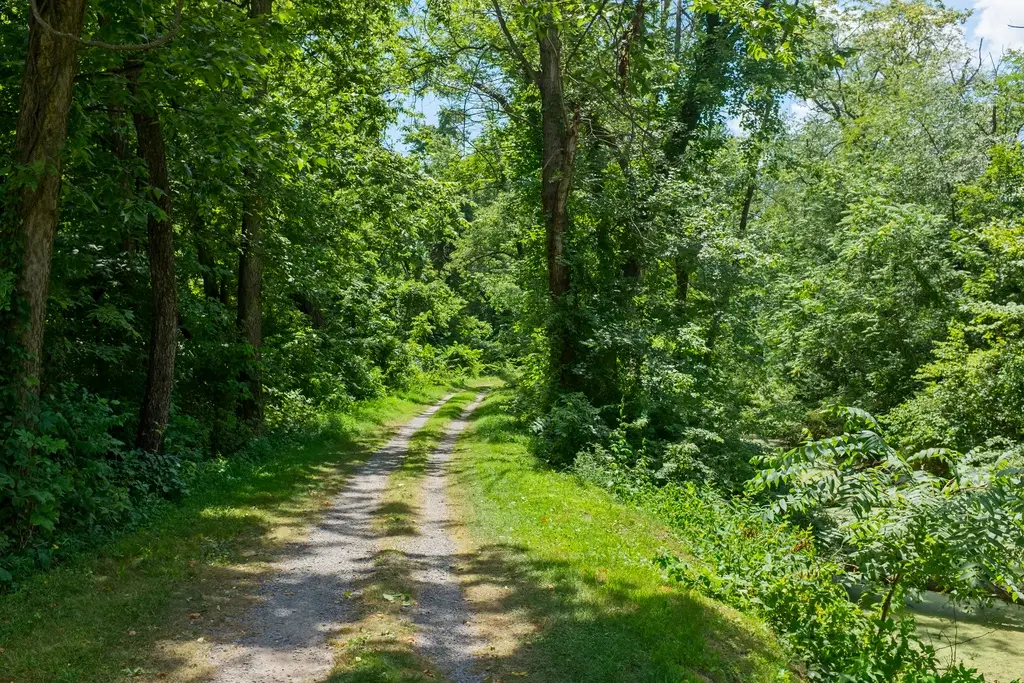
C&O Canal Towpath
The C&O Canal Towpath is the closest thing Maryland has to a flat highway through history. Run the 60 miles from Cumberland to Hancock and you climb barely 600 feet, dropping eight feet at a time through century-old locks rather than grinding up any real hill. The surface is packed dirt and crushed stone shaded by a tunnel of trees, with the Potomac on one side and the old canal prism on the other. You will want fat tires, because washboard, roots, and mud after rain are the real terrain here, not gradient. The Paw Paw Tunnel, a 3,118-foot brick passage you walk your bike through in pitch dark, is the one stretch that stops everyone cold. Most riders take two unhurried days, camping at the free hiker-biker sites strung along the river. Bring lights, bring water, and respect that cell service vanishes for long stretches.
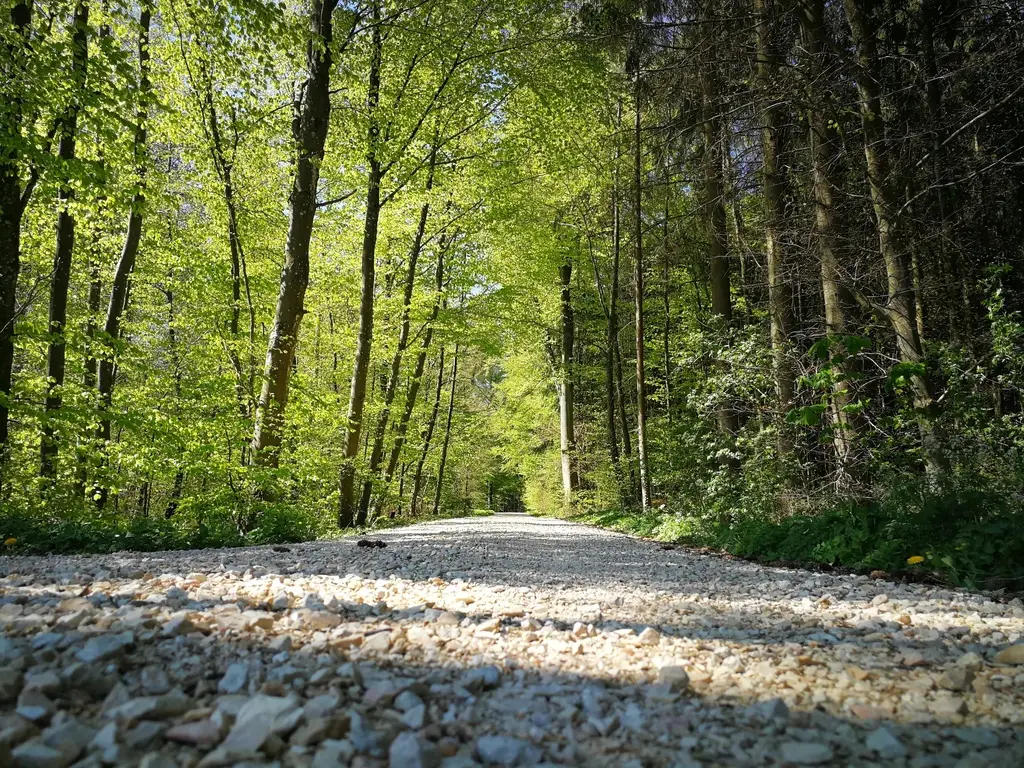
Great Allegheny Passage: Cumberland to Frostburg
This is the climb the C&O never gives you. Leaving Cumberland on the Great Allegheny Passage, you point the bike uphill and stay there, gaining about 1,400 feet over 15.5 miles to Frostburg at a steady railroad grade that never exceeds 1.75 percent. It feels easy and relentless at once: no wall to crack you, just a long, patient pull on smooth crushed limestone that the old railroad engineers never let get too steep. The Western Maryland Scenic Railroad runs alongside, so you may race a steam train through the Cumberland Narrows and over the Brush Tunnel. At Frostburg the reward is the depot, a meal, and a regrade descent that lets you coast nearly the whole way back. This is the steepest sustained stretch of the entire GAP, which tells you how forgiving the rest of it is. Skinny road tires struggle here, so bring something with grip.
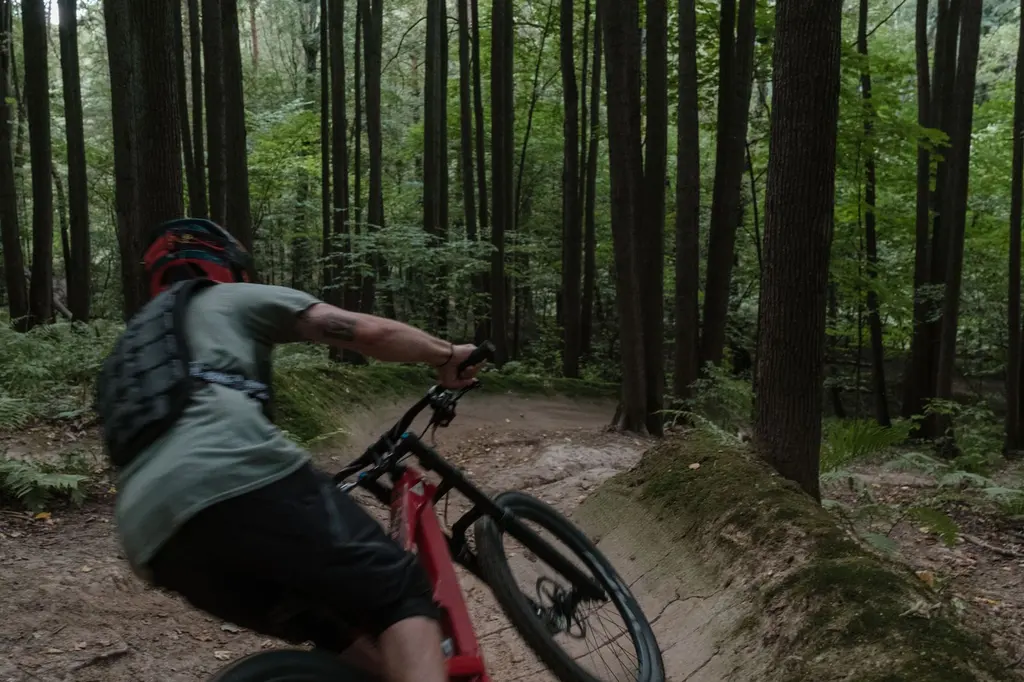
Tour de Patapsco: Full Pull
The Tour de Patapsco is Maryland mountain biking at its most punishing and its most rewarding. The full pull links Avalon to McKeldin across 61 miles and roughly 5,400 feet of climbing, and 90 percent of it is singletrack: steep punchy climbs, fast descents, gnarly rock gardens, a river crossing, and the odd stretch of hike-a-bike. Grades hit 23 percent in places, so this is a ride for fit, experienced hands, not a casual afternoon. The payoff is the Patapsco gorge itself, hardwood ridgelines dropping to the river, old mill ruins, and trail built and maintained by riders who clearly love it. You don't have to swallow the whole thing in one day; the Grist Mill and Trolley Line loop gives you 15 friendly miles of the same valley. But the Full Pull is the bucket-list line. Carry tools, food, and water, because help is a long way out on the far loops.
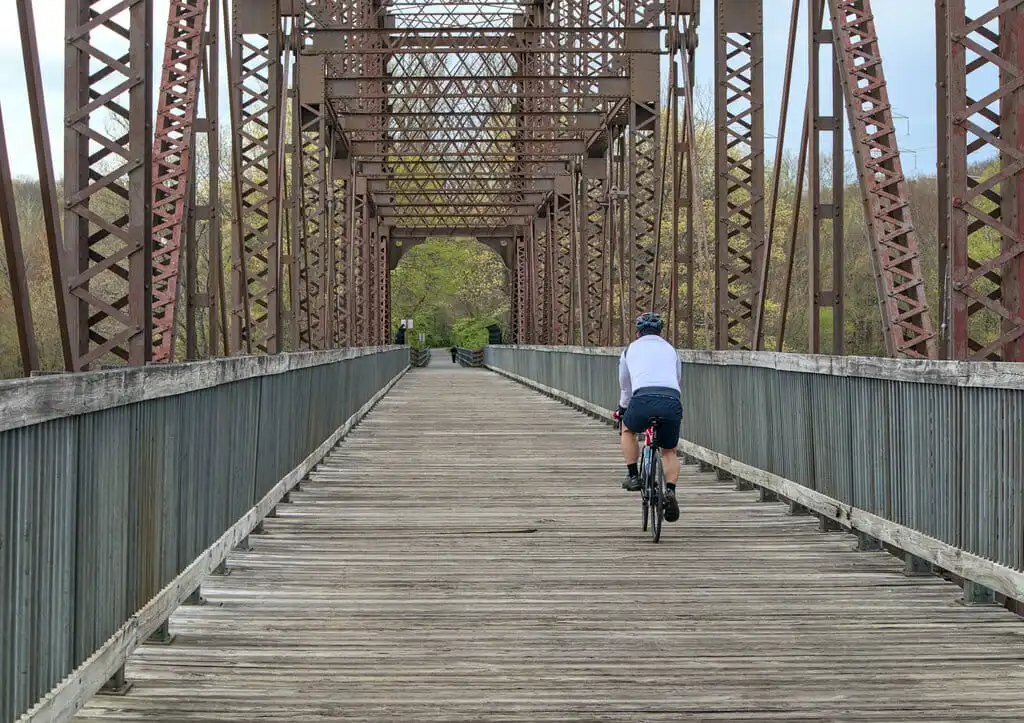
Western Maryland Rail Trail
The Western Maryland Rail Trail is what you ride when you want speed without suffering. Smooth asphalt runs nearly 28 miles through the state's narrow panhandle, from Little Orleans to Big Pool, with so little elevation change you barely notice it. Centrally placed Hancock has the busiest trailhead and a parking lot right in the business district, so most people start there and ride out and back. The trail threads a remote, wooded river valley deep in the Appalachians, passing old canal-town history and running parallel to the gravel C&O for much of its length. That pairing is the trick: ride the paved rail trail one direction and the towpath back for a loop on two completely different surfaces. Road bikes, hybrids, and e-bikes all feel at home on the pavement here, and it is one of only two Maryland state trails where Class 1 e-bikes are welcome. Bring a sense of pace, because the flat, straight miles make it easy to go faster than you planned.
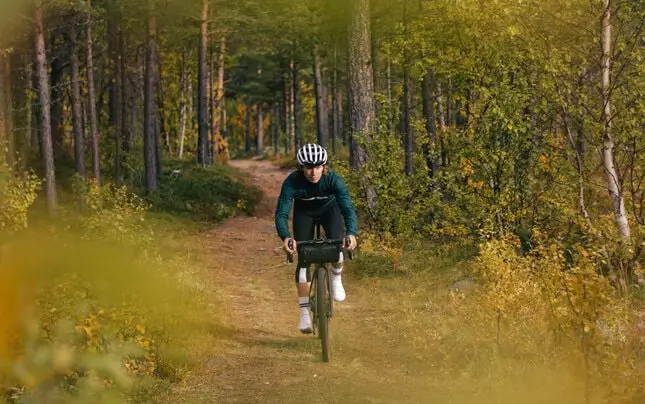
Frederick City Watershed Loop
The Frederick City Watershed is where Maryland gravel turns genuinely rough. The classic loop covers about 29 miles with 1,800 feet of climbing, mixing quiet asphalt approaches with unpaved forest roads full of ruts, rocks, and loose stone. This is not buffed gravel-grinder terrain; the Watershed is famous for chunky, technical surfaces that chew up skinny tires and reward a stout gravel rig or a hardtail. The climbing comes in honest blocks up the Catoctin ridgeline, paid back with descents that demand you actually watch your line. Forest cover keeps most of it shaded and the traffic light, which is the whole appeal: a big mountain day a few minutes from downtown Frederick. Reception is patchy and the rock is unforgiving, so carry a spare, a plug kit, and more water than you think you need. Go after a dry spell, because rain turns the ruts into traps.
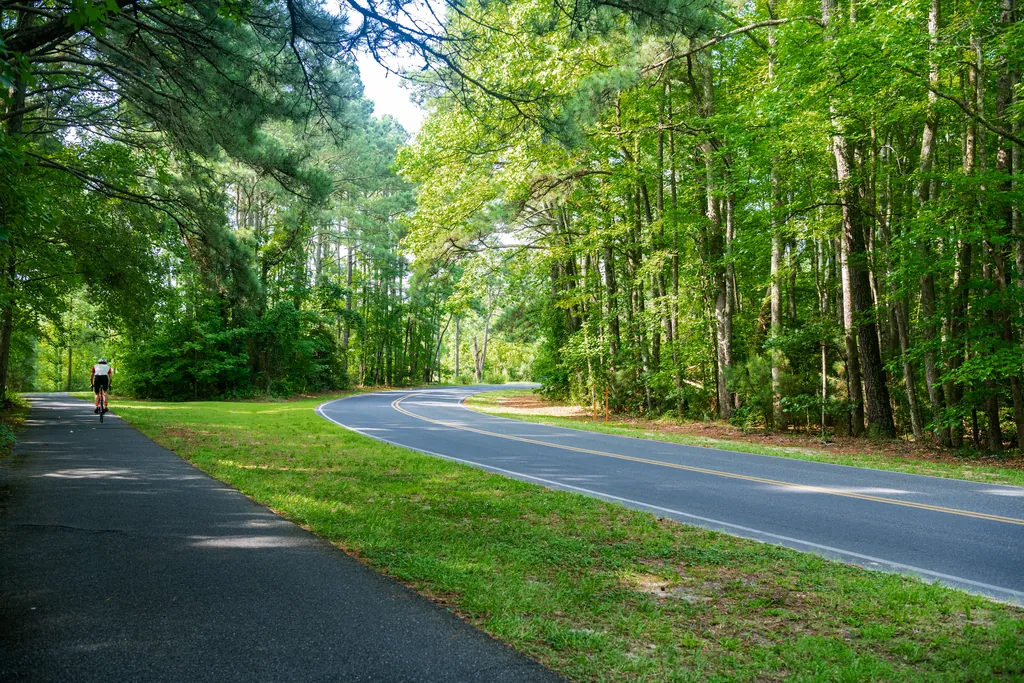
Assateague Island Bike Path
Assateague is the flattest, strangest, most family-friendly ride in this list, and the only one where you might share the path with wild horses. The paved bike path runs about nine miles round trip from the visitor center on Route 611 in Berlin, across the bridge over Sinepuxent Bay, and onto the barrier island itself. Total elevation gain is roughly 50 feet, essentially all of it the gentle hump of the bridge, so anyone on any bike can do this. The reward is salt marsh, dune grass, ocean on one side and bay on the other, and the famous feral ponies grazing close enough to test your nerve. There is almost no shade and the wind off the Atlantic can flip from helper to headwind, so sunscreen and water matter more than fitness here. Enter on foot or by bike and you skip the entrance fee. Keep your distance from the horses; they bite and kick, and the rangers mean it.
Maryland Cycling Events
From the flat Sea Gull Century on the Eastern Shore to the climbing Civil War Century near Gettysburg, Maryland's calendar runs from friendly first centuries to genuine mountain days.
Sea Gull Century
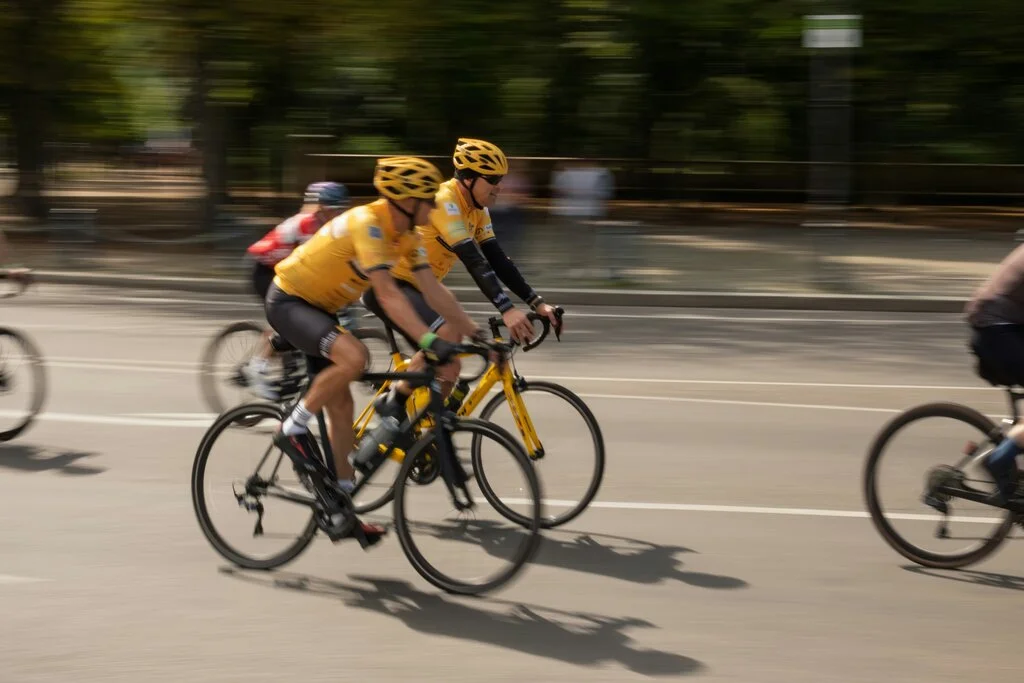
The Sea Gull Century is the Eastern Shore's marquee ride, a flat, fast century that draws thousands of cyclists to Salisbury University every fall. Three routes fan out across Maryland's tidewater country: a 100-mile century, a 63-mile metric, and a 40-mile option for riders easing into distance. The terrain is famously forgiving, so first-time century riders often pick this one to break the triple-digit barrier. The reward at the end is Assateague's coastal scenery and a well-stocked finish line. Proceeds benefit Salisbury University students through the SU Foundation, and registration fills up, so sign up early.
Event website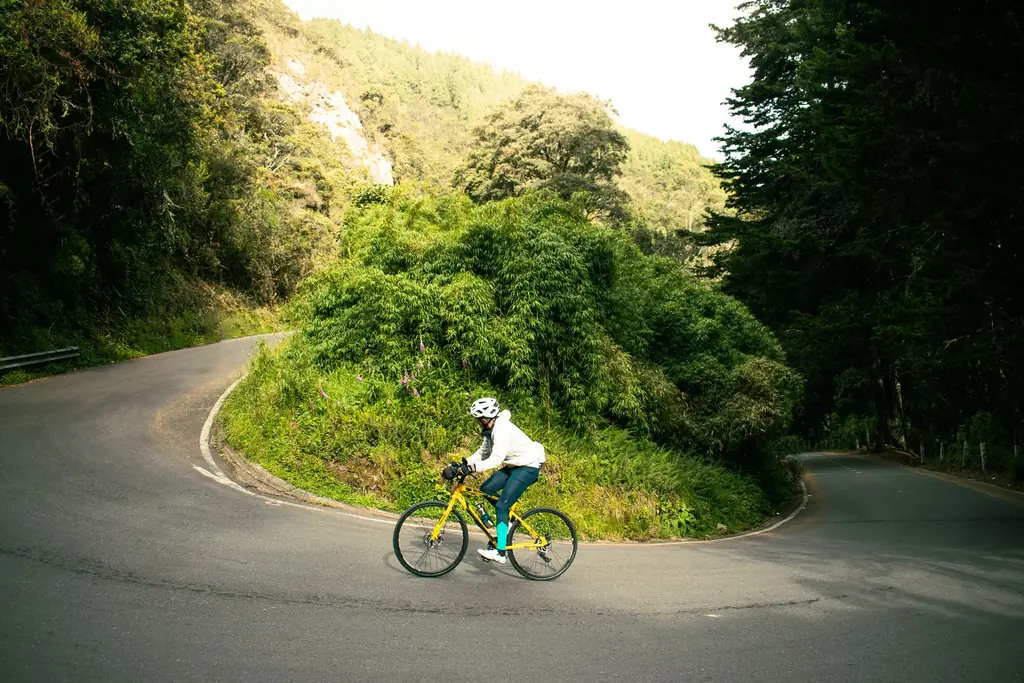
Civil War Century
The Civil War Century is a hill-climber's day out, tracing the battlefields and covered bridges between Thurmont, Maryland and Gettysburg. The full century packs roughly 7,000 feet of climbing into 103 miles, which puts it firmly in the well-trained-cyclist category. Five routes span the range, from a gentle 25-mile Covered Bridge Quarter Century up to the main event, so families and hammerheads share the same start. History rides alongside you the whole way, past South Mountain and into Pennsylvania farm country. The field caps at 1,600 riders and regularly sells out, so register early.
Event website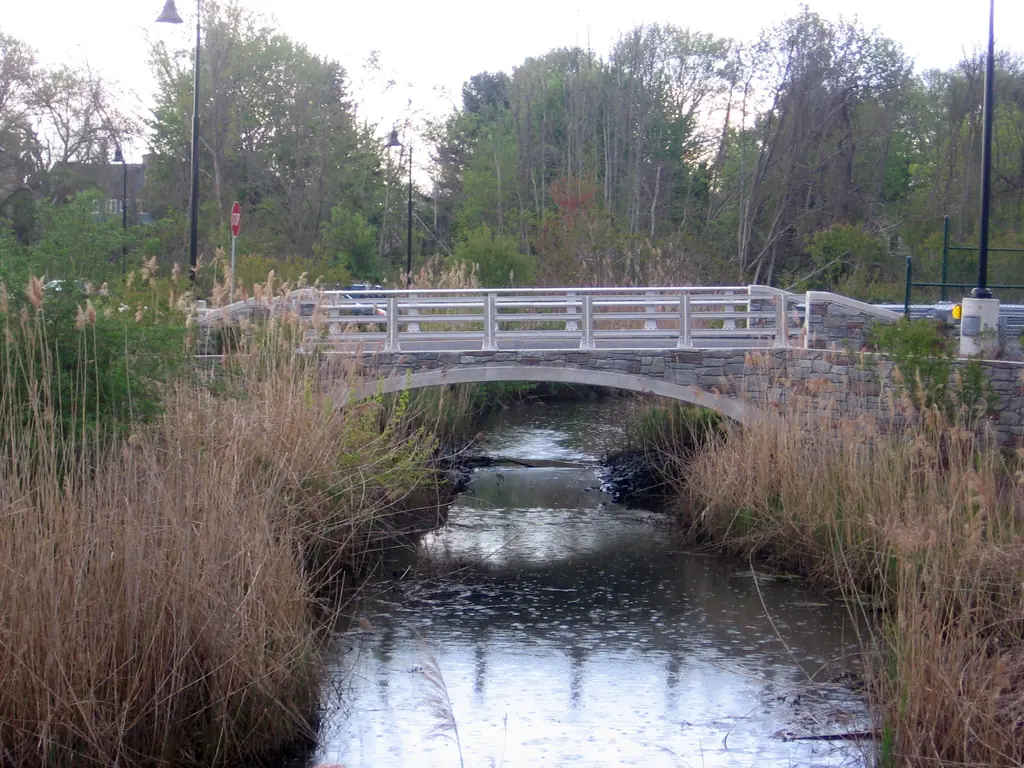
Six Pillars Century
The Six Pillars Century runs flat and fast through Dorchester County, starting at Gerry Boyle Park on the shore of the Choptank River. The 100-mile course threads through Blackwater National Wildlife Refuge and the quiet marsh country of Maryland's Eastern Shore, with 56-mile and 37-mile options for shorter days. The 56-mile route follows the famous Eagleman 70.3 triathlon bike course, so this is a chance to ride a race circuit at your own pace. Pancake-flat roads and an 8-hour cutoff make it a friendly first century. The ride supports local youth programs, and the century rolls out at 7 a.m.
Event website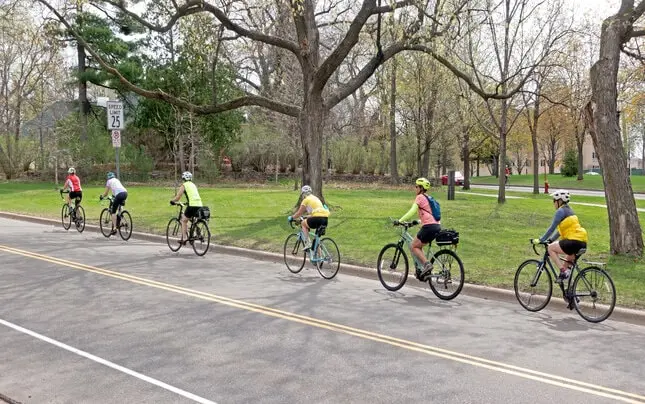
Bike MS: Chesapeake Challenge
The Chesapeake Challenge is the National MS Society's two-day charity ride out of the Talbot County Community Center in Easton, and it is one of the Eastern Shore's largest fundraising rides. Flat, well-supported routes wind through the historic tidewater towns around the Chesapeake, with distances scaling from a 27-mile spin to a full 102-mile weekend for the strong. Riders raise money to fund multiple sclerosis research and rider services, with a fundraising minimum to enter. Rest stops, sag support, and a finish-line celebration make it as much a community weekend as a bike ride, and both days start and end together in Easton. It is a good pick if you want your miles to carry a cause.
Event website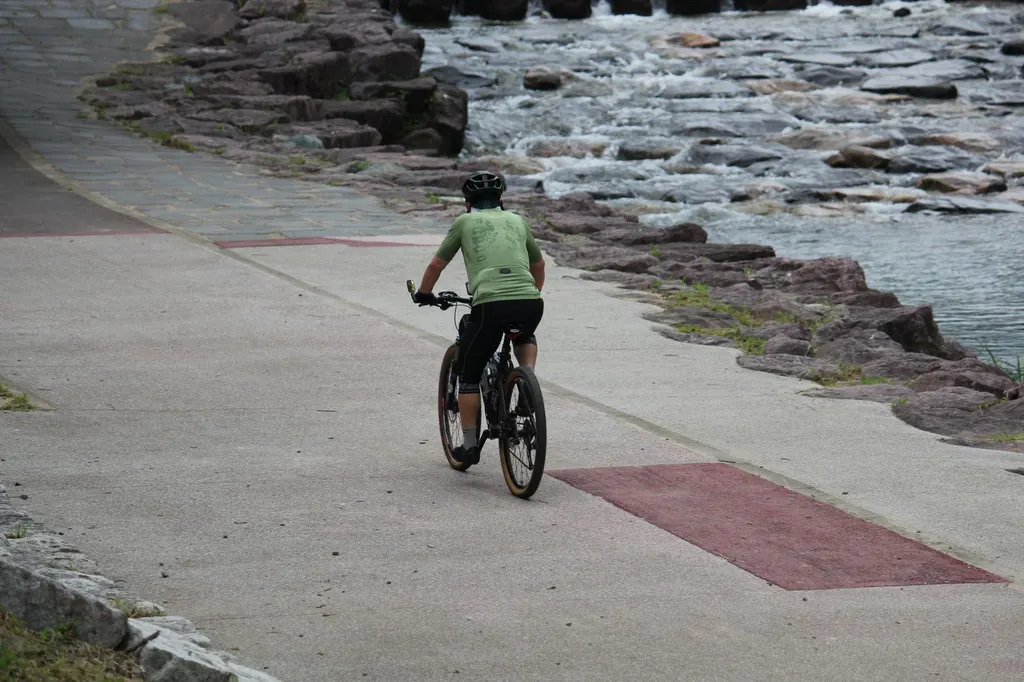
Tour du Port
Tour du Port is Bike Maryland's celebration of Baltimore on two wheels, rolling out of Canton Waterfront Park for a tour of the city's neighborhoods, parks, and harbor landmarks. Four routes of 14, 31, 36, and 50 miles keep it approachable, including an urban adventure route that strings together miles of singletrack inside city limits. This is less a suffer-fest and more a moving portrait of Baltimore's watershed and historic districts. The finish is a genuine party, with food trucks, music, canoe rides, and local beer at the waterfront. Proceeds support Bike Maryland's statewide advocacy for safer cycling.
Event website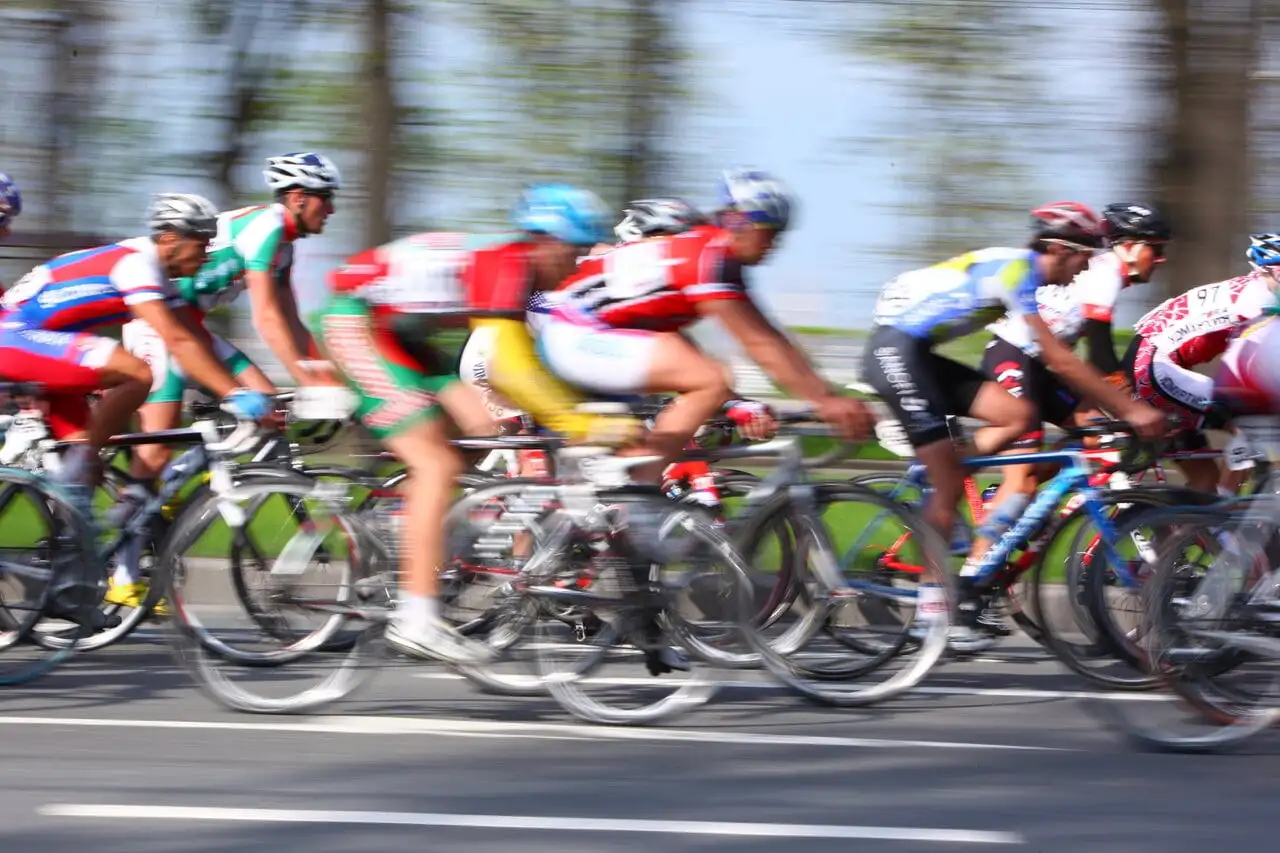
Tour de Frederick
Tour de Frederick is a charity ride through the rolling farm country north of Frederick, starting and finishing at the Walkersville Fire Hall. Four routes span the day: a 100-mile century, a 62-mile metric, a 31-mile club ride, and a family-friendly 10-miler. The roads climb and roll through Piedmont countryside, so the century earns its miles without ever getting brutal. Every registration feeds two local causes, the Rotary Club of Carroll Creek and the Boys and Girls Club of Frederick County. It is a well-run event that balances a real cycling challenge with a genuine community feel.
Event websiteMaryland E-bike Law and Insurance FAQ
- What are the e-bike laws in Maryland?
- Maryland adopted the three-class framework with Maryland HB 939, effective October 1, 2019. A compliant e-bike carries pedals, a motor of 750 watts or less, and a class label, and it rides as a bicycle: no license, no registration, no insurance. Riders under 16 wear a helmet on any bicycle or e-bike, and no one under 16 may operate a Class 3 on a public highway.
- Do Class 1, Class 2, and Class 3 e-bikes need insurance in Maryland?
- Insurance is optional for every class in Maryland. Class 1 assists only while you pedal and cuts off at 20 mph, Class 2 assists whether or not you pedal but stops at 20 mph, and Class 3 assists while pedaling up to 28 mph with no throttle. The state mandates no liability coverage for any of them, so protecting the bike and yourself is on you. A standalone Velosurance policy starts around $9 per month.
- What does bicycle and e-bike insurance cover in Maryland?
- A standalone Velosurance policy covers theft, accidental and crash damage, and damage in transit, with optional liability and medical payments coverage. Maryland requires no insurance for any e-bike class, which means the state leaves your bike and your liability exposure entirely to you. Policies start around $9 per month.
- Which Maryland state park trails allow e-bikes?
- Class 1, the pedal-assist e-bike that cuts off at 20 mph, is welcome on two DNR rail trails: the Torrey C. Brown Rail Trail and the Western Maryland Rail Trail. Beyond those, DNR bars e-bikes on state-park trails today. Outside the parks the picture is friendlier: e-bikes operate where bicycles travel, including bike lanes, under Md. Code, Transp. 21-1205.2.
Maryland e-bike laws explained: classes, age limits, and what changes next.
Keep Riding: Nearby States
Cross a border and the trails, the weather, and the e-bike laws all change. See how Maryland's neighbors compare.



Why Velosurance is best for your bicycle
Not all types of insurance are created equal. Velosurance levels the playing field by offering stand-alone bicycle coverage, where claims won’t affect your homeowner's or renter’s policy premiums.
| Policy Coverage |  | Homeowner/Renters Policy |
|---|---|---|
| Insured at Full Value | Yes | Possibly |
| Crash Damage | Yes | No |
| Theft Coverage | Yes | Limited |
| Theft by Force | Yes | No |
| Theft of Accessories | Yes | Limited |
| Theft Away From Home | Yes | Possibly |
| Uninsured Motorist | Yes | No |
| Personal Liability | Yes | Possibly |
| Permissive Use Policy | Yes | No |
| Replacement Rental | Yes | No |
| Event Fee Return | Yes | No |
| Cycling Apparel Coverage | Yes | No |
| Medical Payments | Yes | Possibly |
| Racing Coverage | Yes | No |
| E-bikes | Yes | No |
| Coverage in-transit | Yes | No |
| USAC, USAT and IMBA Member Discount | Yes | No |
| FREE INSTANT QUOTE |
Not all insurance policies provide the same level of protection, and many people only discover gaps in their coverage after filing a claim. We’ve done the hard work of reviewing the fine print. To see how plans compare, check out our insurance comparison.
Client satisfaction is our #1 goal. Here's what our clients say about Velosurance


Velosurance really stepped up and put me at ease. The claim was fast and easy. I am insuring all my bikes now.

Check out Velosurance reviews to see what people are saying about us.
Maryland's best bicycle and e-bike insurance
No matter where your adventures take you, protect your bicycle and yourself from the unexpected with America's best bike insurance.