


Hawaii cycling in numbers
50%
Bike ownership
200+
Miles of trails
50
State parks
51
Bike friendliness score
Hawaii from a cyclist's perspective
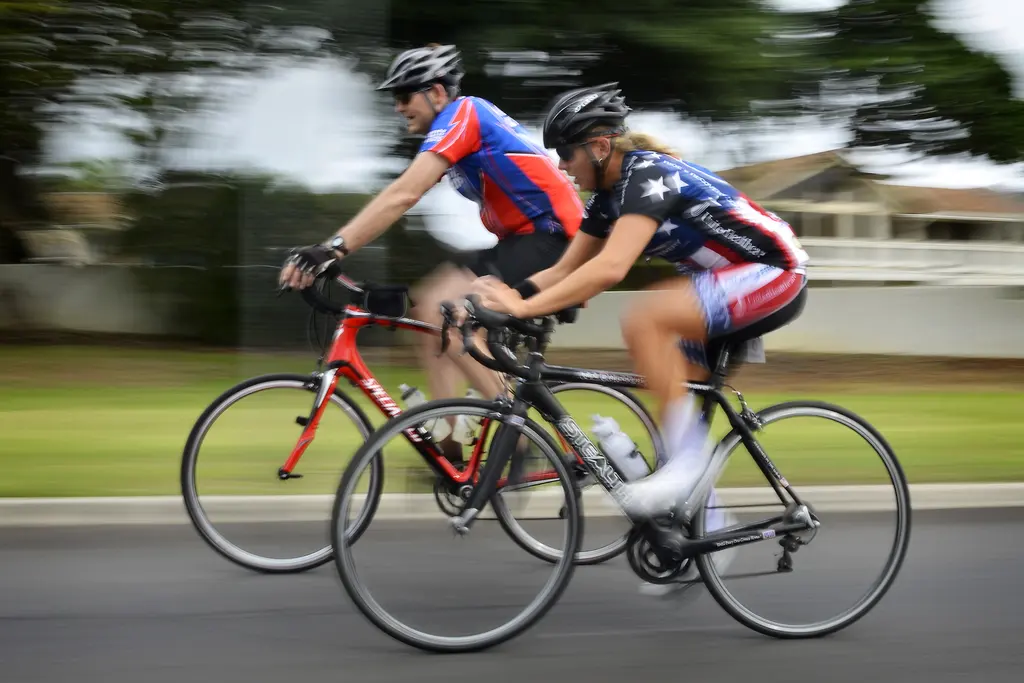
Measured in square miles, Hawaii is one of the smallest states. Measured in vertical feet, it may be the biggest riding destination in America: the road up Haleakala gains 10,000 feet in 36 unbroken miles, the longest continuous paved climb in the world, and it starts at a beach. Each island rides differently, the season never closes, and the coolest month in Honolulu still averages 73°F.
Maui belongs to the climbers. From Paia, Baldwin Avenue rolls up through the paniolo town of Makawao before Haleakala Highway takes over for another 27 miles of switchbacks at a steady 5 to 6 percent, crossing from tropical lowland into alpine desert above the clouds. The Big Island answers with scale of its own: the Queen Kaahumanu Highway carries the Ironman World Championship's 112-mile bike course through black lava fields on a wide, smooth shoulder, and Mana Road circles Mauna Kea for 45 dirt miles across Parker Ranch cattle country between 5,000 and 7,000 feet.
Oahu carries most of the state's riders and nearly all of its racing. The Tantalus and Round Top loop climbs 1,700 feet into rainforest ten minutes from Waikiki, the Ka Iwi coastline gives road riders their postcard miles, and Maunawili's black-diamond singletrack contours beneath the fluted cliffs of the Koolau Range. The Hawaii Bicycling League's Honolulu Century Ride has filled Kapiolani Park every September for four decades, and the Dick Evans Memorial still races the full 112-mile loop around the island that became the bike leg of the first Ironman in 1978.
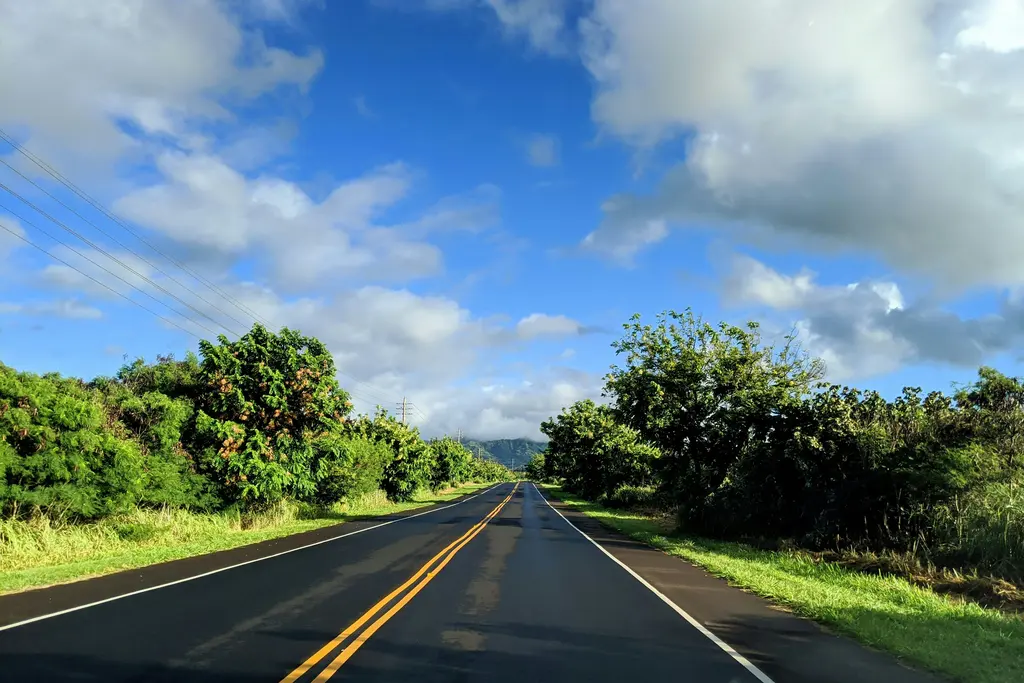 Kauai compresses the whole proposition into one east-shore path. Ke Ala Hele Makalae, "the path that goes by the coast," runs roughly 8 car-free paved miles through Kapaa, with humpback whales offshore in winter and monk seals hauled out on the sand below; the Rails-to-Trails Conservancy inducted it into its Hall of Fame in 2024. When the legs want more, Kokee Road climbs nearly 4,000 feet from sea level at Kekaha to the rim of Waimea Canyon, the course of the island's lone sanctioned road race.
The honest caveats: Hawaii ranked 25th in the League of American Bicyclists' 2024 state rankings, and you feel why on the arterials. Shoulders come and go, Honolulu traffic is dense, and the same trade winds that cool a climb can gust to 40 mph across the Kohala lava desert. Bike theft is a real problem in Waikiki, and every e-bike in the state carries a one-time $30 county registration. Plan around all of it and you get what no mainland state offers: a 12-month season where the biggest climb in American cycling ends above the clouds.
Hawaii E-bike Laws
One $30 registration, no license, no insurance. And this month, Hawaii HB2021 brings the three-class system to the islands. Here is where things stand.
Hawaii is the one state where every e-bike must be registered: a one-time $30 fee paid to the county director of finance, and that is nearly the whole rulebook today. No license, no insurance, no classes. The class era arrives this month: Hawaii HB2021, passed April 30, 2026, adopts the full three-class framework statewide no later than July 15, 2026.
The motor assists only while pedaling and cuts off at 20 mph; Hawaii HB2021 sets no minimum age for Class 1.
Throttle or pedal assist up to 20 mph; under Hawaii HB2021 riders under 16 need a supervising parent or guardian.
Assist while pedaling up to 28 mph with a required speedometer; under Hawaii HB2021 riders under 16 need supervision.
No driver license, permit, or ID is required to ride an e-bike anywhere in Hawaii, and Hawaii HB2021 keeps it that way.
Every e-bike carries a permanent $30 registration paid to the county director of finance (HRS 249-14); Hawaii HB2021 adds citation or impoundment for riding unregistered.
Hawaii mandates no coverage for any e-bike, and Hawaii HB2021 writes the exemption directly into statute.
No one under 15 may operate an e-bike (HRS 291C-143.5); Hawaii HB2021 resets the line at 16 for Class 2 and Class 3 unless a parent or guardian supervises, with no floor for Class 1.
Riders under 16 must wear one on any bicycle, e-bike included (HRS 291C-150); Hawaii HB2021 raises the rule to under 18.
Where You Can Ride
- Roads & bike lanesE-bikes ride wherever bicycles ride, and bike lanes are open to them (HRS 291C-123); Hawaii HB2021 expels mopeds and electric motorcycles from bike lanes and paths.
- Shared-use pathsOpen to e-bikes statewide as bicycles; counties may layer on their own restrictions, so watch posted rules.
- SidewalksHRS 291C-145 bans motorized bicycles from sidewalks today; Hawaii HB2021 relaxes that to 10 mph outside business districts, matching Honolulu's 2025 ordinance.
- State parks & trailsLand managers decide trail by trail, and Na Ala Hele natural-surface trails commonly exclude e-bikes — check hawaiitrails.ehawaii.gov before you ride.
- Out-of-class e-motosOver 750 watts and capable of more than 28 mph is a high-speed electric device under Hawaii HB2021, banned from every public roadway, path, and sidewalk. Honolulu banned them in February 2025.
The three-class era arrives
Hawaii HB2021 passed the Legislature April 30, 2026, and was left off the governor's veto list, so it becomes law no later than July 15, 2026, effective on approval. It adopts the Class 1, Class 2, and Class 3 definitions statewide, raises the helmet age to under 18, requires adult supervision for under-16 riders on Class 2 and Class 3, legalizes sidewalk riding at 10 mph outside business districts, and orders permanent class labels on new e-bikes within 120 days.
Effective July 1, 2019 under Hawaii Act 208 (HB812). Statutes: HRS 249-1, 249-14(b), 291C-1, 291C-123, 291C-143.5, 291C-145, 291C-150; 15 U.S.C. 2085; 2026 Hawaii HB2021 (Act No. pending). Cities and park districts can add their own path and trail restrictions — check signage where you ride. Last reviewed July 2026.
Hawaii Cycling Weather
Hawaii's riding season is all twelve months: Honolulu's coolest month averages 73°F, rain arrives as short passing showers, and the trade winds matter more than any forecast.
Sunny days a year
Riding season
Jan - Dec
Hawaii Cycling Destinations
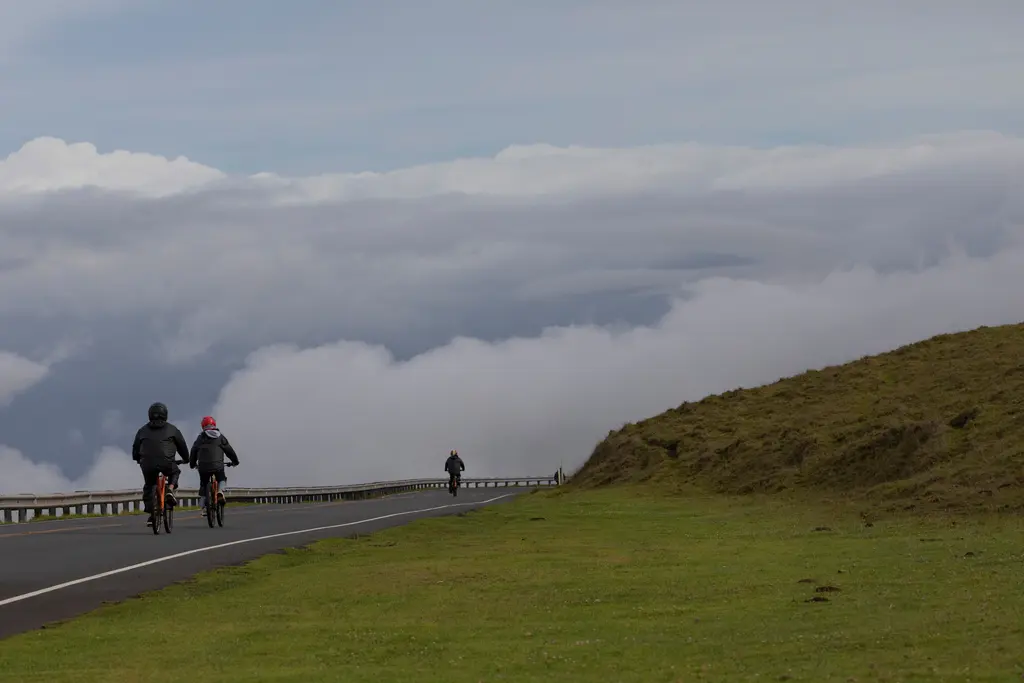
Haleakala Highway Sea-to-Summit Climb
Haleakala is the climb every cyclist should ride once: 36 unbroken paved miles from sea level at Paia to the 10,023-foot summit of the volcano, the longest continuous paved climb in the world. The grade is honest rather than cruel, holding 5 to 6 percent nearly the whole way, with the steepest 9 percent pitch saved for the final push to the crater rim. The route rolls up Baldwin Avenue through Makawao, then joins Haleakala Highway's endless switchbacks past the national park entrance at 7,000 feet, where the $15 entry fee is card-only. Riders cross from tropical lowland into eucalyptus, open pasture, and finally alpine desert above a sea of clouds. Budget about five hours up and ninety minutes back down, and carry layers: summit temperatures run 30 degrees colder than the beach where you started.
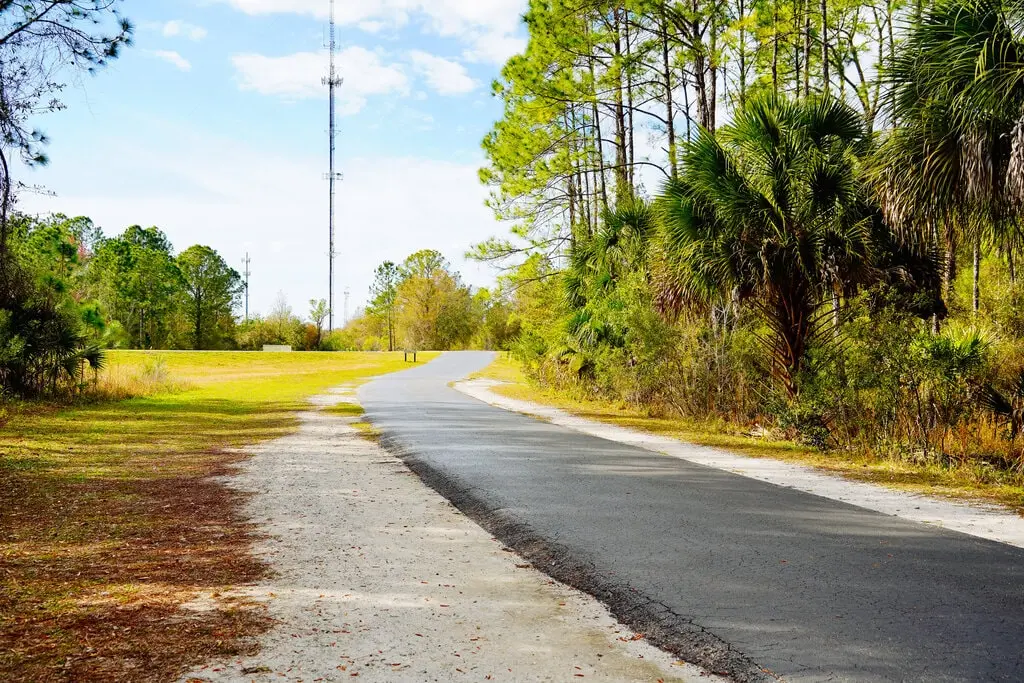
Ke Ala Hele Makalae Coastal Path
The name translates as "the path that goes by the coast," and that is the entire, perfect concept: roughly 8 paved, car-free miles along Kauai's Coconut Coast from Lydgate Beach Park through Kapaa town to Paliku Beach. The Rails-to-Trails Conservancy inducted it into its Hall of Fame in 2024, and it earns the honor with ocean views from nearly every yard of pavement. The grade never exceeds a gentle ramp, which makes it the rare Hawaii ride that suits kids, beach cruisers, and e-bikes as naturally as roadies spinning recovery miles. Humpback whales breach offshore in winter, and endangered monk seals haul out on the beaches below the path. Rent a cruiser in Kapaa, ride north to the sea cliffs at Paliku, and turn around when the pavement does.
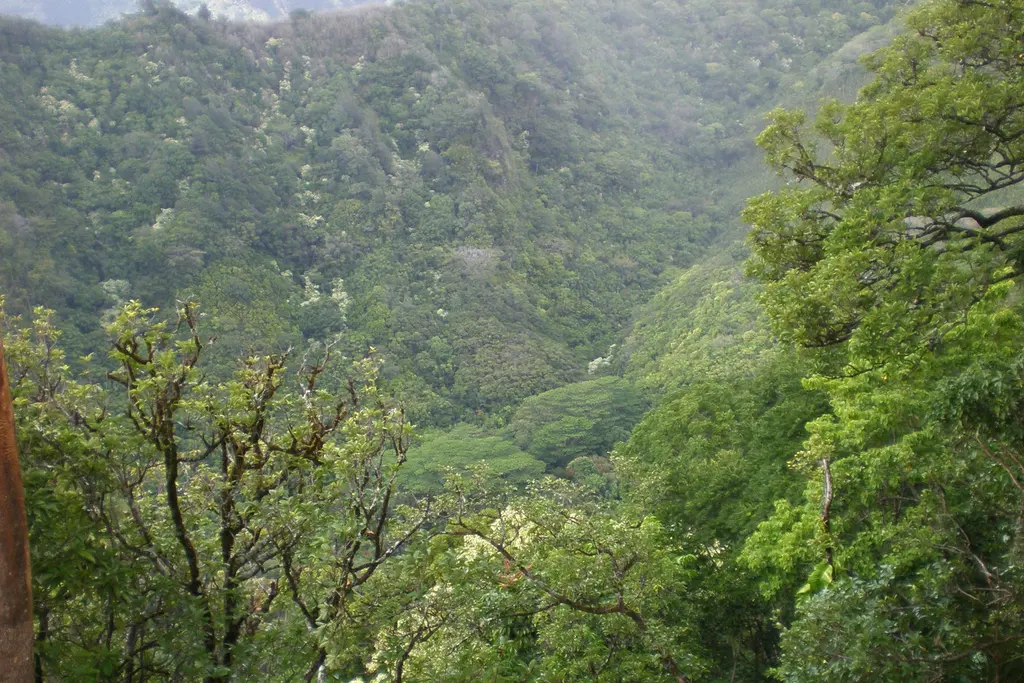
Tantalus-Round Top Drive Loop
Tantalus is Honolulu's signature climb and one of the most atmospheric city rides in America: a 10-mile loop that leaves Makiki Heights and corkscrews through roughly 21 hairpins into full tropical rainforest directly above downtown. The climbing side holds a 6.1 percent average for 4.6 miles, with pitches near 9 percent and banyan trees closing overhead like a tunnel. At the top, the Puu Ualakaa State Park lookout frames Diamond Head and the entire Honolulu skyline. Traffic is light and accustomed to cyclists, though the descent demands respect: the rainforest keeps the pavement damp and potholed in the shaded corners. Minutes from Waikiki, it turns a hotel stay into a training camp.
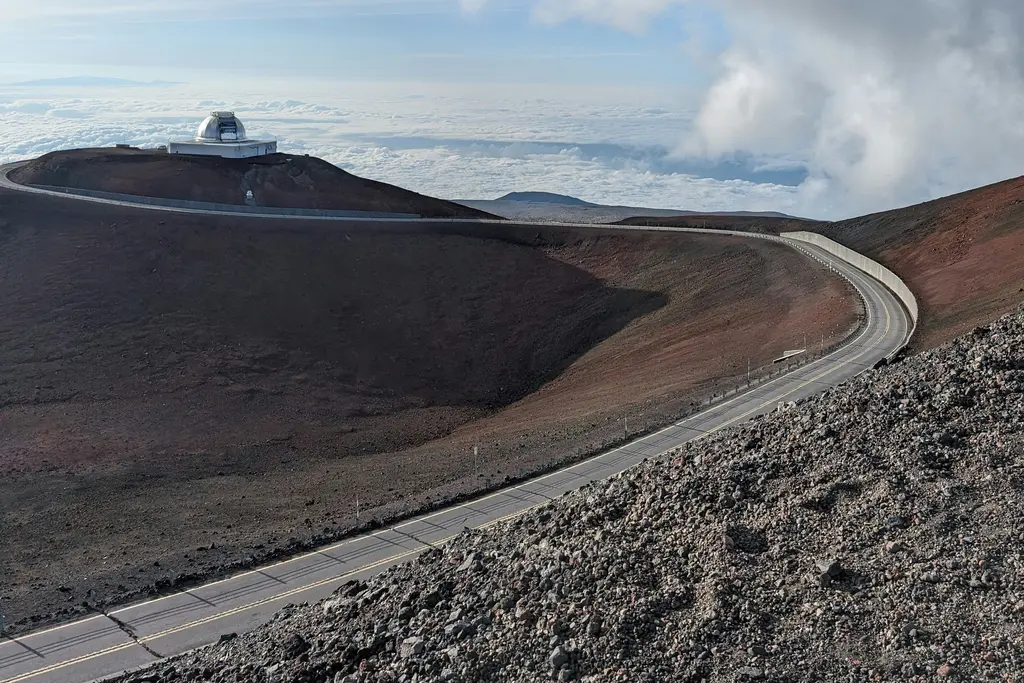
Mana Road (Mauna Kea Traverse)
Mana Road is the best dirt ride in Hawaii: a 45-mile 4WD gravel road wrapping around the base of Mauna Kea between 5,000 and 7,000 feet, from the Mauna Kea Access Road to the ranch town of Waimea. The route crosses Parker Ranch, one of the largest cattle ranches in the country, rolling through native koa forest, open pasture, and volcanic grassland with wild cattle and horses for company and views across to Hilo and the Kohala mountains. The surface is rough and relentlessly rolling, and there is no water, no food, and little cell coverage the whole way, so most riders shuttle to the high start and ride it one-way toward the misty 12-mile descent into Waimea. Temperatures can swing 30 degrees between start and finish. Treat it as an expedition rather than a spin, and it repays every bit of the planning.
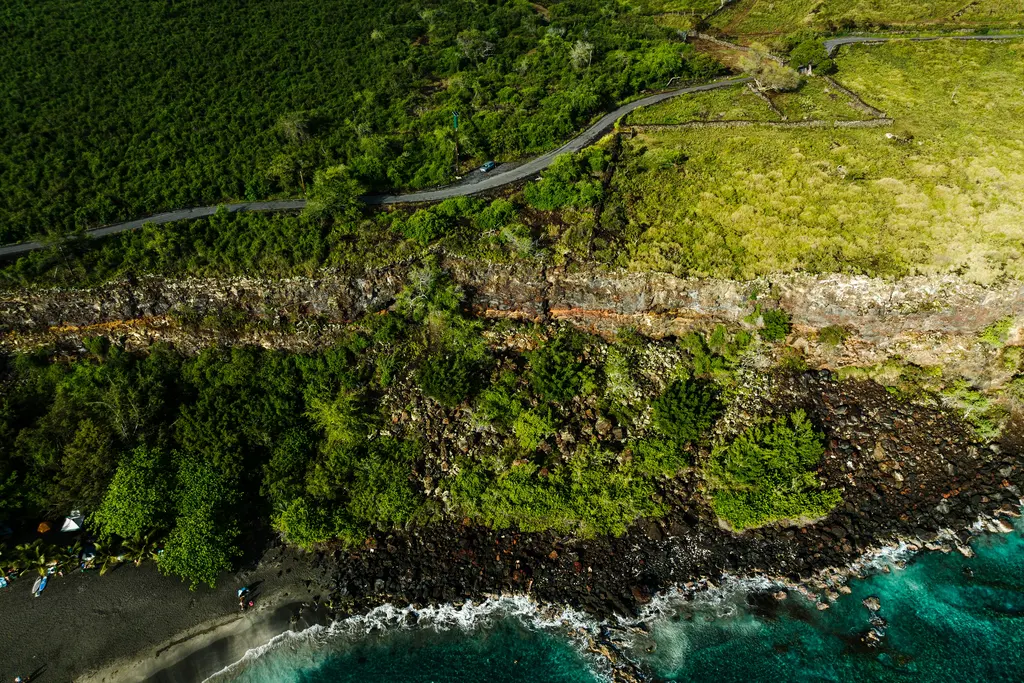
Queen Kaahumanu Highway (Ironman Kona Course)
The Queen K is the most famous 112 miles in triathlon: the Ironman World Championship out-and-back from Kailua-Kona through black lava fields to the plantation town of Hawi at the island's northern tip. The profile reads deceptively easy, 5,814 feet of rolling gain with nothing steeper than 6.3 percent, but the course's reputation was built on wind and heat: crosswinds funnel across the exposed Kohala coast at up to 40 mph, strong enough that race organizers ban disc wheels, while the lava radiates heat back through every mile. The shoulder is wide and smooth, among the most rideable long highways in the islands. Recreational riders sample it with out-and-backs from Waikoloa or Kawaihae; the 600-foot grind up to Hawi is the course's one true climb and its traditional turnaround.
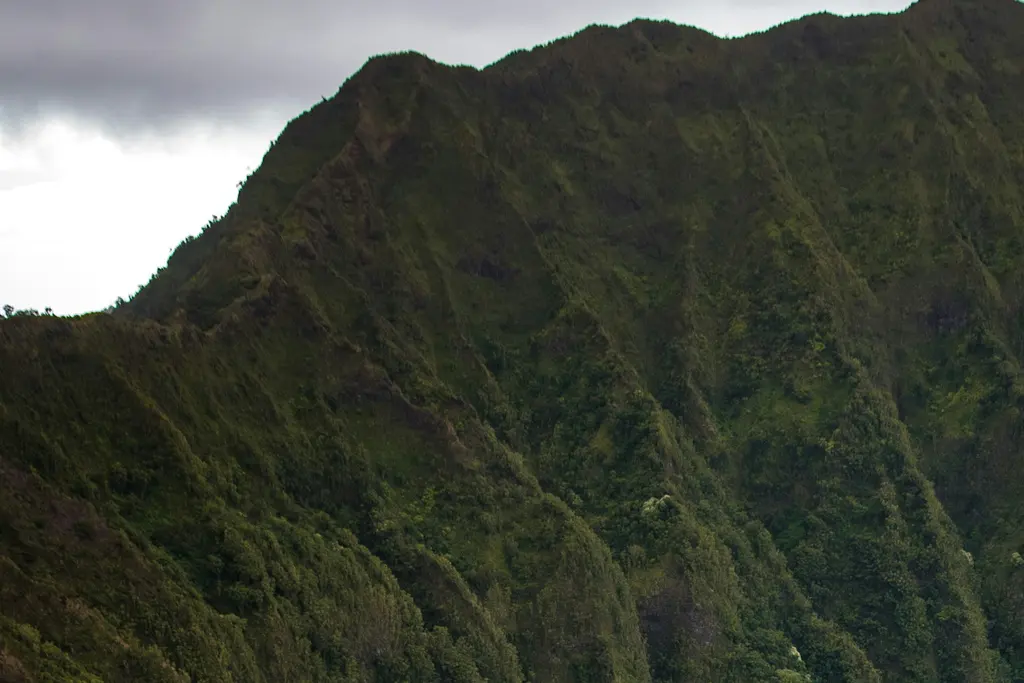
Maunawili Trail
Maunawili is Oahu's premier singletrack: roughly nine miles of black-diamond trail contouring the foothills of the windward Koolau Range beneath sheer, fluted cliffs. Ridden point-to-point from the hairpin near the Nuuanu Pali Lookout down to Waimanalo, it gains about 2,100 feet and gives back 2,300 through narrow, bench-cut tread laced with wet roots, stream crossings, and jungle vegetation that closes in at handlebar height. The views sweep across Kailua Bay and the twin peaks of Olomana whenever the forest opens. It rides wet in every season, so expect mud and choose tires accordingly. The trail doubles as a popular hiking route toward Maunawili Falls; yield generously and time your ride for a weekday morning.
Hawaii Cycling Events
From a 200-rider race up Haleakala to Hawaii's biggest community century, the islands stage events that mainland calendars cannot match.
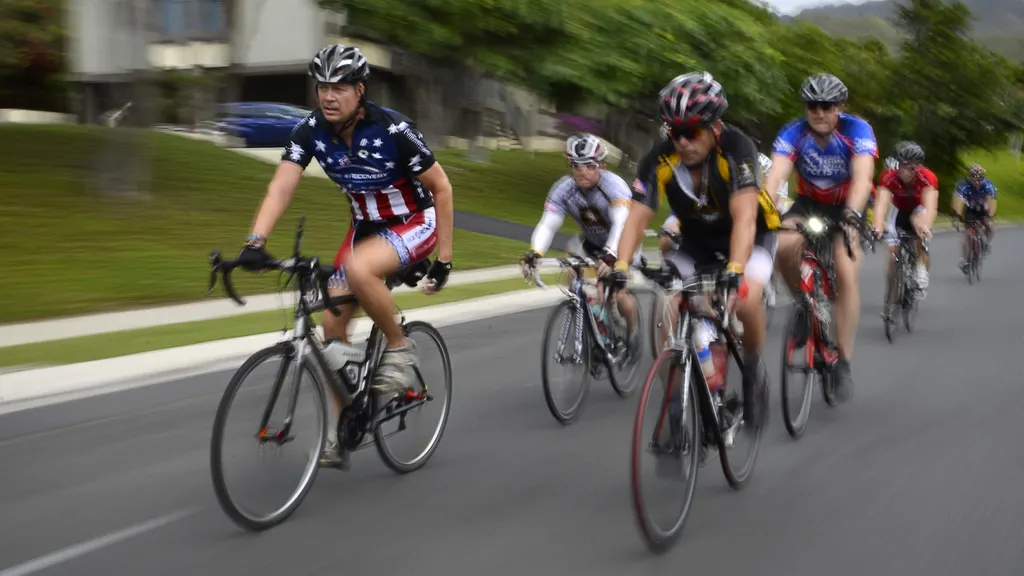
Honolulu Century Ride
The Honolulu Century Ride is Hawaii's oldest and largest cycling event, rolling roughly 2,000 riders out of Kapiolani Park each September as the Hawaii Bicycling League's biggest fundraiser of the year. The out-and-back course traces Oahu's south shore and windward coast to Swanzy Beach Park in Kaaawa, with turnaround points at 25, 50, 75, and 100 miles so every rider picks their own day. Aid stations appear about every 12 miles, backed by roving mechanics, SAG support, and police presence at the busiest intersections. It is untimed and unhurried, drawing families on the short options, first-time century riders, and a large contingent of visiting riders from Japan.
Event website
Cycle to the Sun
Cycle to the Sun is one of the world's marquee hillclimbs: a timed race up all 36 miles of the Haleakala climb, from the beach at Paia to the 10,023-foot summit, with pitches reaching 18 percent. The field is capped at 200 riders under Haleakala National Park rules, which keeps the start line intimate and the road quiet. A three-person relay option splits the mountain at roughly 2,700 and 6,500 feet, opening the day to strong recreational riders who want a piece of the climb without all of it. Produced by Go Cycling Maui since 2008, the race benefits the Paia Youth Center, and finishing it in any capacity earns a story most cyclists never get to tell.
Event website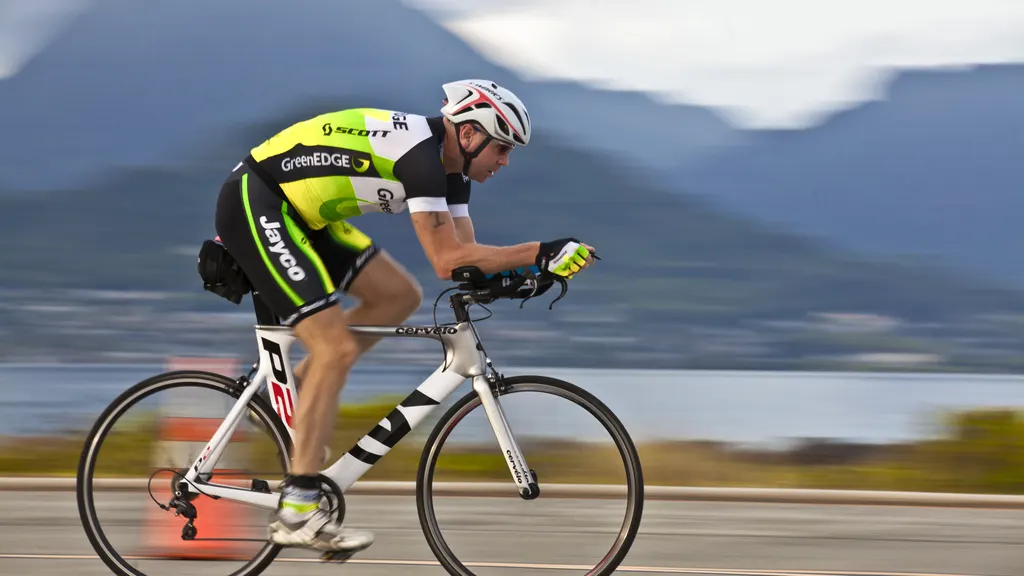
Dick Evans Memorial Road Race
The Dick Evans Memorial is the pinnacle of Hawaii's road racing calendar: a 112-mile circumnavigation of Oahu on the route that became the bike leg of the first Ironman Triathlon in 1978. The race honors a Hawaii cycling great killed while riding in downtown Honolulu in 1982, and it rolls out of Kalama Valley at 5:45 a.m. with a neutral start through Waikiki before the racing begins in earnest on Kunia Road. From there it runs through Haleiwa and the North Shore, then around the windward coast through Kaneohe and Waimanalo, with aid at Kunia summit, Kahuku, Temple Valley, and Olomana. Organized by the Aloha State Bicycle Racing Association, it is a genuine race for licensed and experienced riders, not a casual century.
Event website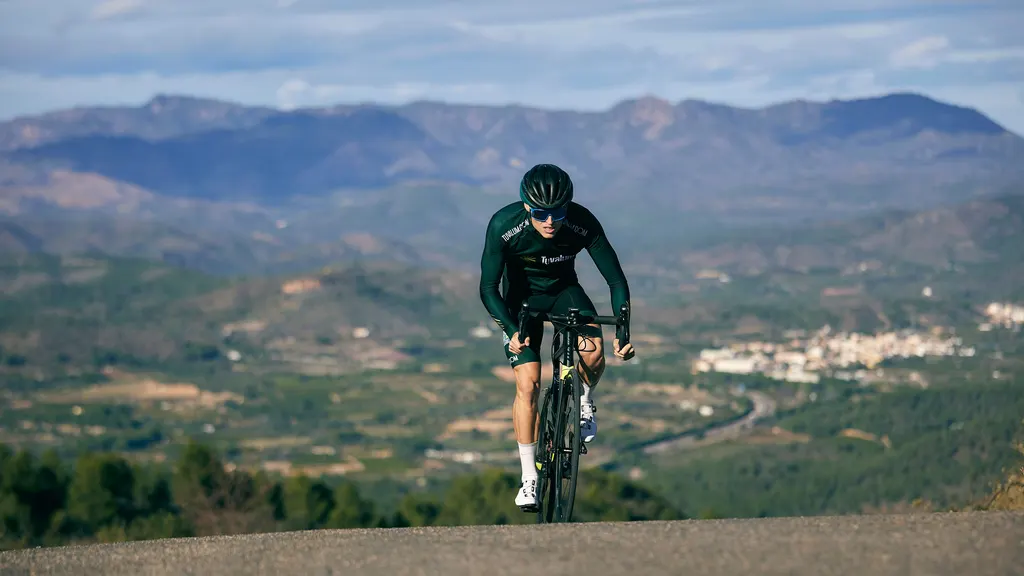
Pedal to the Meadow
Pedal to the Meadow is Kauai's signature race and the island's only sanctioned road event: a USA Cycling hillclimb from sea level at Kekaha to Kanaloahuluhulu Meadow in Kokee State Park, gaining 3,835 feet in under 16 miles along the rim of Waimea Canyon. The gradient bites early and never really lets go, but the reward is a finish in cool mountain air with the canyon's red walls falling away below. The atmosphere is small-field and grassroots, with a hard 11 a.m. course closure that keeps the day honest. One-day USA Cycling licenses are sold at registration, which makes it a natural first race for a strong climber.
Event website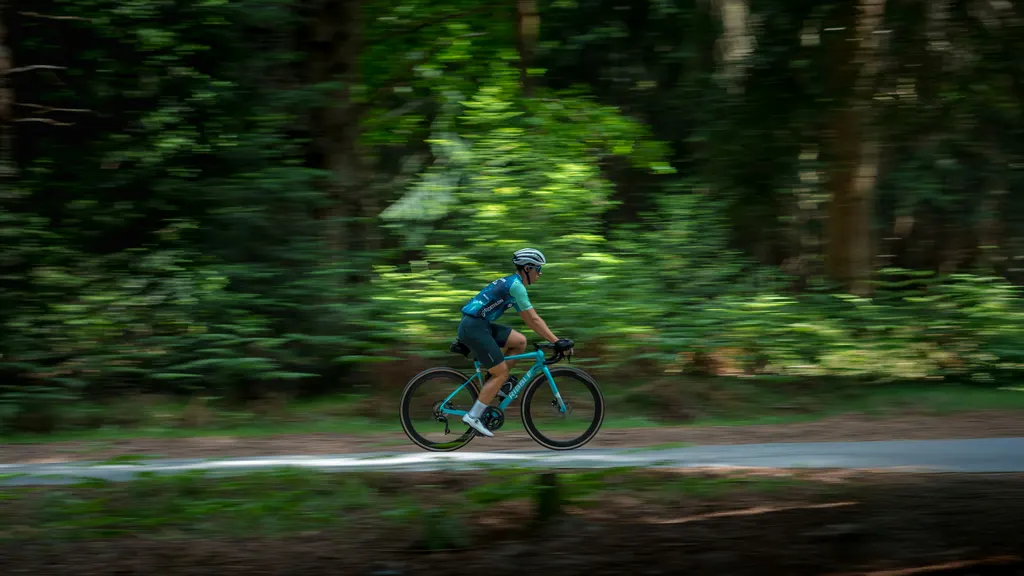
Tantalus Time Trial
Started in 1974, the Tantalus Time Trial is the longest continuously running bicycle race in Hawaii and the traditional opener of the Oahu racing season. Riders start solo against the clock and climb 4.4 miles up Makiki Heights Drive and Tantalus Drive, grinding a 7 percent average gradient through rainforest hairpins above the city. Hosted by the Tradewind Cycling Team, the format could not be simpler or more revealing: no drafting, no tactics, just the rider and the hill. It is short enough for a first-time racer to survive and steep enough that the fastest climbers on the island still finish empty.
Event website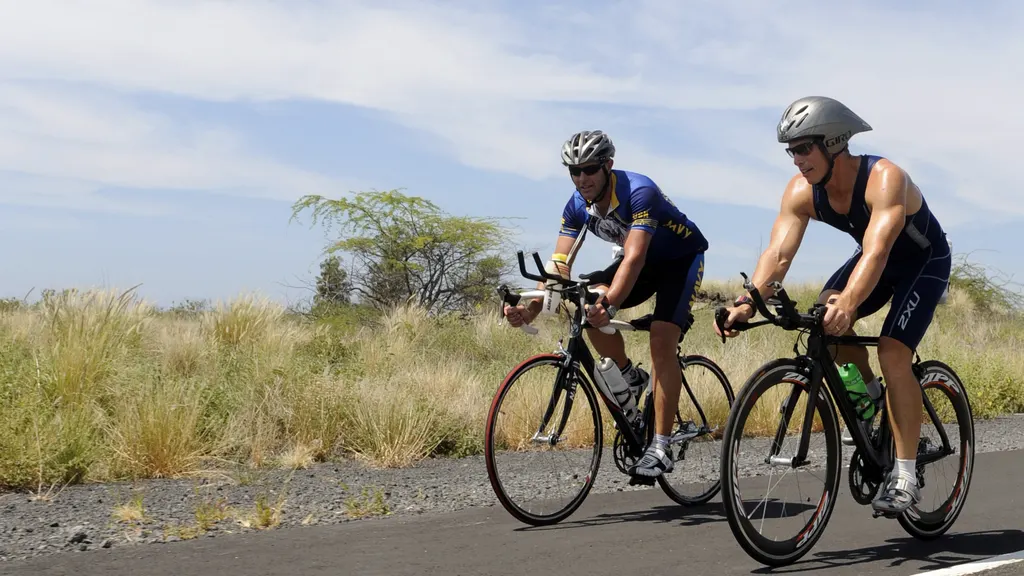
Big Island Gran Fondo
The Big Island Gran Fondo is the Hawaii Cycling Club's lone annual fundraiser, benefiting the Hospice of Kona Foundation and rolling out of Spencer Beach Park on the Kohala Coast each April. Riders choose 42-, 53-, 73-, or 103-mile routes that climb inland past the Hawaii Vanilla Company toward the Waipio Valley Overlook before returning to the leeward coast, on rural roads where the hills run long and steep. All distances are untimed, with staffed and unmanned aid stations, roving SAG, a commemorative patch, and a post-ride buffet and talk story back at the beach pavilion. It suits club riders and visiting cyclists who want a supported Big Island century without racing pressure.
Event websiteHawaii E-bike Law and Insurance FAQ
- What are the e-bike laws in Hawaii?
- Hawaii is the one state where every e-bike must be registered: a one-time $30 fee paid to the county director of finance under Hawaii Act 208, effective July 1, 2019. Beyond that, no license and no insurance. The class era arrives now: Hawaii HB2021, passed April 30, 2026, adopts the full three-class framework statewide no later than July 15, 2026.
- Do Class 1, Class 2, and Class 3 e-bikes need insurance in Hawaii?
- Insurance stays optional in Hawaii: the state mandates no coverage for any e-bike, and Hawaii HB2021 writes the exemption directly into statute. Under the new framework, Class 1 is pedal assist cutting off at 20 mph, Class 2 allows throttle or pedal assist up to 20 mph, and Class 3 is pedal assist up to 28 mph with a required speedometer. A standalone Velosurance policy adds theft, crash, and optional liability coverage from around $9 per month.
- What does bicycle and e-bike insurance cover in Hawaii?
- A standalone Velosurance policy covers theft, accidental and crash damage, and damage in transit, with optional liability and medical payments coverage. Hawaii's $30 registration proves ownership but insures nothing, so damage and theft protection is on you. Policies start around $9 per month for Hawaii riders.
- How do you register an e-bike in Hawaii?
- Registration is simple and one-time: pay a $30 fee to the county director of finance under HRS 249-14, and the e-bike is registered permanently. Hawaii is the only state that requires this for every e-bike. One thing to watch: Hawaii HB2021 adds enforcement teeth, with citation or impoundment for riding unregistered, so handle the paperwork before you ride.
Hawaii e-bike laws explained: classes, age limits, and what changes next.
Keep Riding: Nearby States
Cross a border and the trails, the weather, and the e-bike laws all change. See how Hawaii's neighbors compare.



Why Velosurance is best for your bicycle
Not all types of insurance are created equal. Velosurance levels the playing field by offering stand-alone bicycle coverage, where claims won't affect your homeowner's or renter's policy premiums.
| Policy Coverage |  | Homeowner/Renters Policy |
|---|---|---|
| Insured at Full Value | Yes | Possibly |
| Crash Damage | Yes | No |
| Theft Coverage | Yes | Limited |
| Theft by Force | Yes | No |
| Theft of Accessories | Yes | Limited |
| Theft Away From Home | Yes | Possibly |
| Uninsured Motorist | Yes | No |
| Personal Liability | Yes | Possibly |
| Permissive Use Policy | Yes | No |
| Replacement Rental | Yes | No |
| Event Fee Return | Yes | No |
| Cycling Apparel Coverage | Yes | No |
| Medical Payments | Yes | Possibly |
| Racing Coverage | Yes | No |
| E-bikes | Yes | No |
| Coverage in-transit | Yes | No |
| USAC, USAT and IMBA Member Discount | Yes | No |
| FREE INSTANT QUOTE |
Not all insurance policies provide the same level of protection, and many people only discover gaps in their coverage after filing a claim. We’ve done the hard work of reviewing the fine print. To see how plans compare, check out our insurance comparison.
Client satisfaction is our #1 goal. Here's what our clients say about Velosurance


Velosurance really stepped up and put me at ease. The claim was fast and easy. I am insuring all my bikes now.

Check out Velosurance reviews to see what people are saying about us.
Hawaii's best bicycle and e-bike insurance
No matter where your adventures take you, protect your bicycle and yourself from the unexpected with America's best bike insurance.