TL;DR:
If your carbon frame cracks in an accident, the question that keeps you up at night isn't engineering trivia. It is: will my insurer make me ride a repaired frame, or put me on a new one? Here's the short answer for Velosurance policyholders:
- Velosurance settles your claim in money, not by handing you a repaired or a new frame. It pays the cost to repair a fixable frame, or your bike's insured value if the frame is beyond safe repair, and you choose what to do with the payout.
- The policy pays the amount necessary to repair or replace your bike with like kind and quality. There is no "cheapest-option-wins" clause forcing a repair.
- Whether a damaged frame is repaired or replaced comes down to safety and the extent of the damage, assessed by carbon experts, not to whichever path costs the insurer less.
- Carbon frames can often be restored to original strength by professionals. When they can't be, or when repair costs approach the frame's value, replacement is the right call.
- The decision is ultimately yours to be comfortable with. If a repair guarantee doesn't satisfy you, you can get a second opinion.
The rest of this article explains how that decision is made, why the fine print in your policy matters more than any slogan, and what actually happens to carbon when it's damaged.
Does Velosurance repair or replace a damaged carbon frame?
This is the question most people are really asking, so let's answer it precisely, because the honest answer is that Velosurance does neither. It's an insurer, not a repair shop. It doesn't put your frame on a workbench or order you a new one. It settles your claim in money, and you decide how to use that settlement, whether toward a professional repair, a new frame, or a manufacturer's crash replacement program.
What sets the amount is the extent of the damage:
- If the frame can be safely repaired, the claim is a partial loss, and the policy's crash damage coverage pays the retail cost of that repair, shipping, parts, and labor, minus your deductible.
- If the frame is damaged beyond safe repair, it's a total loss, and the policy pays your bike's insured value, minus your deductible, so you can replace it with one of your choice.
The Velosurance policy commits to paying the amount necessary to repair or replace your bike with like kind and quality, and two things about that wording matter. First, it's your money either way: the settlement reflects the real cost of putting you back on a safe, equivalent bike, and how you spend it is your call. Second, there's no "least of" restriction. Some bicycle policies settle a loss by paying the least of the repair cost or the replacement cost, which quietly hands the insurer a financial reason to favor the cheaper repair. The Velosurance policy contains no such clause.
So when you read elsewhere that "your insurer will always pick the cheaper repair," check the actual policy language. The presence or absence of a "least of repair or replacement" clause tells you far more than any marketing promise about how a carbon claim will really be settled.
What is carbon fiber, and why does damage behave differently?
Designers reach for carbon fiber whenever it's economically feasible: it's roughly five times stronger than steel, twice as stiff, and weighs about two-thirds less. It's made from strands of carbon, thinner than a human hair, woven into a cloth and set in resin. Unlike steel or aluminum, it can be molded into the aerodynamic shapes a high-end frame needs. The aerospace industry leans on it heavily; the fuselage of the Boeing 787 Dreamliner is built from it.
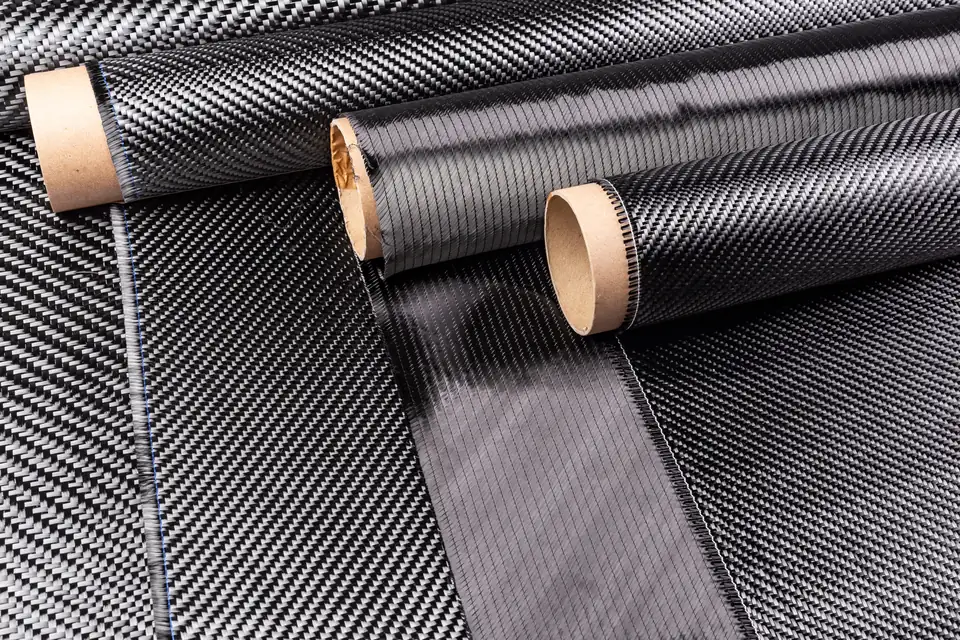
The trade-off is in how carbon fails. Steel and aluminum tend to bend and dent. Carbon is more prone to cracking or shattering on a sharp impact, and a hit to a thin section of the frame can cause damage that isn't obvious to the naked eye. That's exactly why a carbon claim shouldn't be settled by a glance — it needs a qualified assessment.
Can a damaged carbon frame actually be repaired?
Often, yes. Whether it should comes down to two things: where the damage is and how severe it is.
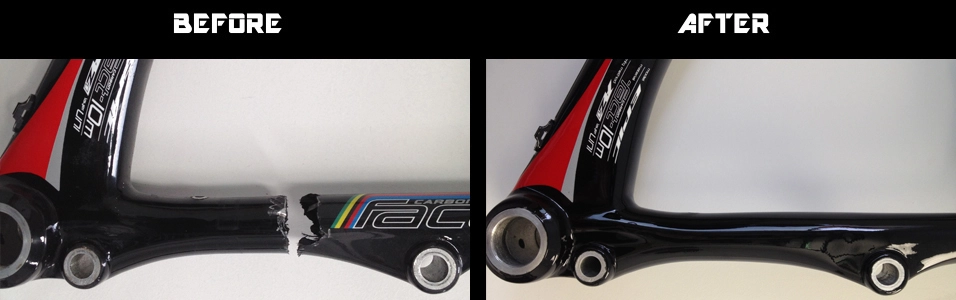
Professional carbon repair is a specialized process: sanding out the damaged fibers, precisely re-laying new carbon and epoxy, controlled curing, and thorough quality checks. Done by experts, a repair can restore a frame to its pre-accident strength so completely that the fix is undetectable.
At some point, though, the economics tip. If the cost to repair approaches or exceeds the frame's current value, replacing it is the more sensible outcome, and that's where the "repair or replace" flexibility in your policy matters.
A note of caution: while DIY carbon repair kits exist, frame repair is not a garage project. The materials are unforgiving, the precision required is high, and hidden damage is easy to miss. Leave it to professionals.
Is a repaired frame safe to ride?
It's a fair worry, and the honest answer is: a properly repaired frame, verified by experts, can be every bit as safe and strong as the original.
Consider the precedent. Airlines don't scrap an aircraft because a carbon wing is damaged. America's Cup boats aren't retired after a collision. Formula 1 teams repair carbon chassis and bodywork between races rather than build a new car each time. In each case, an expert evaluates the damage and the repair is validated against the safety of the end user. The same logic applies to a bicycle frame: if a damaged tube can be evaluated and restored to its original strength and integrity, a high-quality repair is a legitimate outcome. Riding it is still your choice, so if the facility can't stand behind its guarantee, get a second opinion or move toward replacement. You're not stuck.
Will repairing a carbon frame void the manufacturer's warranty?
This concern gets raised a lot, sometimes by competitors, so it's worth addressing plainly. Start with what a warranty actually covers: manufacturing defects, not crash damage. Brands like Trek, Specialized, Giant, and Canyon all exclude accident damage from warranty entirely. So repairing a cracked frame doesn't cost you coverage you had for that crash, because you never had it. What a repair can affect is whether a future defect elsewhere on the frame is still honored, and here the brands vary and tend to be strict.
Here's the more important point. The purpose of insurance is to make you whole, which means putting you back on a safe, equivalent bike. Your policy pays the measurable cost to repair or replace your frame. A manufacturer's warranty is not a measurable thing an insurer can value or cover. It's an agreement between you and the manufacturer, governed by their terms. Any insurer promising you a "warrantied" outcome is promising something outside its control.
If a fresh manufacturer warranty matters to you, you still have a clean path to one. Take your claim payout and apply it toward the manufacturer's crash replacement program. That gets you a brand-new frame carrying its own standard defect warranty, with your settlement covering much or all of the discounted cost. The payout works either way, so the choice stays yours.
What is a manufacturer's crash replacement program?
A crash replacement program is the manufacturer's answer to damage that a warranty won't cover. Because warranties exclude crash and accident damage, most major brands run a separate program that sells the original owner a brand-new frame, fork, or component at a significant discount off retail. It isn't free, but it's far cheaper than buying new, and the replacement frame arrives with its own standard manufacturer's warranty against defects.
Terms vary by brand and change over time, so confirm the current details with your manufacturer, but the shape is consistent:
- Trek runs Carbon Care, a discount on a replacement carbon frame, fork, or part for non-warranty damage, available to Trek owners through an authorized retailer.
- Specialized offers crash replacement pricing to the original owner who meets its ownership and time-period guidelines, with proof of purchase.
- Canyon provides like-for-like crash replacement on its own frames, forks, and components at reduced cost, available for up to three years from purchase.
- Giant repairs or replaces a composite frame structurally damaged while riding within the first two years of ownership.
Most programs share the same conditions: original owner only, a defined window from the purchase date, and proof of purchase. This is where your Velosurance claim does its best work. A settlement that pays the cost to repair or replace your bike can be applied straight to a crash replacement frame, so you can end up on a new, warrantied frame while paying little or nothing out of pocket.
When does replacing the frame make more sense?
Replacement is the right answer when:
- The damage is in a location or of a severity that can't be safely restored to its original strength.
- The repair cost approaches or exceeds the frame's current value.
- The repair facility can't provide a quality assurance guarantee you're comfortable with.
In those cases, Velosurance's policy pays to replace the bike with one of like kind and quality. As with any policy, settlement is subject to your coverage terms, deductible, and the scheduled value of the bike — which is why insuring your frame for its true replacement cost up front matters.
One more reason repair is worth considering: the environmental cost
A rarely asked question is what happens to carbon frames that can't be repaired. Carbon fiber is difficult to dispose of cleanly: it isn't biodegradable or photodegradable. Recycling technology has matured, and modern processes can now recover most of the fiber from an old composite, but the reclaimed material is downcycled into lower-grade products rather than reborn as a frame-strength composite. In other words, a scrapped frame can't simply become a new one. Repairing a frame that can be safely restored keeps a high-value structure in use and out of the waste stream, which remains a sound reason to explore repair before replacement.
Key Takeaways
- Velosurance settles your claim in money, paying to repair or replace with like kind and quality, with no "least of" clause forcing the cheaper option. You decide what to do with the payout.
- Carbon is light, strong, and aerodynamic, but it cracks rather than bends, and impact damage can be hidden, so claims deserve an expert assessment.
- Experts can often restore a frame to its original strength, the same way carbon is repaired in aerospace and marine use.
- Replace when the damage can't be safely restored, the repair cost nears the frame's value, or the guarantee doesn't satisfy you.
- Repair is highly specialized, not a DIY job, and a sound repair keeps a high-value frame in use rather than downcycled into lower-grade material.
- The final call is yours to be comfortable with, and a second opinion is always an option.
Frequently Asked Questions
- Does Velosurance repair or replace a damaged carbon frame?
- Neither, strictly speaking. Velosurance is an insurer, not a repair shop, so it settles your claim in money, and you decide how to use it. If the frame can be safely repaired, the policy pays the cost of that repair, parts, and labor, minus your deductible. If it's damaged beyond safe repair, the policy pays your bike's insured value, minus your deductible, so you can replace it with one of like kind and quality. There's no clause requiring the cheaper of the two. Settlement is subject to your policy terms, deductible, and scheduled value.
- Can a damaged carbon fiber bicycle frame be repaired?
- In many cases, yes. The outcome depends on the location and extent of the damage. Carbon repair experts assess whether the frame can be returned to its pre-accident structural integrity. If the facility can guarantee restoration to original strength, a professional repair is an acceptable, cost-effective result.
- Is a repaired carbon frame safe to ride?
- A properly repaired frame, validated by experts, can be as safe as the original, the same principle that lets airlines and racing teams repair carbon rather than scrap it.
- Will repairing a carbon frame void the warranty?
- Often, yes, a third-party repair can affect the manufacturer's warranty, and policies vary by brand. But it matters less than it sounds, because a warranty only covers manufacturing defects, never crash damage. So repairing a cracked frame forfeits nothing on the crash itself, since that was never covered. What a repair can affect is whether a future defect elsewhere on the frame is still honored. If keeping a fresh manufacturer's warranty is important to you, the simplest route is to put your claim payout toward a manufacturer's crash replacement program and get a new frame that carries its own warranty.
- What is a manufacturer's crash replacement program, and can I use my payout for one?
- A crash replacement program is how manufacturers handle damage that their warranty won't cover. Because warranties exclude crash damage, most major brands sell the original owner a new frame, fork, or component at a steep discount off retail, and that replacement carries its own standard manufacturer warranty. Trek (Carbon Care), Specialized, Canyon, and Giant all run versions of this, usually limited to the original owner within a set window from the purchase date, so confirm your brand's current terms. Yes, you can apply your Velosurance claim settlement toward one, which often means ending up on a new, warrantied frame while paying little or nothing out of pocket.
- How does carbon fiber differ from steel or aluminum in a crash?
- Carbon is about five times stronger than steel, twice as stiff, and two-thirds lighter. The meaningful difference is the failure mode: instead of bending, carbon can shatter on a sharp impact, and a hit to a thin section can leave hidden damage, which is why expert assessment matters.
- When does replacing a carbon frame make more sense than repairing it?
- When the damage can't be safely restored, when repair costs approach or exceed the frame's value, or when the repair facility can't provide a guarantee you're comfortable with. In those cases, your policy pays to replace the bike with like kind and quality.
- What environmental factor favors repair?
- Carbon fiber isn't biodegradable or photodegradable. Recycling has matured and can recover most of the fiber, but the reclaimed material is downcycled into lower-grade products rather than reborn as a frame-strength composite, so a scrapped frame can't simply become a new one. Repairing a frame that can be safely restored keeps a high-value structure in use, which is a real reason to explore repair before replacement.